The Kimpact Development Initiative (KDI) has identified Osogbo and Ede South as the two most critical electoral security pressure points ahead of the August 15, 2026 Osun State governorship election. The organisation, in its 2026 Osun Election Integrity and Security Assessment, also classified 11 other local government areas as having……
The Kimpact Development Initiative (KDI) has identified Osogbo and Ede South as the two most critical electoral security pressure points ahead of the August 15, 2026 Osun State governorship election.
The organisation, in its 2026 Osun Election Integrity and Security Assessment, also classified 11 other local government areas as having high electoral pressure, warning that the major threat to the poll may come from the convergence of political competition, criminal networks, misinformation and operational vulnerabilities.
The assessment, based on citizen surveys, stakeholder consultations, incident monitoring, field observations and other sources, said the election would serve as an important test of Nigeria’s electoral and security preparedness ahead of the 2027 general elections.
According to KDI, the principal security challenge facing Osun is no longer isolated violent incidents but “the convergence of multiple electoral pressures within the same political environment.”
It said violence was increasingly being used strategically to influence electoral outcomes through intimidation, suppression and disruption rather than through indiscriminate confrontation.
The report also identified fear as a major electoral factor, noting that some residents had begun avoiding rallies, reducing political participation and experiencing heightened security anxiety even before physical attacks occurred.
....: APC Will Accept Peoples Verdict In Osun – Ajibola Bashiru
KDI said election-related incidents had become the principal source of violent activity in the state during the pre-election period.
It recorded 73 election-related violent incidents and 29 fatalities within its assessment period, compared with 12 non-election-related incidents and 29 fatalities.
The report said 78 per cent of the election-related violence, 54 of the 73 incidents, occurred between May and July 2026 as political campaigns intensified.
“Electoral violent incidents arising from intense political competition have overtaken ordinary criminality as the principal source of violence in Osun,” the assessment said.
The six recurring forms of violence identified in the report include shootings and murders, intimidation and harassment, physical assaults, kidnappings, property destruction and verbal assaults.
The assessment found that electoral violence was concentrated in a relatively small number of local government areas, rather than being evenly distributed across Osun.
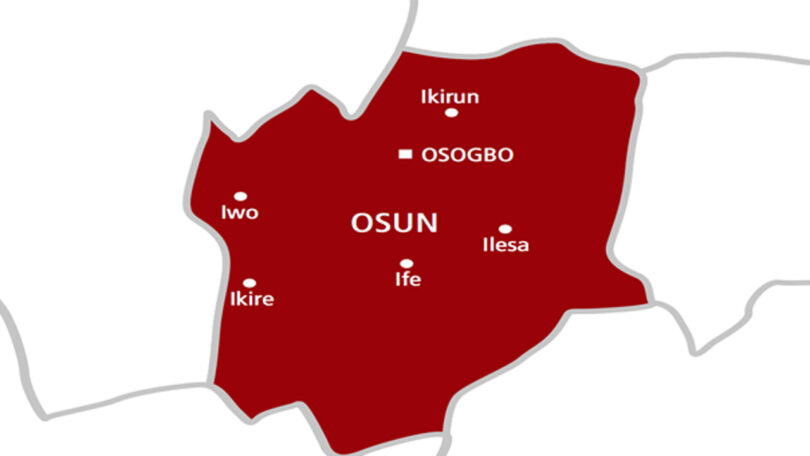
Osogbo emerged as the principal hotspot, accounting for 41 per cent of recorded incidents and 27 per cent of fatalities.
The report recorded 27 incidents and three deaths in the state capital, describing it as the “epicentre” of electoral violence in the state.
Other areas recorded fewer incidents but, in some cases, more lethal outcomes, with Olorunda, Oriade, Irepodun, Irewole, Iwo and Obokun each recording fatalities.
KDI said electoral violence in Osun had become increasingly strategic, with incidents concentrated around party strongholds, campaign routes, party offices and politically significant communities.
The report said 95 per cent of key informants linked recent violent incidents to locations with clear electoral value, including Osogbo, Olorunda, Ikire, Ede South, Ile-Ife and Ilesa.
“The operational question is not ‘where will violence occur?’ but ‘where would violence produce the greatest electoral advantage?’” the report said.
According to the assessment, violence could be used to suppress turnout in opposition strongholds, intimidate voters and political actors, or establish territorial control over campaign routes and politically significant communities.
The organisation warned that fear itself had become an important instrument of electoral disruption.
It said residents were modifying their behaviour in anticipation of possible violence by avoiding campaign rallies, limiting movement after dark, refusing to attend evening meetings and concealing visible political affiliations.
“Fear suppresses participation before violence suppresses voters because psychological insecurity is becoming as operationally significant as physical insecurity,” the report said.
KDI said this meant early warning systems should not rely solely on recorded violent incidents but should also monitor behavioural changes such as declining attendance at political events and reluctance among polling officials and campaign volunteers.
The report also identified existing cult groups, unemployed youth networks, transport associations and informal security actors as potential mobilisation structures that could be activated during the election.
It said these networks had existing organisational capacity, territorial influence and mobilisation potential, making them susceptible to political use during election periods.
“Election violence follows existing social infrastructure; political competition simply switches it on,” KDI said.
The organisation noted that mining communities along the Ife-Ijesa corridor could also provide mobilisation pools because of the presence of cash, armed protection arrangements and unemployed young people.
KDI further identified declining public confidence in democratic institutions as another major risk to the election.
It said communities with low confidence in one institution often expressed similar concerns about others, particularly security agencies, INEC, the media and the judiciary.
The report described the development as an “institutional confidence collapse”, warning that declining trust could make citizens more receptive to rumours, conspiracy theories and misinformation.
It assessed public confidence in security agencies as low to moderate, citing concerns over perceived neutrality, while confidence in INEC was rated moderate to high.
In its Electoral Pressure Atlas, KDI classified Osogbo and Ede South as having “Critical Electoral Pressure”.
Eleven LGAs, Ede North, Egbedore, Iwo, Irewole, Ayedaade, Obokun, Oriade, Ilesa East, Ilesa West, Ife North and Olorunda, were classified as having high electoral pressure.
Nine others were rated moderate, while eight were placed in the low-pressure category.
The report stressed that the classifications were not predictions of violence but were intended to guide preventive action and security planning.
KDI said no single institution could effectively manage the evolving electoral risks in Osun, urging INEC, security agencies, political parties, civil society organisations, traditional institutions, the media and development partners to coordinate their response.
It urged INEC to strengthen logistics planning, establish real-time monitoring mechanisms and provide timely public communication to counter misinformation.
Security agencies were advised to adopt intelligence-led election security, strengthen public confidence through visible neutrality and establish rapid response mechanisms for incidents involving political violence, vote buying, misinformation and attacks on election officials.
Political parties and candidates were also urged to prohibit the recruitment of political thugs and violent youth networks, while avoiding inflammatory statements capable of undermining electoral institutions or encouraging violence.
The organisation further recommended stronger community-based early warning systems, increased voter education and more responsible election reporting by media organisations.
KDI said the lessons from the Osun election should be used to improve national election security planning ahead of the 2027 general elections.
“The Osun Governorship Election provides an important opportunity to refine election security planning before the 2027 general elections,” the report said.
“Lessons emerging from this election should inform national election security doctrine, inter-agency coordination mechanisms and future electoral reforms.”