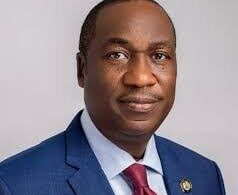

Lagos State Deputy Governor and the All Progressives Congress (APC) governorship candidate for the 2027 election, Obafemi Hamzat, says the state is reviewing its approach to flooding in response to the growing impact of climate change. Hamzat spoke during an interview on TVC News’ Journalists’ Hangout on Monday, September 14,……
Lagos State Deputy Governor and the All Progressives Congress (APC) governorship candidate for the 2027 election, Obafemi Hamzat, says the state is reviewing its approach to flooding in response to the growing impact of climate change.
Hamzat spoke during an interview on TVC News’ Journalists’ Hangout on Monday, September 14, while outlining measures being taken by the state government to address flooding and improve drainage management.
The deputy governor identified rising water levels, increased rainfall and excessive heat as three major climate-related challenges confronting Lagos.
“Climate change is real,” Hamzat said, stressing that the changing environmental conditions required residents and the government to adapt.
He urged Lagos residents to change practices that contribute to flooding, particularly indiscriminate dumping of waste and the blockage of waterways.
....: Lagos Reopens Chevron Drive Drainage Channel
“The way that we live our lives must change. We must ensure that we do not block our waterways,” he said.
Hamzat said Lagos has developed what he described as the country’s best drainage master plan, consisting of seven drainage systems designed to manage the state’s water flow.
He explained that the state’s drainage infrastructure is also affected by tidal locking between drains and receiving channels, which can slow the rate at which floodwater recedes.
“Lagos has the best drainage master plan in this country. We have seven systems,” he said.
According to him, the state government has also strengthened its workforce for drainage maintenance, employing 1,000 people under the Environmental Flooding Action Group (EFAG) to clear drainage channels.
“EFAG: We employed 1,000 people to clear drainages,” Hamzat said.
He added that the government was developing a control room to monitor the movement of ferries across the state, with plans to extend the system to drainage infrastructure.
“We are building a control room that monitors all our ferries; we are extending it to monitor drains,” he said.
Hamzat noted that while the government could not determine the volume of rainfall or water entering the state, it could take steps to manage its movement.
“We cannot control the volume of water, but we can control the movement,” he said.
The deputy governor also disclosed that the government was dredging the Ikota River, which he described as a major channel for water from the Lagos Island axis.
“We are dredging the Ikota river. It is where all the waters on the Island goes in,” he said.
Hamzat further called on residents to stop dumping refuse into waterways, warning that government interventions would be undermined if drainage channels were blocked with waste.
He said the state currently reviews its drainage master plan every five years but suggested that the review cycle could be shortened to three years because of the changing effects of climate change.
“We review our drainage master plan every five years. Maybe because of climate change, we can make it three years,” Hamzat said.