
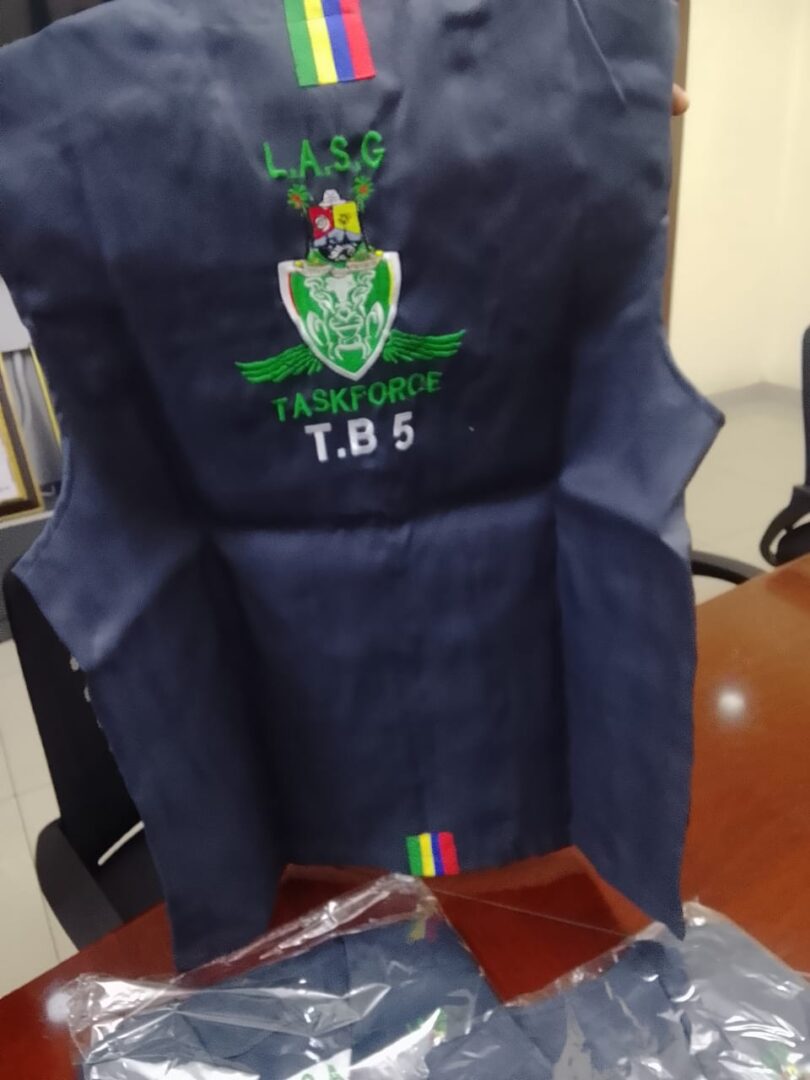
The Chairman of the Lagos State Environmental and Special Offences (Taskforce) Unit, CSP Adetayo Akerele, has announced the introduction and distribution of specially branded operational jackets for ad-hoc security personnel drawn from the Nigerian Legion, in a move aimed at strengthening transparency, professionalism and public trust.
Akerele said the initiative was designed primarily to ensure easy identification of personnel during field operations, while addressing long-standing public concerns about the conduct and composition of enforcement teams.
Over the years, segments of the public have accused the agency of deploying unverified individuals, often described as street urchins or thugs during enforcement exercises, allegations the Taskforce has repeatedly denied.
According to the Chairman, the newly issued jackets will provide a clear visual distinction for authorised operatives, eliminating ambiguity and reducing the risk of impersonation.
“The jackets are not just uniforms; they are symbols of accountability. Every operative on the field can now be easily identified, and this will help curb misconduct while reassuring members of the public,” he said.
He explained that the engagement of Nigerian Legion personnel largely made up of retired military officers remains a strategic decision rooted in their discipline, training and years of service experience.
In a megacity like Lagos, with a population exceeding 20 million, Akerele noted that the scale and complexity of environmental and special offences require a robust and well-coordinated security presence.
“The operational demands of Lagos require experienced hands. Members of the Legion bring professionalism, restraint and tactical knowledge that are essential for maintaining order during enforcement activities,” he added.
Beyond identification, the jackets are expected to improve operational efficiency by fostering a sense of unity and responsibility among personnel.
Security analysts say uniformity often enhances discipline, reduces excesses and encourages adherence to standard operating procedures.
The initiative is also projected to strengthen community relations. With clearly identifiable officers, residents will be better positioned to report misconduct, seek assistance, and engage more confidently with Taskforce personnel.
This, in turn, is expected to reduce friction during enforcement drives and promote voluntary compliance with environmental laws.
Observers note that the move aligns with broader reforms within the Taskforce aimed at repositioning the agency as a more transparent, accountable and citizen-focused institution.
If effectively implemented, the jacket initiative could mark a significant step toward rebuilding public confidence and improving the overall image of the agency in one of Africa’s busiest urban centres.