The ongoing and protracted conflicts have made one thing clear: the old architecture of purchased protection is crumbling. What replaces it will define the next world order.
For decades, security was treated as a commodity — something that could be procured, invoiced, and delivered on schedule.
The Gulf model made this logic explicit: pay Washington enough, host enough bases, and the threat will remain at a manageable distance. The price kept rising, but the logic held. Until it didn’t.
What the Iran-Israel/USA confrontation, the Russia-Ukraine war, and the Gaza genocide have collectively exposed is not simply a failure of this or that alliance.
They have exposed the structural bankruptcy of security-as-purchase. In each of these ongoing conflicts, the defining variable was not how much money a state had spent on defence contracts — it was whether that state had built something that could endure.
Sustainability, not spending, has become the supreme military currency of our time.
The new grammar of war
Russia’s war in Ukraine, launched in February 2022, was supposed to last days. It has now stretched beyond four years. Ukraine held on not simply because of its own resolve, but because it had built — and was backed by — a genuinely sustainable war effort.
Russia entered the war with the world’s second-largest defence budget — and yet failed to subdue a nation it had underestimated.
Related
The reason was simple: on the other side stood not just Ukraine, but a web of Western partners providing weapons, intelligence, financing, and sanctions pressure in a coordinated, sustained manner.
Ukraine did not emerge from this war unscathed — far from it. But it pushed back an invasion that was designed to end in weeks, recaptured significant territory, and fundamentally altered Russia’s strategic position.
More importantly, it demonstrated something the next generation of military planners will not forget: that a state with committed allies, a resilient population, and an adaptable production base can outlast a far richer opponent who fights alone.
If Ukraine illustrates what sustainable defence can achieve, Gaza illustrates what the absence of strategic accountability costs — not for the weaker party, but the stronger one.
Israel launched the genocidal war on Gaza with overwhelming military superiority, American diplomatic cover, and initial European silence.
It also entered it with a near-total disregard for international humanitarian law, civilian protection norms, and the basic moral framework that gives military action its legitimacy in the eyes of the world. Eighteen months later, the balance sheet looks very different.
On the ground, Israel has achieved tactical objectives: significant territorial re-occupation in Gaza, sustained pressure on the occupied West Bank, and the degradation of the command infrastructure of the Palestinian resistance group Hamas.
By the metrics of a conventional military offensive, these are measurable gains. But war is no longer measured in square kilometres alone.
The cracks in European support have become impossible to ignore. Ireland, Spain, Norway, and Belgium have moved well beyond symbolic gestures toward concrete diplomatic and legal action.
But even within countries that have maintained closer ties to Israel — the UK, Germany, and Italy — official voices have increasingly broken ranks, calling for ceasefires, arms embargoes, and humanitarian access.
Related
The International Court of Justice is engaged. The International Criminal Court has issued arrest warrants for Israeli leadership.
Corporations operating under ESG frameworks are quietly reassessing their exposure.
And perhaps most significantly for the long term: on university campuses from London to Los Angeles, pro-Palestinian sentiment has grown steadily, even as some governments have moved to restrict or criminalise such expression.
The attempt to suppress debate has, in many cases, only deepened it. Across the Global South, the reputational damage to Israel’s diplomatic standing is severe — and no military victory can simply reverse it.
Israel may control more territory than it did in October 2023. But it inhabits a fundamentally different world — one in which its strategic isolation has deepened with every passing month.
This is the paradox of short-horizon victory in an era of long-memory accountability.
A state can win the battle and systematically lose the conditions that make future security possible: international legitimacy, economic integration, alliance depth, and the moral authority that turns raw power into soft influence.
In Gaza, the world has watched in real time as a military superpower demonstrated that firepower and sustainability are not synonyms.
The humanitarian catastrophe has become, paradoxically, Israel’s most consequential strategic liability — one no Iron Dome system can intercept.
The architecture of durable security
What these cases share — and what the broader Gulf transformation makes explicit — is a structural shift in what security actually means.
The old formula was simple: money buys military capacity, military capacity produces security. The Gulf states spent decades testing that formula, and the results were instructive.
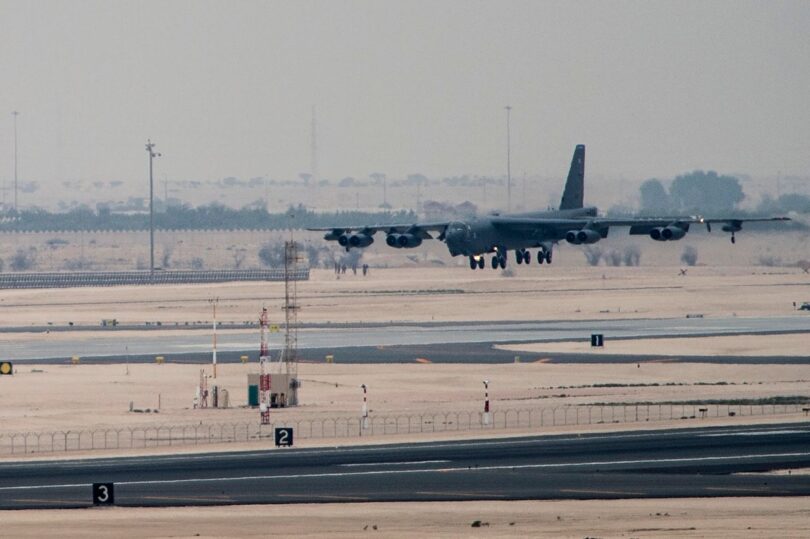
Saudi Arabia paid hundreds of millions to host American forces on its own soil — forces that were meant to deter external threats but became a source of political tension and, eventually, a target themselves.
US military installations across the Gulf were repeatedly listed among Iran’s declared strike targets. The presence that was supposed to provide protection had, in effect, become part of the threat landscape.
The security package purchased did not include what was on the invoice.