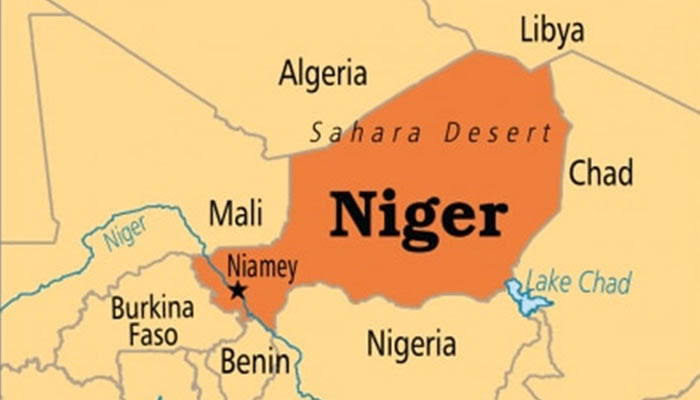
An internal dispute over deployments and alleged unequal treatment within Niger’s armed forces reportedly triggered the armed confrontation at Base Aérienne 101 in Niamey, rather than a coordinated attempt to overthrow the government.
Security analyst Zagazola Makama, citing a security source, reported that the crisis began on August 26, 2026, after a meeting involving Nigerien Army Chief of Staff, Gen. Maman Sani Kiao, and two Special Forces officers identified as Nassirou and Moutari.
According to the source, the officers were informed of plans to deploy them to Boulkessi and Parc W but objected to the assignments, citing difficult operational conditions and inadequate logistics.
The officers were also said to have complained about what they considered unequal treatment within the Special Forces, particularly the deployment of some personnel to challenging operational areas while others were sent abroad for training or given administrative duties.
The disagreement allegedly escalated when soldiers fired shots into the air in protest before withdrawing towards Base Aérienne 101, where one of the officers had previously served.
The situation reportedly worsened following the arrest of another officer, Maï-Hatchi, who was said to have been serving on an escort mission along the Dori axis when he was detained over unspecified suspicions.
His battalion members stationed in Niamey subsequently joined the protest, according to the account.
The security source alleged that members of the Presidential Guard later pursued the protesting soldiers and opened fire, triggering an armed confrontation.
The soldiers reportedly took defensive positions after believing that the security forces intended to eliminate them.
The source maintained that the episode was an armed mutiny arising from internal grievances rather than an organised coup.
However, the sequence of events, the alleged orders given during the confrontation and the precise motives of those involved could not be independently verified.
The account further alleged that Nigerien authorities brought in Russian personnel linked to Africa Corps, a force formerly associated with the Wagner Group, to assist in the operation against the mutineers.
According to the source, armed drones were allegedly used during the confrontation, resulting in deaths and injuries, while detained soldiers were subsequently displayed publicly.
The reported confrontation has also raised concerns over the treatment of members of Niger’s security forces following the incident.
Zagazola Makama reported that a further round of arrests was allegedly underway, including the detention of dozens of soldiers at Camp Bagagi.
A young officer identified as Lt. Lawly Mamane Sabiou was also reportedly missing.
The claims have not been independently verified, while Nigerien authorities have yet to provide a comprehensive public account establishing the circumstances surrounding the confrontation, reported casualties, arrests or the alleged involvement of Russian personnel.
The episode has nonetheless renewed questions about cohesion within Niger’s military, particularly regarding deployment conditions, internal command relations and the treatment of personnel assigned to high-risk operational areas.
According to the security account cited by Zagazola Makama, the key issue is whether the Base 101 confrontation should be understood as an isolated mutiny or as a symptom of deeper tensions within Niger’s armed forces.