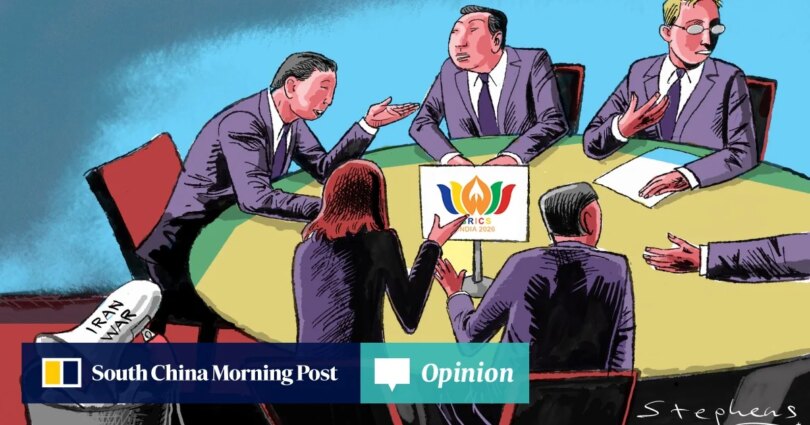
As the Brics summit chair, India seeks to straddle its deepening strategic ties with Israel and symbolic commitment to the Global South, while ensuring the safety of its diaspora in the Middle East. Its challenges are compounded by the deterioration in relations with the United States under the second Trump administration, and criticism from domestic opposition over the government’s “uncritical silence” on the US-Israel attacks.
Given the disparate interests and divergent stances within the grouping, the coming Brics foreign ministerial meetings in New Delhi are unlikely to yield concrete breakthroughs over the war. Yet it would be a mistake to conflate a known fact – that Brics is not a coherent bloc – with a premature conclusion: that Brics is impotent.
As Heiwai Tang and I argued in our co-edited volume, the grouping is best conceived of as a tool for leverage enhancement and optionality maximisation, as opposed to a binding structure demanding alignment on all major policy stances. Indeed, if carefully pursued, select areas of cooperation may prove immensely fruitful for all members, especially in the present moment.