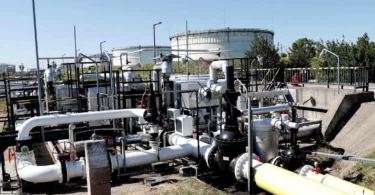

The numbers tell a different story. The United States remains a net importer of crude oil. Its refineries are engineered for the medium sour barrels that flow through the Hormuz Strait. And the global price shock triggered by the US’ military actions against Iran has already pushed American petrol above US$4 a gallon while hammering Europe and Asia far harder.
Start with the feedstock reality. In 2025, the US produced a record 13.6 million barrels per day of crude oil. Yet it still imported an average of 6.2 million barrels per day and exported only 4 million, leaving net crude imports at 2.2 million barrels per day.
Countries in the Persian Gulf, such as Saudi Arabia, Iraq, Kuwait and the United Arab Emirates, supplied roughly 490,000 barrels per day through the Strait of Hormuz in 2025, accounting for about 8 per cent of total US crude imports and roughly 2–3 per cent of refinery throughput. That is not “almost no oil”. It is a quality-specific slice needed by complex refineries along the Gulf of Mexico and the US West Coast.
A chemistry mismatch is the heart of the issue. American shale output is overwhelmingly light and sweet – high American Petroleum Institute (API) gravity and low sulphur. Most US refineries, however, were built over decades to run heavier, sourer crudes that yield more middle distillates (diesel and jet fuel) and fewer low-value residuals.
Roughly 70 per cent of US refining capacity relies on other units optimised for medium-to-heavy sour blends averaging 33-34 degrees API and 1.3 per cent sulphur. Light shale crude alone produces too much petrol and too little of the high-value products that drive refinery margins and exports. Without the imported sour barrels for blending, refiners face lower throughput, suboptimal yields and higher operating costs. Persian Gulf crude that does arrive – 88 per cent of it medium sour – fills exactly that gap.