
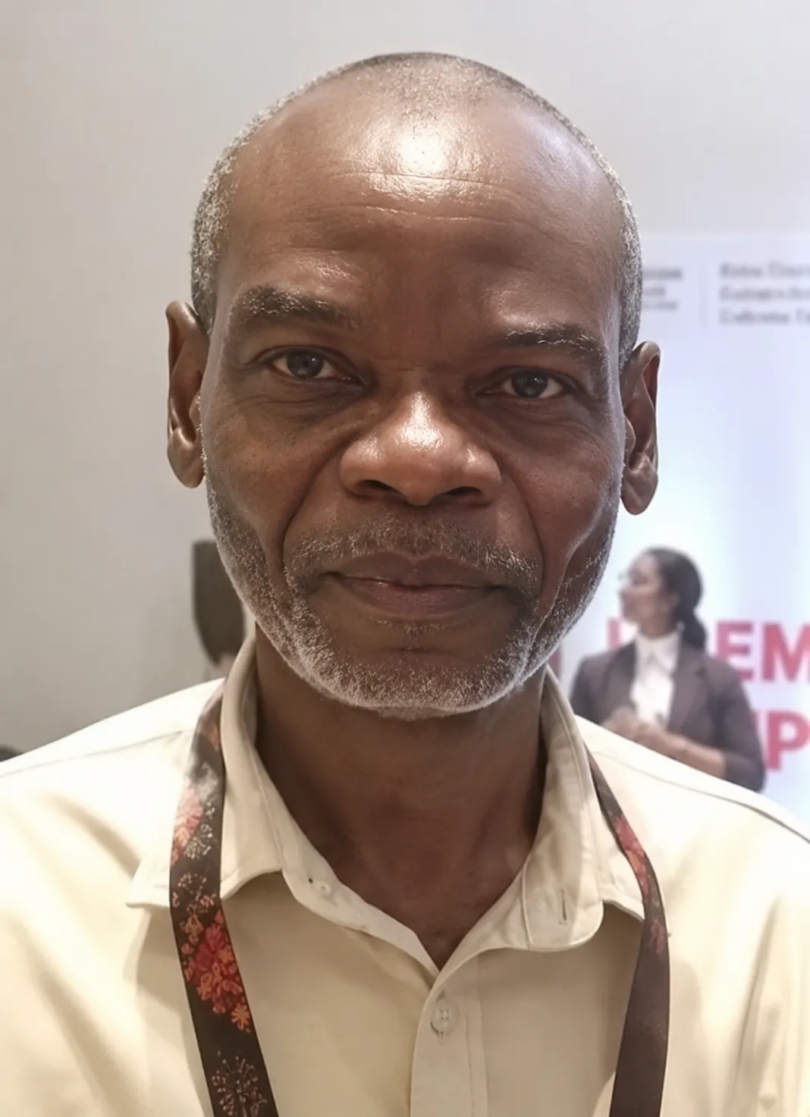
By Vivian Ihechu/NAN —
Mr Ayoola Olajide has lived most of his life in the shadow of a diagnosis that arrived before he could understand its meaning.
Born into a large polygamous family in Lagos, he was told the word “sickle cell” for the first time only after fainting at the finish line of a school race and waking up on a hospital bed in 1966.
That moment began a lifetime of pain, prejudice and persistence.
According to the World Health Organisation, sickle-cell disorder (SCD) is a serious inherited blood disorder caused by a mutation in the HBB gene, leading to abnormal, sickle-shaped red blood cells that block blood flow and cause severe health complications.
In 2021, an estimated 7.74 million people lived with SCD globally, with 515,000 new births — primarily in sub-Saharan Africa, which accounts for nearly 80 per cent of global cases.
According to the Sickle Cell Foundation of Nigeria (SCFN) and Federal Ministry of Health and Social Welfare, Nigeria bears the highest global burden of Sickle Cell Disease (SCD), with over 40 million carriers and roughly 150,000 babies born with the condition annually.
The ministry noted that no fewer than 100,000 of these infants died before their fifth birthday, representing eight per cent of the nation’s total infant mortality
SCD causes acute pain crises, anaemia, stroke, infections, kidney failure, and pregnancy-related risks.
It is classified as a top non-communicable disease (NCD) and a critical public health emergency.
Frequent pain crises, jaundice, malaria and repeated hospital stays made Olajide’s childhood different from his siblings.
“My father had 31 children; I was the only one with sickle cell anaemia,” Olajide remembered.
He narrated that he was often left behind when the boys went to the farm and, because of misconceptions, family and community sometimes attributed his illness to witchcraft or the “evil eye.”
Even simple cruelty followed: classmates and neighbours accused him of malingering and laughed at his slow physical growth.
The heaviest burden fell on his mother, who spent sleepless nights tending to him during crises.
Yet school, examinations and repeated hospital admissions did not stop Olajide.
He completed his education, became a journalist and in 2008 founded African Sickle Cell News & World Report and the Sickle Cell Education Centre — platforms that make information and free copies of the magazine available to anyone with internet access.
“I once ended a serious relationship because of genotype incompatibility,” he told the News Agency of Nigeria (NAN), illustrating personal sacrifices many living with sickle cell faced when choosing partners, raising children and planning families.
In spite of challenges, Olajide is married with children.
However, he noted that he once ended a serious relationship due to genotype incompatibility, illustrating how reproductive decisions affected warriors
On managing the condition, he said simple routines kept him going.
Olajide said his greatest health tonic was water.
Beyond that, management involved regular check-ups, vaccinations (pneumococcal, hepatitis B), malaria prophylaxis, and avoiding extreme temperatures.
He also noted that on the average, the cost of living and managing SCD was high.
On the average a pack of hydroxyurea would cost about ₦7,000 and many warriors needed multiple packs monthly.
Folic acid, Vitamin C and pain medications like cocodamol per sachet were also required as part of their treatment/management regimen.
This is excluding the cost for haematologist consultations, routine blood tests and/or hospital admission if there was severe crisis.
The costs also varied depending on whether it was a private or government-owned health facility.
Current treatments for SCD in Nigeria included hydroxyurea (to reduce crises), folic acid supplements, analgesics for pain, antibiotics for infections, and occasional blood transfusions.
Hydroxyurea increases fetal haemoglobin, preventing sickling.
During severe crises, patients receive pain management, oxygen, hydration, and sometimes exchange transfusions.
The only proven cure is bone marrow or stem cell transplant.
In Nigeria, bone marrow transplant is available mainly in Lagos, costing an estimated ₦80 to ₦85 million, excluding donor testing.
Gene therapy, recently approved in the U.S. (exagamglogene autotemcel and lovotibeglogene autotemcel) is potentially curative but too new and unavailable in Nigeria.
For Olajide, his advocacy was born out of experience.
He counsels patients, educates the public, and fights stigma that persists across Nigeria: the false ideas that people with sickle cell are lazy, incapable or unlikely to live long, productive lives.
Calling on government, Olajide urged for stronger sickle cell services, reliable access to medication and blood, support for newborn screening, and wider public education.
While the Federal Ministry of Health had established six Sickle Cell Centres at Federal Medical Centres across geopolitical zones, the country still lacked coordinated neonatal screening, leading to preventable complications and death.
This is as WHO recommended integrating SCD care into primary health systems and ensuring access to essential medicines.
According to him, newborn screening remains critically important but lacks a coordinated national programme, leading to late diagnosis.
NAN reports that Nigeria’s National Guideline for Sickle Cell Disease adopts point-of-care testing (such as SickleScan®) as the first-line screening method at all healthcare levels.
Confirmation uses High-Performance Liquid Chromatography (HPLC) or Isoelectric Focusing (IEF).
Other tests include haemoglobin electrophoresis, sickling test, solubility test, and blood film.
Olajide also called on citizens to know their genotypes before marriage and to reject the stigma that isolated warriors.
He condemned stigmatisation of SCD warriors, calling for support to help them achieve their full potential.
For warriors, he encouraged them, saying, “Sickle cell has taught me to appreciate every day, remain grateful during difficult times and never lose hope.”
60 years after that hospital admission in Isale Eko, Olajide stands as living proof against a chorus of earlier doubts.
He speaks not only as a survivor but as a campaigner shaping how Nigeria understands and supports the millions affected by sickle cell disorder.
NAN