
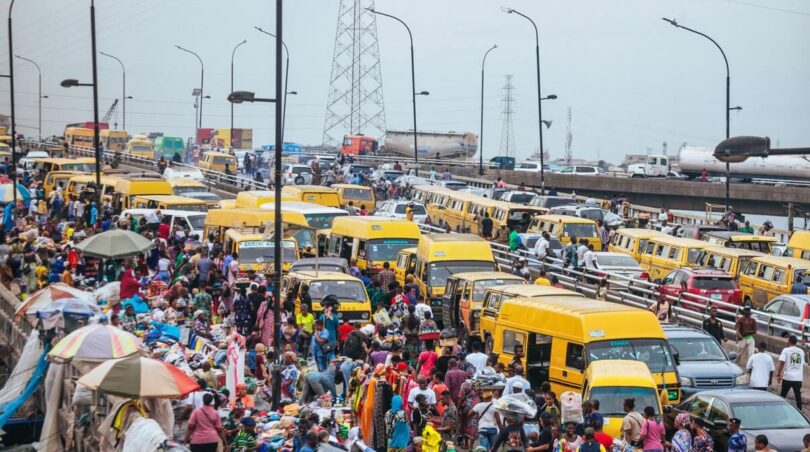
Long-lease demand in the Lagos Mainland market is increasingly being driven by price-to-location value, according to the co-founders of RV Property Co., a company with an active pipeline of long-lease residential developments across Lagos.
The co-founders, Abdulbhaqi Al-Amin and Olabanji Olatomiwa, disclosed this during an exclusive chat with Naijaonpoint.
They noted that the Lagos Mainland market, which includes locations such as Ikeja, Somolu, Surulere, Yaba, and Gbagada, benefits from proximity to business districts and commercial hubs, where reduced commuting pressure supports residential demand.
Al-Amin attributed Lagos Mainland’s stronger long-lease demand to its relatively better price-to-location balance compared to Lagos Island. According to him, this price-to-location ratio offers a more accessible entry point while still delivering strong rental viability.
He further stated that major Mainland hubs such as Ikeja, Surulere, Yaba, Somolu and Gbagada continue to drive sustained demand due to their accessibility and proximity to commercial activity.
Olabanji Olatomiwa, the other co-founder, noted that demand is largely driven by middle-income earners, including entrepreneurs, business owners and salaried professionals.
He further explained that long-lease properties are typically priced at about 30–40% of outright ownership value, making them attractive for both investors and end-users seeking lower entry costs and income potential.
In a report by RV Property Co. titled “Long Lease: The property option Lagos has been sleeping on,” it categorised long-lease participants into three main groups based on their financial goals and usage patterns.
These classifications highlight how different buyers interact with the 17-year lease (sometimes 18 years) structure across Lagos residential corridors.
The report also included projections showing how long-lease properties may perform over time under assumed rental growth patterns.
For instance, a one-bedroom apartment in Surulere priced at N11.5 million is projected to generate increasing rental income from N1.7 million in 2024 and 2025, with 15% growth every two years from 2026, running through a 17-year lease ending in 2040.
Another example shows a studio apartment acquired for N8 million, generating about N29.45 million in total rent over 18 years, based on projected occupancy and rental growth assumptions.
House rents across Nigeria have continued to rise in recent years, reflecting broader cost-of-living pressures and housing shortages.
According to the spending analysis section of Risevest’s The Cost of Living Report 2025, rent is the second-largest monthly expense for Nigerians, with households spending a median of N75,000 monthly on accommodation.
In Nigeria, rent is typically paid annually, meaning the monthly estimate reflects a breakdown of yearly housing costs across urban households.
For example, earlier Naijaonpoint reporting showed that 2-bedroom flats in Ikoyi and Banana Island can exceed N15 million annually as of 2025, with even higher rates in Eko Atlantic.
This broader pricing pressure continues to reinforce interest in alternative ownership models like long-lease arrangements, particularly on Lagos Mainland, where entry costs remain comparatively lower.