The West African Telecommunications Regulators Assembly (WATRA) has warned that incidents of submarine cable disruptions are exposing a major weakness in a regional digital economy estimated to be worth as much as $150 billion.
WATRA Executive Secretary, Aliyu Aboki, disclosed this during the International Submarine Cable Resilience Summit held in Porto, Portugal, noting that existing network capacity across the region lacks adequate resilience.
He made a specific reference to the disruptions recorded off the coast of West Africa in March 2024, which affected digital economic activities across the sub-region.
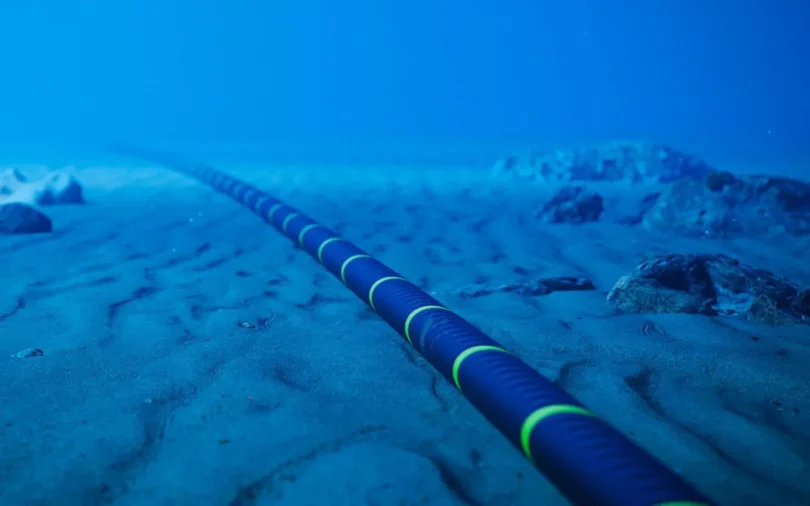
According to him, despite multiple international cable systems serving West Africa, including WACS, ACE and MainOne, the March outage significantly weakened connectivity for several days, slowed banking operations and disrupted cloud-dependent businesses across multiple countries.
Aboki noted that internet traffic in affected countries declined by more than 50% immediately after the incident, while restoration took several days in some locations, exposing both physical repair limitations and administrative delays.
For West Africa, with a combined GDP of more than $800 billion, the economic implications remain significant. Over 95% of global internet traffic is transmitted through submarine cables, meaning outages often result in failed transactions, lower productivity and weaker investor confidence.
He explained that while cable faults globally are often caused by fishing activity, anchoring or seabed movement, the March 2024 incident stood out because several cables serving the region were damaged at the same time, overwhelming existing backup systems.
Aboki also identified what he described as a structural mismatch, worsening the impact of such incidents.
According to him, while cable networks operate regionally, governance structures remain largely national, with differences in permitting processes, emergency response systems and cable protection rules across countries leading to delays in customs clearance, port access and cross-border coordination.
He noted that repair costs in the region are already high, with a single cable repair estimated at between $1.5 million and $2 million, largely due to the mobilisation of repair vessels from distant locations such as Cape Town.
In more complex incidents involving multiple cable failures, costs can rise to as much as $8 million. Limited availability of specialised repair vessels within Africa also contributes to slower restoration timelines.
To address the challenge, Aboki called for submarine cable resilience to be treated as a regional public good, backed by coordinated policy frameworks across WATRA’s 16 member states.
He said priority measures should include faster landing and permitting processes, stronger and harmonised cable protection regulations, pre agreed emergency repair protocols, and improved data sharing on outages and restoration timelines.
He also urged governments and investors to integrate resilience into the design of new infrastructure projects by ensuring route diversity and reducing shared risks.
He added that, unlike more mature markets with multiple redundancies, much of West Africa’s digital economy operates in real time with little room for disruption.
In March 2024, Naijaonpoint reported that telecommunications companies, banks, and several other businesses in Nigeria suffered service outages for days as a result of damage to international undersea cables supplying them with connectivity.
The damage affected major undersea cables near Abidjan in Côte d’Ivoire and is causing downtime across West and South African countries.
The West Africa Cable System (WACS), the Africa Coast to Europe (ACE), MainOne, and SAT3 cables were affected.