
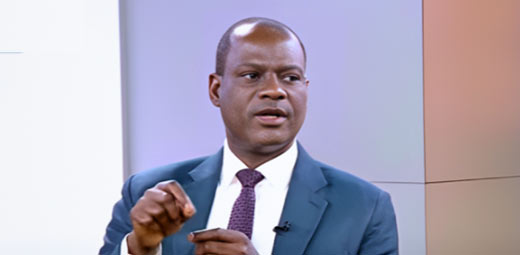
The federal government, yesterday, said it was in talks with petrol marketers and industry regulators to address concerns over fuel pricing and promote a more transparent pricing regime.
Minister of Finance and Coordinating Minister of the Economy, Taiwo Oyedele, made the comments while briefing newsmen after the Federal Executive Council (FEC) meeting chaired by President Bola Tinubu at the Council Chambers of State House, Abuja.
There had been mounting concerns over the refusal of petrol marketers to reduce fuel prices, despite the return of global crude oil prices to pre-US-Iran war levels, following the peace deal between the two nations. Crude oil prices now hover between $75 and $76 per barrel.
In the formal reaction to the issue of appropriate pricing of petroleum products in Nigeria, following the drop in global oil prices, the federal government also pledged to ensure fairness in all dealings in the downstream sector of the petroleum industry.
FEC also approved new reforms in the National Youth Service Corps (NYSC), with Minister of Youth Development, Ayodele Olawande, announcing that the service would henceforth be civilian-led.
Olawande disclosed that the scheme established 53 years ago, which had traditionally been headed by senior military officers, would now include professional trainings for corps members to enhance their employability.
Minister of Works, Senator David Umahi, told newsmen at the session that FEC had approved N2.078 trillion for road infrastructure across 10 states, in pursuit of the federal government’s drive to expand and modernise Nigeria’s transport network.
On his part, Minister of Aviation and Aerospace Development, Festus Keyamo, said the federal government had approved N34.398 billion for construction of an airstrip in Gboko, Benue State.
Keyamo said the contract awarded to CCECC Nigeria Limited, when completed, would serve agricultural operations, strengthen security, and support humanitarian and emergency medical services in the area.
Minister of Environment, Balarabe Lawal, who briefed newsmen on behalf of Minister of Marine and Blue Economy, Alhaji Gboyega Oyetola, said the council approved maritime infrastructure and safety projects worth about N286 billion to modernise port operations, strengthen maritime safety, and protect Nigeria’s marine environment.
Oyedele, who opened the session, said consultations were ongoing with market operators and regulators to ensure adjustments in the pump prices of refined petroleum products to reflect prevailing global crude oil prices in a fair and balanced manner.
He stated, “We are working to strike a balance between ensuring operators remain commercially viable and protecting Nigerians from unfair pricing.”
He explained that while marketers often responded to increases in global crude oil prices by raising pump prices on the basis of replacement costs, reductions in prices tended to be slower because of existing stock purchased at higher costs.
According to him, government’s objective is to strike an appropriate balance between safeguarding the commercial sustainability of operators and protecting consumers from exploitative pricing practices.
The minister stated that the Federal Competition and Consumer Protection Commission (FCCPC) and Nigerian Midstream and Downstream Petroleum Regulatory Authority (NMDPRA) were already addressing the issue within the framework of the Petroleum Industry Act (PIA).
Oyedele added that fiscal measures introduced by the Tinubu administration, including the suspension of Value Added Tax (VAT), excise duty, and the surcharge on petroleum products, had helped to cushion the effect of global energy price increases, keeping fuel prices lower than those in neighbouring countries.
He implored transport operators benefiting from the federal government’s investments in the Presidential Compressed Natural Gas (CNG) Initiative—including subsidised vehicle conversion kits—to pass the resulting cost savings on to commuters by offering more affordable transport fares rather than maintaining petrol-based pricing.
Olawande, who spoke on new reforms in NYSC, explained that the scheme would retain its one-year duration, while introducing flexible, skills-based training programmes within the service year.
Under the new arrangement, he said NYSC would be civilian-led, while the military would continue to oversee the security of corps members nationwide.
According to the youth development minister, “Graduates enrolled in specialised streams, such as the proposed Digital Corps, may spend additional time in training before deployment to their primary places of assignment to earn professional certifications that enhance employability and self-employment opportunities.”
He explained that the reforms were designed to consolidate youth development programmes under the NYSC for better coordination, monitoring, and accountability.
Olawande said the reform framework emerged from extensive consultation involving the youth development and education ministries, Office of the Special Adviser to of the President on Policy Coordination, and young Nigerians, with the objective of repositioning the scheme as a stronger platform for youth empowerment, skills development, and national integration.
He said the reforms were designed to strengthen national unity, promote skills development, create jobs, and empower young people.
Key components of the reform included the digitalisation of NYSC operations, enhanced security and welfare for corps members, improved orientation camp facilities through stronger partnerships with state governments, and redesigning of the passing-out parade into a formal graduation ceremony.
Others were introduction of professional identity certification for corps members and amendment of the NYSC Act to align the scheme with current national development priorities.
Shedding more light on the reforms, Special Adviser to the President on Policy Coordination, Hajia Hadiza Bala-Usman, said, “The safety aspect of our corps members still remains with the military, but the operational leadership of the NYSC will be civilian-led.
“The security will continue to be anchored and implemented by the Nigerian military, increasing the length.”
To give legal backing to the reforms, FEC directed Attorney-General of the Federation (AGF), in collaboration with Ministry of Youth Development, to initiate an amendment to the NYSC Act and its regulations to enable the immediate implementation of the approved reforms.
While acknowledging the challenge of brain drain, the presidential adviser explained that the government was focused on producing more graduates, particularly in STEM fields, and equipping them with relevant skills so they could contribute to national development, whether they remained in Nigeria or eventually returned with global experience.
Council also approved the establishment of a National Snakebite Treatment and Research Centre, alongside a package of health sector interventions valued approximately N73.9 billion. This was part of efforts to strengthen healthcare delivery and expand access to essential medical services nationwide.