
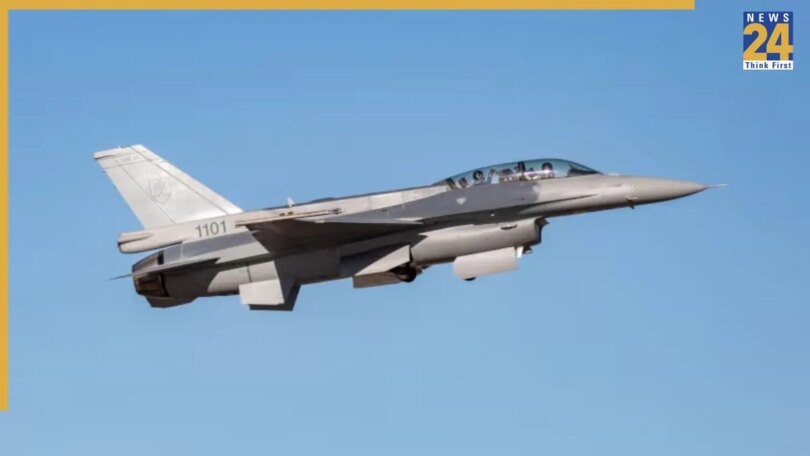
Have you ever wondered why fighter aircraft are called names like F-16 Fighting Falcon, Su-30MKI or Dassault Rafale instead of simply being numbered? Fighter jet naming follows a structured system and every letter and number has a specific meaning.
Meaning behind the letters

2 / 6
Many countries, especially the United States, follow the Mission Design Series naming system. In this system, the first letter represents the aircraft’s role. For example, ‘F’ stands for Fighter, ‘B’ for Bomber, ‘A’ for Attack aircraft and ‘T’ for Trainer.
What the numbers represent

3 / 6
The number that follows the letter usually indicates the aircraft model sequence. For example, F-16 Fighting Falcon and F-35 Lightning II belong to different fighter generations and models. The higher number often reflects a newer design.
What do extra letters mean?

4 / 6
Some fighter jets also carry additional letters at the end of their names. These suffixes indicate a special variant or upgraded version. For example, in F-15E Strike Eagle, the ‘E’ represents an enhanced version with expanded combat capabilities.
Naming based on manufacturers

5 / 6
In countries like Russia, fighter jets are often named after the company or design bureau that developed them. ‘Su’ stands for Sukhoi, while ‘MiG’ comes from Mikoyan-Gurevich. This is why aircraft such as the MiG-29 and Su-30MKI carry those prefixes.
Nicknames and project names

6 / 6
Apart from official designations, many fighter jets are also given memorable nicknames that reflect speed, power or aggression. Names like Eagle and Raptor are inspired by birds of prey. Before receiving official names, aircraft are often identified by project titles during development. For example, Advanced Medium Combat Aircraft or AMCA, is the project name of India’s upcoming fifth-generation stealth fighter jet.