Nigeria’s ambassador-designate to Mexico, Reno Omokri, has defended President Bola Tinubu amid renewed controversy over records held by the United States Federal Bureau of Investigation (FBI), insisting that FBI records should not automatically be interpreted as criminal records. The controversy followed claims surrounding the release of FBI and Drug Enforcement……
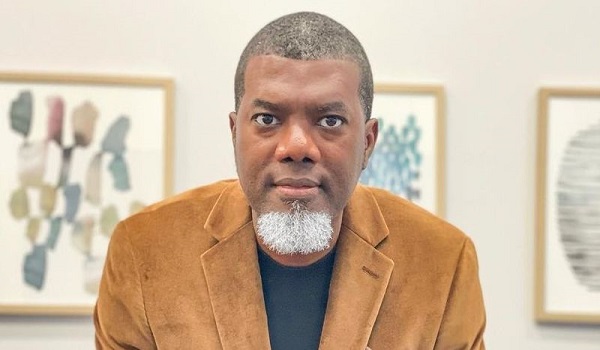
Nigeria’s ambassador-designate to Mexico, Reno Omokri, has defended President Bola Tinubu amid renewed controversy over records held by the United States Federal Bureau of Investigation (FBI), insisting that FBI records should not automatically be interpreted as criminal records.
The controversy followed claims surrounding the release of FBI and Drug Enforcement Administration (DEA) records linked to historical investigations involving Tinubu. The ongoing case is a Freedom of Information Act (FOIA) dispute over access to US government records, rather than a criminal trial against the President.
Omokri’s comments came after former National Human Rights Commission Chairman Chidi Anselm Odinkalu questioned his claims about DNA records, asking on X: “So, to apply for visa now, u have to provide your #DNA according to dude? This is beneath disgraceful. What kind of substance is @renoomokri on, pls?!”
Responding, Omokri said US diplomatic missions could request DNA tests in family-based visa applications, particularly where applicants are seeking visas alongside dependent family members.
“Thank you for your feedback. If you apply for a United States visa along with your family members who are dependent on you, as the President has done in the past, the Embassy of the United States in Nigeria regularly asks for DNA tests from parents. If you’re unsure, you can research it with an A.I. tool you trust or contact the Embassy of the United States directly.”
He said the practice was not limited to the United States, adding that Canadian and British missions also use DNA tests for family visa applications.
“This is not limited to the Embassy of the United States. The Canadian and British High Commission and other missions in Nigeria and other countries also use DNA tests for family visa applications.”
Omokri further claimed that the diplomatic missions of the three countries collect and share sensitive information as part of such processes.
“In the cases of the United States, Canada, and the United Kingdom, their diplomatic missions not only collect DNA evidence, but they also share sensitive data.”
Read Also: Reno Omokri Dismisses Reports Of FBI Criminal Records On Tinubu
According to him, such procedures have been in place in Nigeria for decades and are intended not only to address paternity concerns but also to protect potential victims of human trafficking.
“This has been the case in Nigeria for over 30 years and is not limited to Nigeria. It is done not only because paternity fraud is high in many countries, including, unfortunately, Nigeria, but it also serves to protect potential victims of human trafficking.”
Omokri also cited what he described as the case of a popular Afrobeat artist who had to provide DNA samples to the US Embassy for a family-based application.
“In fact, a popular Afrobeat artist has had to provide DNA tests to the US Embassy for a family-based application.”
The ambassador-designate also rejected Odinkalu’s suggestion that he was under the influence of drugs, saying he had never used narcotics or other intoxicating substances.
“I have never used drugs, narcotics, or any inebriating substances at any point in my life.”
Omokri, who described himself as surprised that Odinkalu was unfamiliar with embassy-mandated DNA tests, said he was aware of cases in which individuals discovered through such tests that they were not the biological fathers of their children and subsequently petitioned the National Human Rights Commission for redress.
“As a professor and former Chairman of the National Human Rights Commission, I am surprised that you do not know this, as I am aware of cases where individuals who only discovered that they were not the fathers of their children because of an embassy-mandated DNA test petitioned the NHRC for justice.”
He urged Odinkalu to focus on evidence rather than personal attacks.
“Also, it would be helpful if you and I could focus on facts rather than emotions and ad hominem attacks; we could provide a better example to younger Nigerians of how to have a sentient, fact-based, and dialectical conversation.”
The exchange comes amid a wider political dispute over the release of FBI and DEA records relating to Tinubu. A recent FBI court filing acknowledged that records sought in the FOIA case were compiled during an investigation of multiple individuals for drug-trafficking crimes, while the court proceedings have not established that Tinubu committed a criminal offence.
The Presidency has maintained that the case centres on access to and redaction of government records, while Tinubu’s legal team has challenged further disclosure on privacy grounds. The FBI and DEA have released 399 pages of records but withheld portions under exemptions provided by US law.