Nepal has intensified efforts to rescue more than 900 workers believed to be trapped inside hydropower project tunnels after devastating flash floods and landslides struck areas along the Nepal-China border. According to Al Jazeera, rescuers are focusing on about a dozen hydropower sites where tunnels have been blocked by massive……
Nepal has intensified efforts to rescue more than 900 workers believed to be trapped inside hydropower project tunnels after devastating flash floods and landslides struck areas along the Nepal-China border.
According to Al Jazeera, rescuers are focusing on about a dozen hydropower sites where tunnels have been blocked by massive deposits of mud, rocks and debris. Nepal has also accepted specialised assistance from India and China as authorities work to reach those still unaccounted for.
The disaster occurred on Wednesday after a glacier collapse triggered a massive surge of water, ice, rocks and mud across communities near the border. Nepal’s disaster authority said 903 people had been killed, while 4,247 remained missing.
Across the border in China’s Tibet region, at least 16 people were reported dead and another 546 missing after the flooding and mudslides.
Rescue teams have been working through the night with excavators and other heavy machinery to clear debris from tunnel entrances. Soldiers have also been using lights and detection equipment to search for possible access points.
“A large amount of debris has been deposited, and that is posing us a big challenge to open the tunnels,” Nepal Army spokesperson Raja Ram Basnet told Reuters.
“Our main focus is on opening the tunnels.”
The scale of the disaster has complicated efforts to identify victims, with hundreds of bodies recovered and buried in shallow graves after being swept down the mountains by the floodwaters.
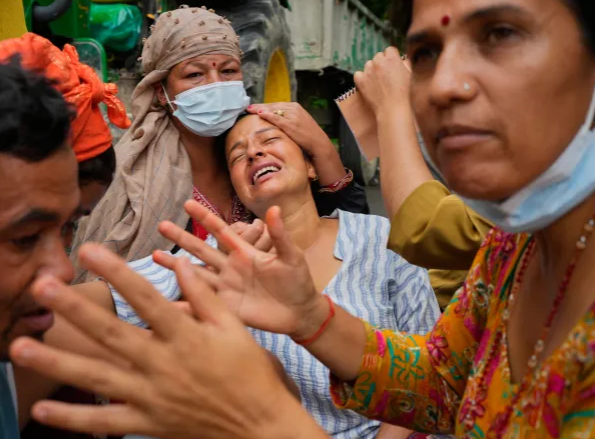
Hospitals in Kathmandu have also been overwhelmed, with morgues reaching capacity as relatives visit medical facilities in search of missing family members. Al Jazeera reported that about 500 workers affiliated with the Truck and Container Association were also missing, in addition to the hydropower workers.
Read Also: Rescue Hopes Rise as Nepal Army Reaches Flooded Tunnel
The Red Cross estimates that more than 90,000 people could have been affected by the disaster, which China has linked to the effects of climate change.
Prime Minister Balendra Shah described the floods as an “unprecedented and devastating natural disaster” and said authorities were still struggling to establish the full scale of the damage.
“Despite the adverse weather, difficult terrain and continuing risks, we are moving forward with determination to save the lives of our citizens,” Shah said in a Facebook post, adding that nearly 21,000 security personnel, alongside civilian workers and volunteers, were taking part in rescue operations.
Although access has been restored along several roads and highways, major infrastructure damage continues to hinder relief efforts. Al Jazeera reported that almost “40 kilometres of roads have been absolutely swept away”, creating additional difficulties in delivering assistance to affected communities.
China has deployed more than 2,100 rescue workers and allocated at least 220 million yuan ($33 million) for relief operations, state broadcaster CCTV reported. Equipment and supplies have also been airdropped to rescue teams, while Chinese soldiers have used life-detection equipment to search for missing people.
Beijing said 261 foreign nationals from 23 countries remained unaccounted for in Tibet.
“President Xi Jinping, according to state media, has called for all-out efforts to rescue those missing in the mudslide, and this is the second time that the president has made such a call,” Al Jazeera correspondent Katrina Yu reported from Beijing.
“So this seems to be the Chinese leader’s effort to call on people, not only to continue their efforts, but redouble their efforts even as things are looking grimmer and grimmer.”
China has sent nine tunnel-rescue experts to Nepal and provided satellite information to Nepalese authorities. Although Nepal has said it does not need general foreign assistance for search-and-rescue operations, it has accepted specialised support from India and China because of their expertise in tunnel rescues.
Rescue operations have been suspended several times since Friday because of poor weather and concerns over a lake formed along the Nepal-China border. The lake has begun overflowing into Nepal’s rivers, raising fears that further flooding could endanger rescue workers and communities.
Weather conditions improved on Monday, allowing rescue operations to gather pace. Narendra Pariyar, the district administrator of Rasuwa, one of the worst-hit districts, said rescue efforts were continuing as authorities worked to locate the missing workers.