
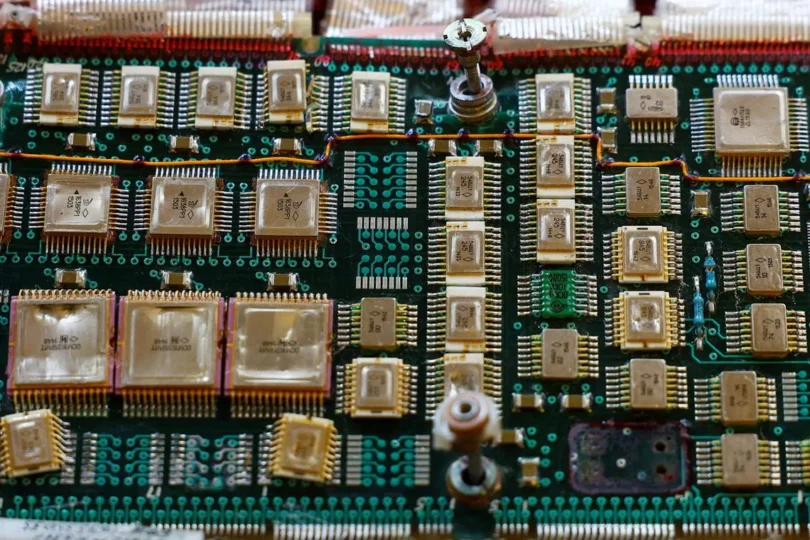
KYIV, May 29 – A Russian Oreshnik missile fired at Ukraine in January appears to have been made nine years ago and contains only Russian and Belarusian components, Ukrainian experts said on Friday after examining fragments of a weapon Russia says is a game-changer.
The Oreshnik, which Russia first used against Ukraine in 2024, is a nuclear-capable missile with a range of over 5,000 km (3,100 miles). Russian President Vladimir Putin has said the Oreshnik is impossible to intercept, though many Western experts have questioned that assertion.
Debris recovered from the small number of Oreshnik missiles fired by Russia during its war in Ukraine has helped Kyiv to learn more about the weapon – and to question some of the hype around it.
Ukrainian authorities assess the Oreshnik to be a modernised version of the older RS-26 Rubezh missile which was first successfully test-launched in 2012.
At a presentation of electronics recovered from Russian missiles and drones, a Ukrainian missile forensics expert said on Friday that the Oreshnik recovered in January had been assembled in 2017 from components dating to 2016 or earlier, all of them made in Russia or its ally Belarus.
“We were rather surprised, because they say that this is a very new missile, but if you look at the year of assembly, it says 2017,” said the expert, who identified himself only as Petro for security reasons.
AT LEAST THREE STRIKES
Russia has struck Ukrainian territory with the Oreshnik at least three times during the war, including a town near Kyiv during a heavy air assault on May 24.
Vladyslav Vlasiuk, Ukrainian President Volodymyr Zelenskiy’s sanctions adviser, said the surviving electronics were recovered from an Oreshnik that hit the western city of Lviv in January. Vlasiuk said the missile debris from the latest Oreshnik strike this month was still being studied.
He also said that Ukrainian investigators were observing a greater degree of substitution of western missile components for Chinese ones, which Vlasiuk said appeared to be a “forced” substitution.
Although Ukraine’s Western allies have restricted the export of electronics which could be used in missiles to Russia, Western chips supplied through illicit means are still often found in Russian missiles and drones.
Ukraine has long put pressure on Western countries to toughen enforcement against electronic component flows to Moscow. REUTERS