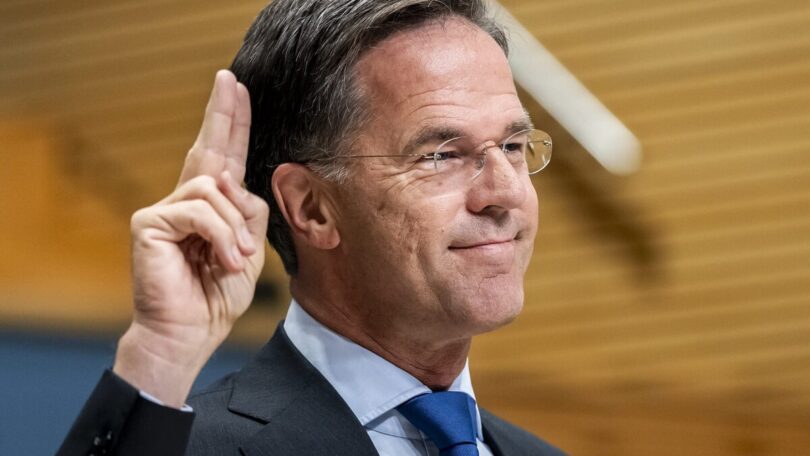
Former Dutch prime minister Mark Rutte has defended the nationwide curfew and repeated school closures introduced during the COVID-19 pandemic.
Rutte made the comments while giving evidence to a parliamentary inquiry examining how the Dutch government handled the health crisis.
He said the curfew introduced in January 2021 became unavoidable because most other restrictions were already in place.
“There was no alternative,” Rutte told the inquiry.
The nighttime curfew began on January 23, 2021. It was the first nationwide curfew introduced in the Netherlands since the Second World War.
It remained in place until April 28, 2021, not until the end of 2021 as stated in the original DutchNews report.
Rutte said the government understood that the measure seriously restricted people’s freedom of movement. However, officials relied on models suggesting it could reduce infections and prevent hospitals from reaching “code black.”
Code black is the point at which hospitals become so overwhelmed that healthcare workers may have to decide which patients can receive treatment.
Several earlier witnesses questioned whether the curfew was effective and whether the government properly explained the reasons for introducing it.
The restriction also sparked protests and riots in several Dutch towns and cities.
Rutte defended the decision to close schools again in December 2021. He said the Delta wave had already forced the government to introduce restrictions before the highly infectious Omicron variant appeared.
Officials did not initially know whether Omicron would cause illness as severe as Delta. Rutte said the government feared that hospitals could become dangerously overwhelmed.
The former prime minister also discussed disagreements with then-health minister Hugo de Jonge over vaccinations.
Rutte said he was willing to receive the vaccine publicly to set an example, but believed vaccination should remain an individual decision. De Jonge reportedly wanted the government to place greater pressure on people to get vaccinated.
Rutte argued that tougher restrictions might not have been required if everyone had followed basic measures such as physical distancing, ventilation and proper hygiene.
The inquiry is examining decisions made by the Dutch government during the pandemic. Rutte’s evidence represents his defence of those decisions and is not the inquiry’s final conclusion.