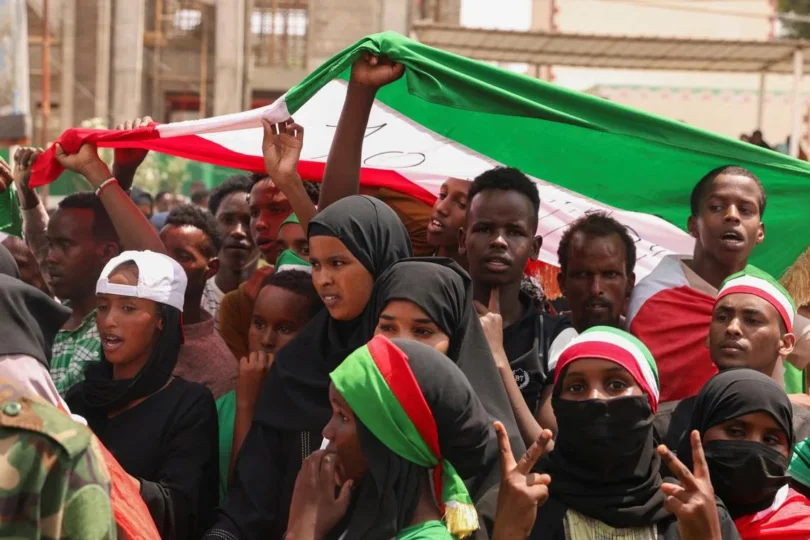
MOGADISHU – Somaliland celebrates its first independence day on May 18 since being recognised as a country by Israel, but not everyone in the breakaway region of Somalia has welcomed its new ally.
Thousands gathered in the capital Hargeisa for a military parade, traditional dances and political speeches, with added excitement this year following Israel’s move in December to recognise Somaliland’s independence – the first country to do so since it declared its separation from Somalia in 1991.
Yet the hope that others might quickly follow suit – including the United States, United Arab Emirates and Ethiopia – has not come true.
Those countries see Somaliland’s value – it has a strategic military and trade position on the Gulf of Aden, very close to Yemen, and is a haven of democracy in a volatile region.
But secession is strongly opposed by the African Union and other partners, who fear it could encourage other breakaway movements.
And while most Somalilanders are overjoyed with Israel’s recognition, there have been dissenting voices among its almost entirely Muslim population.
There were large protests in the western city of Borama after the recognition was announced, with dozens arrested and wounded by security forces.
Religious scholars were also arrested for sermons condemning ties to Israel, and youths detained for waving the Palestinian flag.
Nor does Somaliland fully control the territory that it claims.
North East State favours union with Somalia and broke away from Somaliland in August 2023 following a months-long conflict in which thousands were killed and some 250,000 displaced.
Somaliland’s army shelled hospitals, schools, mosques and civilian neighbourhoods during the war, according to Amnesty International, which said its actions amounted to war crimes.
“The conflict will reignite,” Mr Ahmed Ali Shire, a North East State Member of Parliament, told AFP by phone from the city of Las Anod where the scars of war are still fresh.
He said Somalia’s civil war of the 1980s had been fuelled by foreign interference, and the same dynamic was being repeated with Israel’s presence in Somaliland.
“More than half of the territory Somaliland claims is actually administered by North East State,” said Mr Ali Shire.
Israel’s recognition derailed peace talks due to start in 2026 to formalise a ceasefire and exchange prisoners.
Mr Ali Shire was outraged to see Somaliland’s President Abdirahman Mohamed Abdullahi, known as “Irro”, present a map of the territory to the visiting Israeli foreign minister that included North East State.
“Then we had no doubt that war is imminent,” he said.
Locals “fear a new war is coming,” added Ms Amina Guhad, chair of the North East State women’s association, which works with families affected by conflict.
“Maybe the Israelis think they can help Somaliland by force. But everyone will defend their rightful lands like how the Palestinians are defending their land,” she told AFP.
In Somaliland’s heartland, many now love Israel.
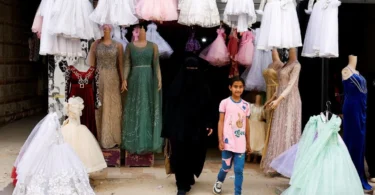
When AFP visited the capital Hargeisa during Ramadan, almost everyone was happy to sing its praises, with many displaying Israeli flags in their homes and businesses.
But there are a few dissenting voices.
Hargeisa resident Dahir Omar Bile, 42, fears Israel’s reputation from the war in Gaza could hurt the cause.
“Somaliland fought hard for its independence but I can’t trust (Israeli Prime Minister Benjamin) Netanyahu. He’s killed children the same age as my own,” said Mr Bile, who grew up partly in an Ethiopian refugee camp during the civil war of the 1980s.
“When Israel recognised us, everyone in Somaliland assumed the West would do the same – that’s why a lot of people celebrated. But more recognition has not followed and I think a lot has to do with Israel’s international isolation,” he added.
Many also worry about threats from Islamist militants, including Yemen’s Iran-backed Houthi rebels who have threatened to strike Somaliland if Israel establishes a military presence as expected.
“The Houthi threats have many people scared,” said Mr Bile. AFP