
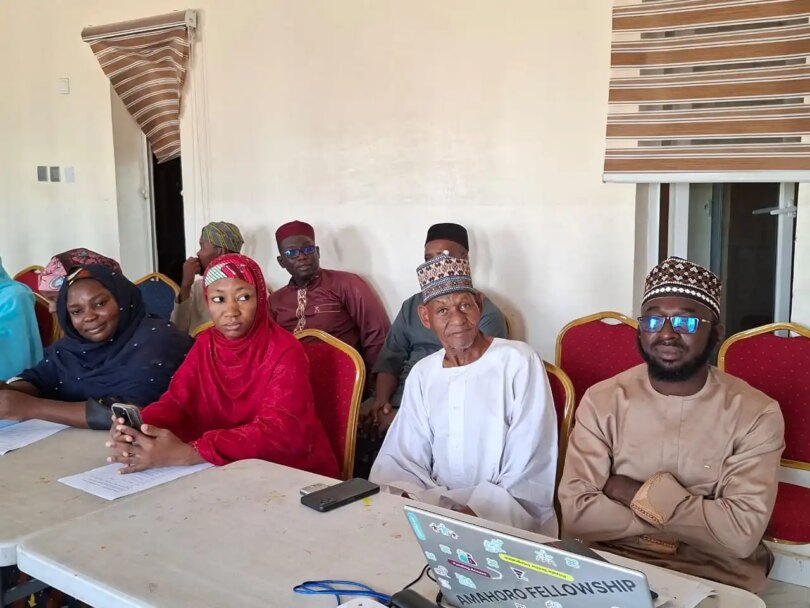
Stakeholders from government agencies, traditional institutions, religious bodies, civil society groups, security agencies and the media have called for stronger male involvement in promoting gender equality and ending gender-based violence in Kano State.
The engagement, convened on Thursday by the Centre for Information Technology and Development (CITAD) under its Male Feminist Project, brought together participants to examine practical ways men can become active allies in protecting women’s rights and dismantling harmful social norms.
Speaking during the dialogue, Male Feminist Project Officer, Sani Saidu Muhammad, said the initiative aims to transform conversations on gender violence into concrete community-driven actions.
He noted that engaging men as advocates for women’s safety remains critical to addressing the persistent abuse experienced by women and girls.
“This dialogue is about building responsibility among stakeholders and encouraging men to become allies to women. We want participants to return to their communities with practical solutions that will reduce abuse,” he said.
Muhammad explained that the intervention is being implemented regionally across Nigeria, with the North-West phase covering Kano, Kaduna and Jigawa states.
According to him, despite existing legal frameworks protecting women, weak implementation continues to undermine justice for survivors.
“The laws exist, but enforcement remains a challenge. Until perpetrators are consistently held accountable, gender-based violence will continue to thrive,” he added.
Representing CITAD’s Executive Director, Haruna Adamu Hadejia linked the persistence of violence against women to declining social empathy and socio-economic pressures within communities.
He urged society to prioritise dignity, respect and equality for women, stressing that gender justice cannot be achieved without collective responsibility.
“If people imagine their own daughters or sisters as victims, they will understand why harassment must stop. Everyone must be equal before the law, regardless of status or influence,” he said.
A participant, Habiba Usman Hassan, described the dialogue as a necessary feminist intervention that recognises women as the most affected victims of gender-based violence while encouraging shared societal responsibility.
She called for stronger institutions and consistent collaboration among stakeholders to protect women and girls from abuse.
“Violence affects both men and women, but statistics show that women make up the overwhelming majority of victims. We must unite to confront sexual, emotional, economic and even digital violence,” she stated.
Participants emphasised that sustained engagement with community leaders, policymakers and security institutions would help challenge patriarchal attitudes, strengthen accountability mechanisms and promote safer environments for women across the North-West.
They expressed optimism that the Male Feminist approach would encourage men to champion gender equality, support survivors and advance a more inclusive and just society.
What do you think about this?
Drop your opinion in the comment section.
FOLLOW US & Share this with someone who needs to see this.