By Isa Isawade
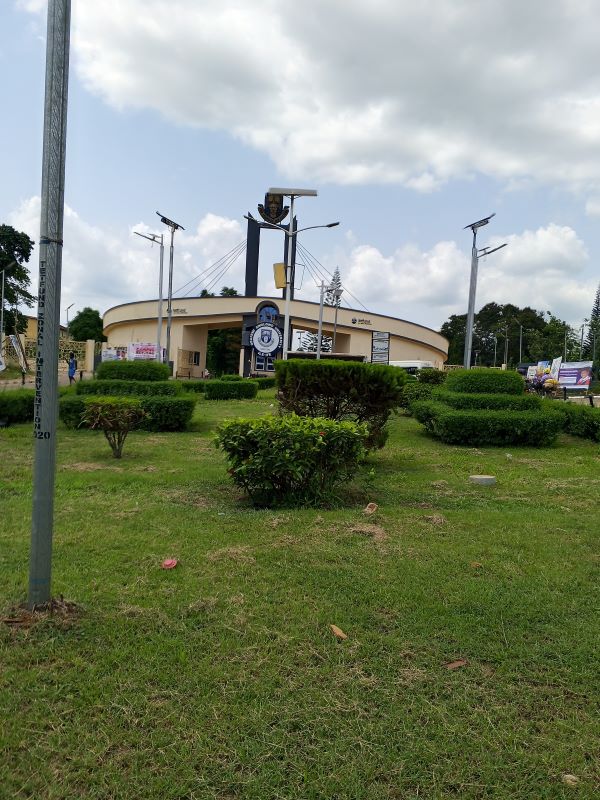
The transportation crisis at Obafemi Awolowo University (OAU), Ile-Ife, Osun State, remains unresolved following a 72-hour lecture boycott launched by the Students’ Union on Tuesday, April 14, 2026. The boycott was triggered by frustrations over the university’s newly introduced campus transportation system.
Students argue that while the initiative is commendable in principle, its implementation has caused severe hardship. They cite long queues, overcrowding, and difficulty accessing transport, particularly to off-campus areas. According to them, the number of buses, tricycles, and drivers is grossly inadequate. The union is demanding either a return to the old system where Town-Gboro buses and commercial motorcycles popularly called Okada operated freely on campus or a hybrid arrangement until the new system is properly managed.
University authorities, however, insist there will be no reversal. They argue that the old system compromised safety, caused injuries, and disrupted the serenity of the academic environment. The administration points to the November 2025 donation of mass transit buses and eco-friendly tricycles by Nigeria’s First Lady, Senator Oluremi Tinubu, as a turning point in modernizing campus transport.
Despite expectations that negotiations would resume after the boycott ended on Thursday, April 16, both sides remain entrenched. On Friday, April 17, PM NEWS spoke with the Students’ Union Public Relations Officer, Oreoluwa Joseph Olowosile, and the University’s Public Relations Officer, Abiodun Olarewaju, who reiterated their respective positions.
NO RETREAT, NO SURRENDER – Olowosile
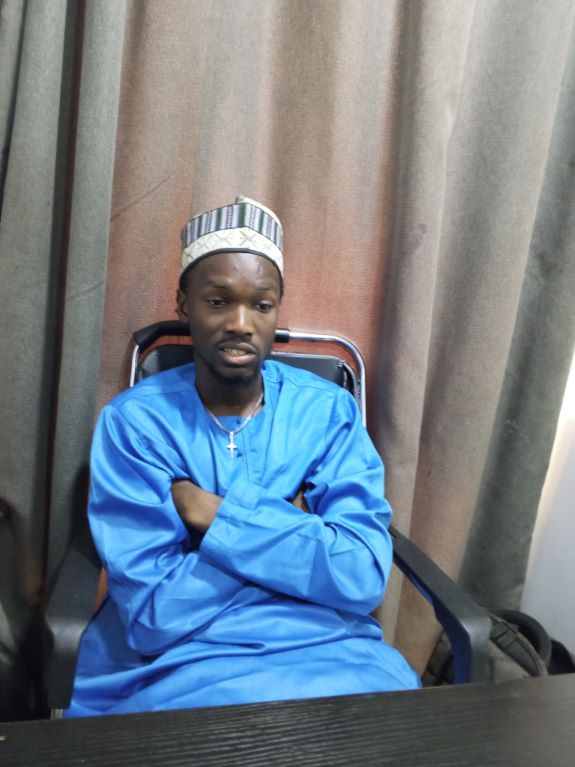
PM: What is the update regarding the transportation crisis for which you boycotted lectures for three days?
Ans: First of all, I will love to reiterate the fact that the students’ union, proudly led by the person of Mr Adelani David popularly and politically known as Itabi, is not and will not be against innovation. We are a very lovely set of ideological persons and we are forward thinkers. I remember we were very graciously happy accepting the tens of tricycles and buses duly donated by our mother, First Lady of this great country in person of Senator Oluremi Tinubu. Honestly, we are so grateful for this innovation. We are very proud. It’s one of those rare campuses that have such technologically based means of transportation, and we are proud to have that. But the problem is implementation. We’ve had this lovely donation since November/December and we expect, as a forward-thinking university, that processes and statistics for implementation should have been going on to activate in full swing without hitches. But shockingly to us, we got to realise that the implementation, probably under tension or duress or whatever, began in the month of April. This is quite sad for our students. In fact, this is a community of over 50,000 persons- students, non-students, indigenes, academic staff, non-academic staff and businesspersons. The population of our students alone in this community is nothing less than 40,000. So, we are the ones who bear the largest brunt of the punishment, the pain and the sacrifices that have to be made just because we are here for one reason- academics.
We initiated lots of conversations with the school management, the transport management and we came to a platform where we understood that okay, the school was trying to curb some discrepancies and issues that have been caused by the former means of transportation. But, our own idea is this- you can’t totally cut things off without sufficiency. If you are bringing in a new infrastructure, it must be able to adequately, emphasis on adequately, balance up with whatsoever deficiencies that must have been there before your infrastructure. So, a situation whereby we’ve been having over 300 registered bike men popularly known as Okada and we’ve been having about 150 14-seater commercial buses we call Town-Gboro and you are eradicating this means of transportation and replacing them with just roughly 80 ten-sitting capacity buses and 30 tricycles of six and four sitting capacity. You don’t expect these limited figures to suffice for the hundreds of means of transportation. Yes, we cannot deny the fact that these previous means of transportation have had some negative impacts on our students- a situation where you lose a student because of carelessness of a driver or commercial motorcycle rider or a student falls off a Town-Gboro because they don’t close their doors and all that. The recklessness of these men cannot be denied and the life of every single student matters. An injury to one is an injury to all. But you do things in phases. That’s the point we have been trying to make known to the school, and we are a union. The students voted for us, not the management. So we are saddled with the responsibility of ensuring their well-being, keeping them very active and ensuring that they are good.
We appreciate that there is virtue in respect, but there is a point for respect and there is a point of pulling the strings of being a union. Basically, that is what we’ve been doing. The student populace felt we have not been very active, thinking we were not feeling their pain but we are in it together. I buy tickets too. In fact, I buy in bulk because I do giveaways once in a while. So, it’s not like we don’t know what our students are going through. It is also painful to us as union officials. Before, I could just take a bike from off campus, and he drops me in front of the Students’ Union Building where my office is. But now I have to take bike to campus gate and wait to get a bus to take me to my bus-stop. So, we are affected also. A situation where you don’t plan well, there are bound to be crises.
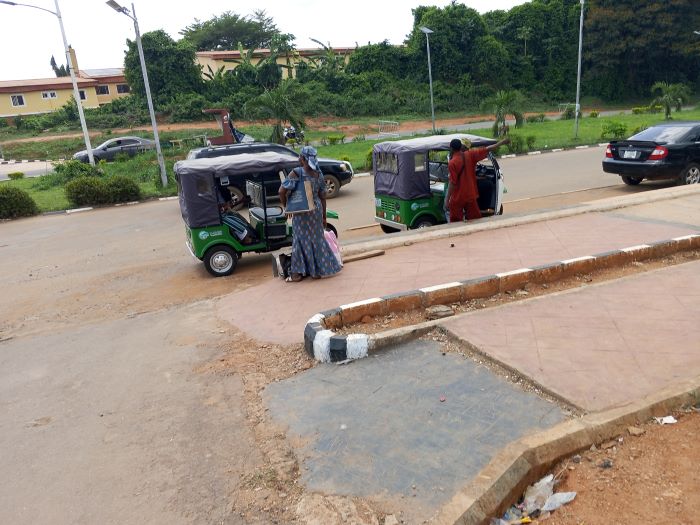
PM: When I got to the gate around 10 am, I saw some of the brand-new tricycles which have not been used at all parked at the garage idle. Why are they not on the road?
Ans: The information given to us is that about ten to twelve of those tricycles have been kept inactive for some time and they are electric tricycles, some of them are solar-powered. But the electric ones, because they have been kept inactive for some time, there are issues. Unfortunately, they are not Nigeria-based technology. To put them in order you have to get things from abroad. That is the phase in which some of them are.
As for the buses, we were very pleased to inform our fellow students through the office of the transport commission of the union that there’s going to be an empowerment of students in form of student drivers and there was a payment plan for that. But students would be students. You cannot expect students to be very active when they have academic engagements to attend to. So, the student drivers turned out not to be very effective. And you can’t expect men who have been driving their Town-Gboros on campus and off campus to suddenly park theirs and apply for a new private system that’s not going to favour them. That is what is going on. Some of the buses are not active due to inadequate drivers and some of the tricycles are also not working due to mechanical issues. And what did the union do? After consulting with the school and realising that the management would always be the management, we decided to call a congress. A section of the constitution confers the utmost power of decision making on the congress. Whatever decision is made by the congress stands. So, we arrived at a boycott, 72 hours of academic lectures so that our students, the community and the lecturers can all understand that these are the issues we are going through.
PM: What was the compliance like?
Ans: The compliance was 80% because students are feeling it, lecturers are also feeling it. Because of the fuel price hike resulting from global events, many lecturers too have resorted to taking public transport. We have a situation where you see your lecturer you were rushing to go and meet in the class also on queue at the bus-stop (laugh).
PM: The boycott ended yesterday (Thursday). Has the management called the SUG to a round table again?
Ans: As regards that, we are patiently waiting for the feedback. Yes, we had a meeting with the management on Wednesday, 48 hours into the boycott where we were reminded that pausing academic activities for as long as 72 hours poses a potential shut down of the school. We told them that yes, we are familiar with the sections of the law that says that and that is why we also did that to put you on your toes because what is the point of coming as early as 7am when you have lecture by 9 am and you are still on the queue for hours. There is a point for policy, there is a point for administration, there is a point for politics and there is a point of being rational. You cannot be using our students to experiment.
So, we’ve had that conversation and we’ve made our demands very clear before the Central Executive Council with the students’ representative leadership and the 16-man committee that was created at the level of the congress to follow up. We have made that known to them that this and this are our demands. The hybridisation of the previous transport system with the current transport system; re-introduction of new private policy persons that will implement more vehicular movement- that is, getting more persons that can bring in more tricycles and buses.
PM: You are calling for private investors?
Ans: Yes, private investors to this and the managerial procedures to be made better because students have begun to complain of extortion and other things. That’s a topic for another time. But we are looking into that. We were very hopeful that after ending the boycott yesterday, the school management would give us a call. We made it known in our release yesterday at exactly 8:30 pm that a congress will be called again to proffer a way forward we are going to activate if the school management doesn’t yield to our demands. We know it’s not easy for students to challenge management, they are in charge of your academic life.
PM: Have lectures resume fully or partially?
Ans: Yes, lectures were supposed to have resumed by 8 am this morning (Friday 17 April).
PM: How soon will the congress be convened?
Ans: Well, conversations are going on amongst the leadership of the union, amongst stakeholders and once that is made known, we will definitely let the public be aware.
PM: Beyond the transport crisis, are there other challenges students are facing here?
Ans: It’s a community here of different persons with different backgrounds, different understandings and ideologies. So, there are definitely going to be challenges. But on specific ones, yesterday I got a text from occupants of one of our hostels, complaining of the water outlet. Information and resources have already been put into that so as to restore normalcy because water is life. That aside, I think we are just starting the second semester. Every other thing is going on smoothly for now.
PM: How would you describe the relationship between the school management and the OAU Students’ Union Government before the current crisis?
Ans: (Laugh) Ha! I saw a statement on a news platform where the school management said we are a family (laugh). I am not going to deny that. I mean by God’s grace even before we got to the level of the union, on my own I have been able to build a very solid relationship with lecturers and the management. So, we can attribute the peace we have been experiencing to that. There is a saying that great wars are not settled on the battle field, they are settled on the round table of association. That is the ideology we have been pushing and InshaAllah that’s what we will keep pushing.
NO GOING BACK TO EGYPT – Olarewaju
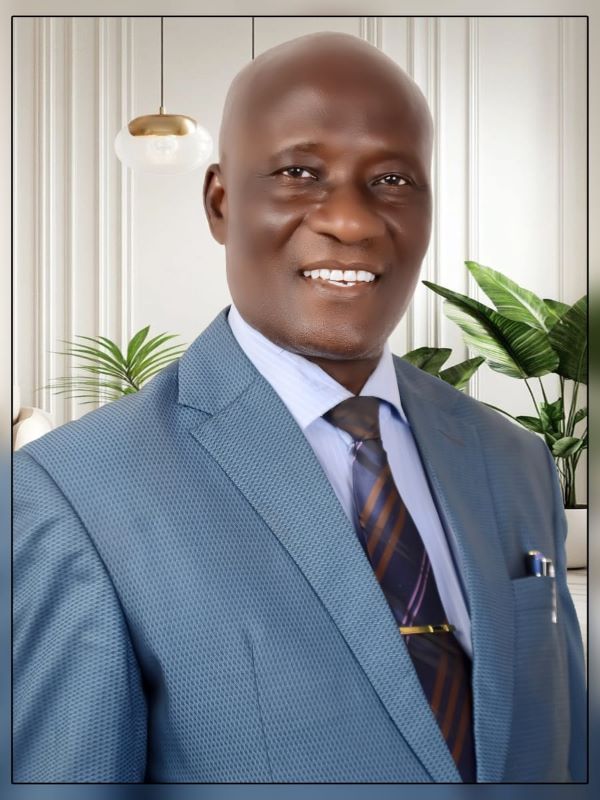
PM: What is the situation now regarding the transport crisis over which the Students’ Union declared a 72-hour lecture boycott?
Ans: Nothing negative has happened to the university. No demonstration. Only some of them decided to boycott lectures, a very microscopic unit of them while the overwhelming majority of them are attending lectures. Even till now you can see that everywhere is clean and cool. We don’t want a situation where they will pressure the management to bring back the backward system we have discarded. It’s only in OAU that Okada operated. It would not happen in other universities. Look at the University of Lagos; the University of Ibadan, and all other universities in the Southwest, you cannot find any of them with such a system. We also want our environment to be an ideal academic environment. We want it to be cool and tidy.
PM: The union also commended the new innovation, but they want the school authorities to make available sufficient units of the vehicles and tricycles. They maintain the existing units are grossly inadequate. Is their point invalid?
Ans: You do not call a dog bad name in order to hang it. Her Excellency, the First Lady of the Federal Republic of Nigeria, Distinguished Senator Oluremi Tinubu (CON) gave us 50 mass transit buses. So, I don’t know what they mean by they are not adequate. What they claimed was that around 7 to 9 am they normally queue up. We told them that we have rush hours everywhere in Nigeria. In Lagos, the rush hours start from even 4 am till 9 am. In some other state capitals and cities, people have time they normally go to their offices, to their shops, to their business centers. You do not now use that as yardstick to say we should go back to old system. Even in U.S, in Britain, if you want to enter train you queue. What is the stress there? After 9 ‘O’ Clock, you see these buses idle- no more passengers, no more rush, no more stress. So, what are we saying?
OAU is within the Nigerian system and those who are there are majorly Nigerians. You cannot be holier than the Pope. We are all Nigerians, we all know the system we operate and we know how we operate it. If you have morning lectures like some of your colleagues do, you are bound to be having this kind of situation and it is not in all cases anyway. But the problem is you don’t want to queue at all. Even where they come from, don’t they queue, don’t they rush, and don’t they struggle to board vehicles?
PM: Now, what’s the management doing to make the students understand this so there won’t be a disturbance because they’ve threatened to stage protests if their demands are not met?
Ans: Let’s see how the whole thing goes. Let’s see what they want to do. I don’t want to react to speculation. Let’s see what they want to do and how we will tackle it.
PM: But are you engaging them?
Ans: We’ve always engaged our students. We are all stakeholders. In fact, they are part and parcel of the committee of this transportation. They have members there. Quote me, ask them. Everything we decided, we decided together.
PM: What about the tricycles, the union claims that some of them are not yet operational?
Ans: My brother, didn’t you see them on the road? You can’t see up to ten parked at the garage. The rest are on the road. Did you see passengers in rush boarding them?
PM: No but that may be because I came in around 10 am.
Ans: That is what I am saying, immediately after the rush hours vehicles will be available in abundance. You see the situation everywhere. Go to Ibadan, it’s the same thing.
PM: You are saying there’s no crisis here and no cause for alarm?
Ans: No cause for alarm in whatever form or guise. No cause for alarm at all.