
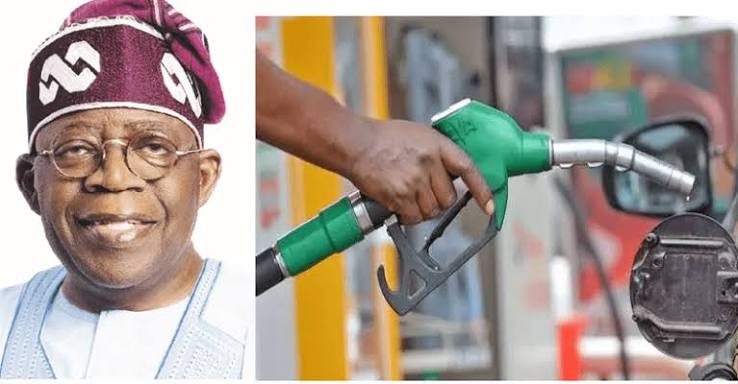
The Federal Government has disclosed that a substantial portion of the additional resources generated through its economic reforms since 2023 has been used to fund workers’ wages, service debts and finance strategic infrastructure….
The Federal Government has disclosed that a substantial portion of the additional resources generated through its economic reforms since 2023 has been used to fund workers’ wages, service debts and finance strategic infrastructure.
Finance and Coordinating Minister of the Economy, Taiwo Oyedele, gave the breakdown on Wednesday while presenting the government’s Nigeria’s Reform Scorecard in Abuja.
According to the scorecard, the removal of fuel subsidy generated ₦15.8 trillion in savings for the Federation between June 2023 and December 2025.
Of this amount, ₦5.4 trillion accrued to the Federal Government, while ₦10.4 trillion was shared among the states and local governments.
The Federal Government also generated an additional ₦3.1 trillion in independent revenue, principally through remittances from government-owned entities.
Another ₦11.9 trillion came from incremental borrowing.
Oyedele said the combined sources gave the Federal Government ₦20.4 trillion in incremental resources during the period.
He said the money was deployed alongside existing government revenue to finance ₦30.64 trillion in incremental expenditure.
The largest share, ₦9.39 trillion, went into wage adjustments, minimum wage increases and allowances for public servants.
Another ₦9.37 trillion was used to meet the rising cost of external debt servicing following the depreciation of the naira.
The government also spent ₦6.5 trillion on strategic infrastructure, according to the scorecard.
The minister said the figures demonstrated that the savings from subsidy removal were not simply accumulated by the Federal Government but were used to meet critical obligations and support the economy.
“The single largest expenditure line – wage adjustments, at ₦9.39 trillion – outstripped the Federal Government’s entire savings from subsidy removal,” Oyedele said.
He argued that this also showed that subsidy removal was not primarily introduced as a revenue-generating measure.
“The reform was never introduced for revenue purposes, but to address entrenched corruption in an artificially managed fuel subsidy and foreign exchange market,” he said.
Oyedele said 58 per cent of the Federal Government’s ₦20.4 trillion in incremental resources came from borrowing, 27 per cent from subsidy savings, while the remaining 15 per cent came from other revenue.
Against the ₦30.64 trillion in additional expenditure, he said about two-thirds was funded by the new resources, while approximately ₦10 trillion came from the government’s existing revenue base.
He described this as evidence of improved public financial management, particularly after the government stopped relying excessively on Ways and Means financing.
The minister said the reform also created room for the government to meet higher debt-servicing obligations arising from the naira’s depreciation.
Oyedele had previously explained that the savings from the subsidy reforms were being used to meet debt obligations, fund salary increases and support student loans, while stressing that the government would provide Nigerians with a detailed account of the spending.
The latest scorecard provides that detailed breakdown, showing that wage-related expenditure, debt service and infrastructure accounted for the three largest components of the Federal Government’s incremental spending.
The government has also highlighted NELFUND, which has supported more than 1.5 million students, as one of the social interventions made possible within the broader fiscal adjustment programme.
Other benefits cited in the scorecard include cash transfers to millions of households, subsidised mortgages, agricultural support and the increase in the national minimum wage from ₦30,000 to ₦70,000.
Oyedele, however, acknowledged that the reforms had imposed significant costs on Nigerians, including higher petrol prices and interest rates.
He said the government’s assessment was therefore intended to show both what the reforms had cost and what they had enabled the country to prevent.
“A scorecard that only lists wins is not a scorecard – it is a campaign leaflet, and we did not come here to give you one,” he said.
The minister said the next phase of the reform programme would focus on translating the fiscal and macroeconomic gains into tangible improvements in household welfare.