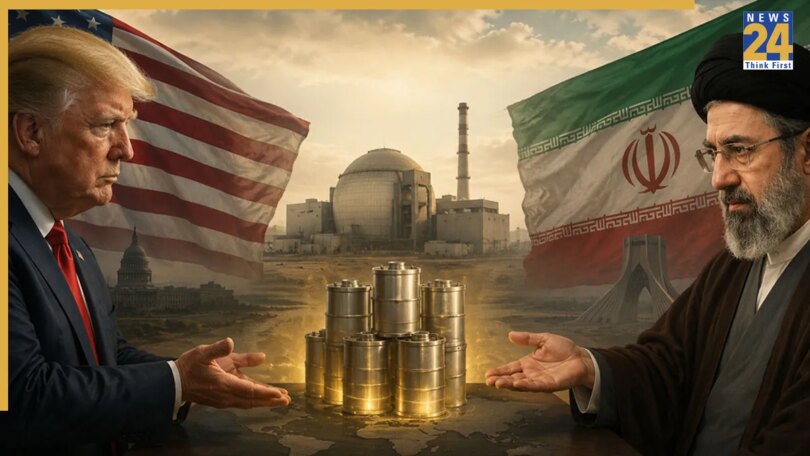
About 440 kilograms in weight, Iran’s highly enriched uranium stockpile has emerged as the single-biggest deciding factor in a lasting agreement between the US and Iran. According to the reported draft agreement, the final discussions will be centered solely on agendas including enrichment, enriched material, and economic reconstruction. According to media reports, Tehran’s nuclear programme and support for resistance groups would be excluded.
US President Donald Trump has, however, made his stance clear. Speaking at the White House about Iran’s enriched uranium, he had said: “We will get it. We don’t need it; we don’t want it. We’ll probably destroy it after we get it.” But the Iranian leadership is unwilling to relent. The country’s Supreme Leader directed that the highly enriched uranium “should not be sent abroad”. The negotiators are currently facing one of the most difficult questions: What exactly should happen to 440 kilograms of uranium enriched to roughly 60% purity?
ALSO READ: ‘Not a banana republic’: Israel’s first reaction to US-Iran peace deal, warns on Lebanon operations, says this about Trump’s
Why does 440 kg of highly enriched uranium matter?
The number is critical. It matters because most civilian nuclear power reactors use 3 to 5% enriched uranium. In contrast, nuclear weapons require the radioactive material to be enriched to about 90%. The stockpile in Iran, therefore, sits uncomfortably close to weapons-grade territory.
According to assessments cited by CNN-News 18, foreign inspectors and nuclear analysts believe the radioactive material could potentially be enriched to weapons-grade levels in a relatively brief period if Tehran chose to do so. Experts estimate that the country contains enough uranium stockpile for around 10 nuclear weapons if enriched to 90%.
Iran says its nuclear programme is peaceful
The Iranian leadership has maintained the position that its nuclear programme remains peaceful and the country has every right under international law to enrich uranium for civilian requirements. The US, Israel, and many European governments, however, argue that enrichment to 60% goes far beyond civilian purposes and greatly shortens the timeline to a nuclear weapon.
ALSO READ: Which Muslim nations stepped in to stop US-Iran war? Pakistan PM Shehbaz Sharif reveals names of all the countries
Does uranium exist in Iran despite facilities being destroyed?
The issue has now become even more complex after a prolonged conflict and military strikes on the nuclear infrastructure in Iran. While many of the country’s enrichment facilities have been destroyed, Western intelligence assessments indicate that much of the enriched uranium itself may have survived. The radioactive material can be hidden, transported, dispersed, or stored at secret locations. Due to this, even after combat operations, it may still exist. IAEA Director General Rafael Grossi recently told Reuters that agency inspectors believe “a bit more than 200 kg” of Iran’s 60% enriched uranium could be hidden in tunnel facilities located near Isfahan.
Why does Trump want the uranium removed?
For the United States, the enriched uranium stockpile represents the biggest unresolved danger in the nuclear programme in Iran. President Trump and his advisers stress that as long as the material exists, concerns about Tehran’s weapons programme in the future will persist despite enrichment facilities being damaged. That explains why the administration wants uranium to be removed and destroyed. Trump has announced, “We’ll probably destroy it after we get it.”
ALSO READ: Why Iran looks like the winner after the peace deal with the US
About 440 kilograms in weight, Iran’s highly enriched uranium stockpile has emerged as the single-biggest deciding factor in a lasting agreement between the US and Iran. According to the reported draft agreement, the final discussions will be centered solely on agendas including enrichment, enriched material, and economic reconstruction. According to media reports, Tehran’s nuclear programme and support for resistance groups would be excluded.
US President Donald Trump has, however, made his stance clear. Speaking at the White House about Iran’s enriched uranium, he had said: “We will get it. We don’t need it; we don’t want it. We’ll probably destroy it after we get it.” But the Iranian leadership is unwilling to relent. The country’s Supreme Leader directed that the highly enriched uranium “should not be sent abroad”. The negotiators are currently facing one of the most difficult questions: What exactly should happen to 440 kilograms of uranium enriched to roughly 60% purity?
ALSO READ: ‘Not a banana republic’: Israel’s first reaction to US-Iran peace deal, warns on Lebanon operations, says this about Trump’s
Why does 440 kg of highly enriched uranium matter?
The number is critical. It matters because most civilian nuclear power reactors use 3 to 5% enriched uranium. In contrast, nuclear weapons require the radioactive material to be enriched to about 90%. The stockpile in Iran, therefore, sits uncomfortably close to weapons-grade territory.
According to assessments cited by CNN-News 18, foreign inspectors and nuclear analysts believe the radioactive material could potentially be enriched to weapons-grade levels in a relatively brief period if Tehran chose to do so. Experts estimate that the country contains enough uranium stockpile for around 10 nuclear weapons if enriched to 90%.
Iran says its nuclear programme is peaceful
The Iranian leadership has maintained the position that its nuclear programme remains peaceful and the country has every right under international law to enrich uranium for civilian requirements. The US, Israel, and many European governments, however, argue that enrichment to 60% goes far beyond civilian purposes and greatly shortens the timeline to a nuclear weapon.
ALSO READ: Which Muslim nations stepped in to stop US-Iran war? Pakistan PM Shehbaz Sharif reveals names of all the countries
Does uranium exist in Iran despite facilities being destroyed?
The issue has now become even more complex after a prolonged conflict and military strikes on the nuclear infrastructure in Iran. While many of the country’s enrichment facilities have been destroyed, Western intelligence assessments indicate that much of the enriched uranium itself may have survived. The radioactive material can be hidden, transported, dispersed, or stored at secret locations. Due to this, even after combat operations, it may still exist. IAEA Director General Rafael Grossi recently told Reuters that agency inspectors believe “a bit more than 200 kg” of Iran’s 60% enriched uranium could be hidden in tunnel facilities located near Isfahan.
Why does Trump want the uranium removed?
For the United States, the enriched uranium stockpile represents the biggest unresolved danger in the nuclear programme in Iran. President Trump and his advisers stress that as long as the material exists, concerns about Tehran’s weapons programme in the future will persist despite enrichment facilities being damaged. That explains why the administration wants uranium to be removed and destroyed. Trump has announced, “We’ll probably destroy it after we get it.”
ALSO READ: Why Iran looks like the winner after the peace deal with the US
First published on: Jun 15, 2026 04:44 PM IST
Get Breaking News First and Latest Updates from India and around the world
on News24. Follow News24 on Facebook, Twitter.
News/ world/the 440 kg question iran most dangerous item that could decide future of trumps peace deal what is it
End of Article
About the Author
Sheetal Prasad
Sheetal Prasad is a news author with 1.5 years of experience in journalism. She covers a diverse range of topics, including politics, entertainment, and trending news, ensuring her readers stay informed about the latest developments. Sheetal holds a Master’s degree in Journalism from Adamas University, West Bengal, which has equipped her with essential storytelling skills. Previously, she worked as a news journalist at Odisha TV.
In addition to her articles, Sheetal manages a live blog that offers real-time updates on breaking news and trending stories. This interactive platform allows her audience to engage with the news as it unfolds, enhancing their understanding of significant issues.
Every article she writes is rigorously verified by the News Desk team before publication, ensuring accuracy and reliability. Sheetal is committed to delivering trustworthy information, making her a dependable source for readers seeking quality content.
When she’s not writing, Sheetal enjoys creating content for her YouTube channel and watching podcasts and interviews with renowned personalities. You can connect with her on Instagram for more insights and updates.
Read More
Sheetal Prasad
Sheetal Prasad is a news author with 1.5 years of experience in journalism. She covers a diverse range of topics, including politics, entertainment, and trending news, ensuring her readers stay informed about the latest developments. Sheetal holds a Master’s degree in Journalism from Adamas University, West Bengal, which has equipped her with essential storytelling skills. Previously, she worked as a news journalist at Odisha TV.
In addition to her articles, Sheetal manages a live blog that offers real-time updates on breaking news and trending stories. This interactive platform allows her audience to engage with the news as it unfolds, enhancing their understanding of significant issues.
Every article she writes is rigorously verified by the News Desk team before publication, ensuring accuracy and reliability. Sheetal is committed to delivering trustworthy information, making her a dependable source for readers seeking quality content.
When she’s not writing, Sheetal enjoys creating content for her YouTube channel and watching podcasts and interviews with renowned personalities. You can connect with her on Instagram for more insights and updates.
Read More
Related Story
Jun 15, 2026 03:20 PM ISTWhy Iran looks like the winner after the peace deal with the US
Jun 15, 2026 02:14 PM IST‘Not a banana republic’: Israel’s first reaction to US-Iran peace deal, warns on Lebanon operations, says this about Trump’s agreement
Jun 15, 2026 01:37 PM ISTWhich Muslim nations stepped in to stop US-Iran war? Pakistan PM Shehbaz Sharif reveals names of all the countries
Jun 15, 2026 12:13 PM ISTWhat’s inside 14-point US-Iran peace deal? Which terms favor Washington, which benefit Tehran? Know why its win-win for both
Jun 15, 2026 10:23 AM IST‘Very difficult guy’: US President Trump rebukes Netanyahu, says Israeli PM should ‘be very thankful’ for…
Jun 15, 2026 08:11 AM ISTHormuz Strait set to reopen, Israel pauses Lebanon strikes: 10 key points of Iran-US peace deal
Jun 15, 2026 07:40 AM IST‘Deal with Iran complete’: Trump says Strait of Hormuz to be ‘permanently toll free’; official signing expected in Geneva on…
Jun 15, 2026 06:43 AM IST12 dead after skydiving plane crashes moments after takeoff in US state of Missouri; what exactly happened?
Jun 15, 2026 06:36 AM IST[Live Updates] Today Breaking News, June 15: Donald Trump calls Netanyahu ‘a very difficult guy, says ‘Israel won’t last…’
Jun 14, 2026 10:43 PM IST‘We are very close…, let’s not blow it’: Trump irate over Beirut strikes, asks Israel to halt attacks on Lebanon, says US-Iran deal is ‘close’