
One of the most important indicators of a strong democracy is that the internal operations of political parties conform to democratic principles and that there are legal consequences when they fail to do so.
In modern democracies, political parties are public organisations operating under constitutional safeguards and oversight, serving as intermediaries in the exercise of sovereignty on behalf of the people.
Because of this role, parties bear a democratic responsibility: they are obliged to comply not only with their own internal rules but also with the constitution, the law, and public order.
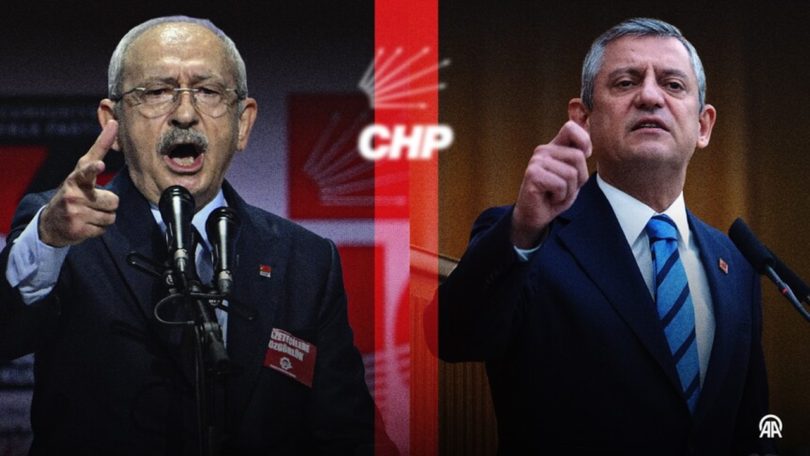
The decision of the 36th Civil Chamber of the Ankara Regional Court of Appeal declaring the 38th Ordinary Elective Congress of the Republican People’s Party (CHP), held on November 4–5, 2023, and the Istanbul Provincial Congress of October 8, 2023—which served as the basis for that congress—absolutely null and void has taken centre stage on Türkiye’s political agenda.
Related
However, public reactions to the decision largely overlook the legal basis of this historic ruling.
While some circles have deliberately characterised the decision as judicial interference in politics, others have sought to discredit it by labelling it political engineering.
In reality, this judicial decision is a concrete example of the rule of law functioning exactly as expected.
Political autonomy and legal boundaries
In democratic theory, political parties are widely recognised as having the freedom to organise their internal operations.
Articles 68 and 69 of the Constitution of the Republic of Türkiye and the Political Parties Act recognise parties as indispensable to democratic life and provide them with legal safeguards. However, this autonomy can never be construed as a legal shield of immunity.
In the hierarchy of norms of a rule of law, a political party’s charter and decisions based on that charter occupy the lowest ranks. Constitutional mandatory provisions and the mandatory provisions of laws, however, always take precedence.
Consequently, even the party’s highest decision-making body cannot adopt measures that conflict with constitutional norms or the mandatory provisions of the law.
In Türkiye as well, as expected of a rule of law, Article 69 of the Turkish Constitution and Articles 4 and 93 of the Political Parties Act explicitly require that the internal operations, organ elections, and decisions of political parties comply with “the principles of democracy”.
In this context, the phrase “principles of democracy” encompasses a declaration of will that is fair, equal, transparent, and free from any unlawful influence.
Article 27 of the Turkish Code of Obligations, which applies directly to political party proceedings, provides that legal acts contrary to the mandatory provisions of the law, public order, or general morality are “absolutely void”.
The conclusion is clear: Judicial intervention is not an external attack on politics; it is the activation of a constitutional check-and-balance mechanism to enforce the rules of the game.
The most concrete and decisive legal basis for the court’s ruling of “absolute nullity” is the structural and systemic defect of consent identified during the convention process.
Under private law doctrine, the validity of a legal transaction depends on the parties’ free and sound consent. The presence of any one of the elements of mistake, fraud, or duress renders the legal transaction voidable.
However, when organised structural corruption that constitutes a crime is involved, the severity of the defect transcends the “voidability” threshold and becomes an absolute nullity.
The Court has legally established, in light of concrete evidence, physical findings, and testimonies summoned from criminal and civil courts, that the will of the delegates at the CHP’s 38th Ordinary Congress was directly nullified through “financial transactions”.
Accordingly, it has been judicially established that benefits were provided to delegates and their relatives in the form of foreign currency, cash, high-value technological products (mobile phones, tablets, etc.), and promises of real estate.
Furthermore, it has been documented that local government and party resources held at the time—primarily those of the Istanbul Metropolitan Municipality and its affiliates—were distributed to delegates in the form of job placements and employment commitments.
This situation cannot be reduced to a “procedural error” or a “formal defect” in legal terminology.
What we are facing is organised, structural corruption that simultaneously violates the Political Parties Act, the Turkish Penal Code, and the Election Act, and constitutes a crime under criminal law.
The act of buying votes in exchange for material gain directly undermines the very essence of the right to vote and to be elected.