
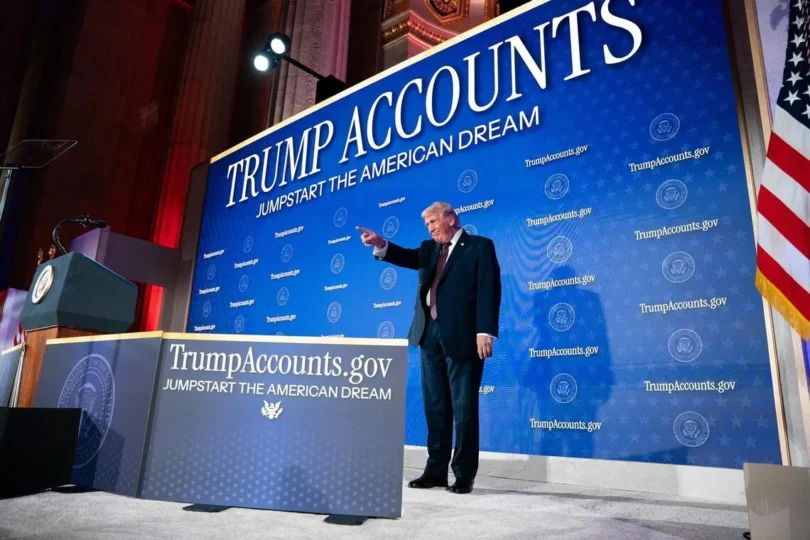
After months of fanfare, the Trump administration will launch its flagship cradle-to-adulthood investment programme, Trump Accounts, on July 4, as the US begins celebrations marking the 250th anniversary of its independence.
Trump Accounts is central to the administration’s push to promote investing and financial literacy from an early age.
The programme will provide US citizens born between 2025 and 2028 a government-funded investment account of US$1,000 (S$1,300) that families can build on, adding a new savings vehicle to a raft of other tax-efficient college savings plans and retirement accounts.
“The US$1,000 federal contribution at birth helps remove the barrier of having nothing to start with, which has historically been one of the biggest obstacles to saving,” said Andy Blocker, head of policy, regulatory and government relations at financial services firm Edward Jones.
“If by year-end, more families have a clear onramp to begin saving and investing for their children’s financial futures, that’s success.”
Several top US companies have pledged support for the programme, with employer matches or additional seed funding.
Participating companies include payment giant Visa, technology company Dell, and media and telecom firm Comcast. Earlier this week, chipmaker Micron pledged US$250 million to support Trump Accounts.
The launch comes as the rising cost of living has become a major issue for voters heading into the November midterm elections. Policymakers across the spectrum have increasingly turned to proposals aimed at helping families build wealth and improve long-term financial security.
About 3.6 million children were born in the United States in 2025, according to provisional data from the US Centers for Disease Control and Prevention.
While only US citizens born during Trump’s second administration will receive the US$1,000 government contribution, Americans can open a Trump Account for their children under age 18 with a valid Social Security number.
The Treasury Department is overseeing the programme, with brokerage Robinhood and custodian bank BNY acting as administrators. The Treasury has warned families to be vigilant against scams and fraudsters, and has provided information on what to look out for.
The accounts are free to open, and parents, family members, employers and charitable organisations can contribute up to US$5,000 on a pre-tax basis annually.
Contributions are automatically invested in a low-cost index fund designed for long-term growth. Account holders take control when they turn 18, at which point they can withdraw the funds or continue investing. Gains will be taxed upon withdrawal.
On its website, Trump Accounts estimates that, based on the historical average returns of the S&P 500 index, a child receiving annual contributions of US$5,000 could accumulate about US$271,000 by age 18. That could grow to roughly US$13 million by age 55 if the same annual contributions continue, although actual returns will likely vary, depending on market conditions.
At launch, all contributions will be invested in State Street SPDR Portfolio S&P 500 ETF, a low-cost exchange-traded fund that tracks the US equities benchmark. The programme’s additional investment line-up includes ETFs from BlackRock and Vanguard, which give broad exposure to the US stock market.
“The thesis behind Trump Accounts is to have more people participate in the greatest wealth creation vehicle on the planet, which is the US market,” said Steve Quirk, chief brokerage officer at Robinhood.
While supporters have hailed Trump Accounts as a way to encourage investing from an early age, some policy experts question whether it will significantly narrow wealth gaps, arguing that returns will depend largely on families’ ability to make regular contributions and on decades of sustained market gains.
“Government handouts have a long track record of failing to lift people out of poverty, and there’s little reason to think this one will be different,” said Adam Michel, director of tax policy studies at Washington-based think tank the Cato Institute.
He added that employer matching contributions are likely to be concentrated at large companies. “The real benefit lands on families who already have steady jobs and the capacity to save,” Michel said. REUTERS