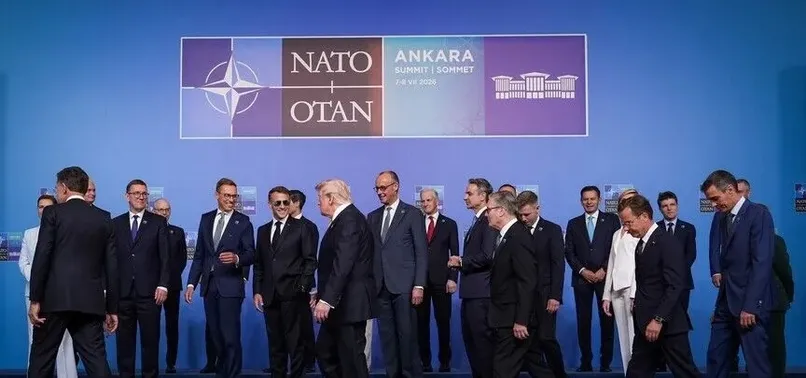
Türkiye’s hosting of the NATO summit has been widely viewed by experts as a major diplomatic success.
The summit, which brought together leaders from NATO’s 32 member countries, concluded with allies reaffirming their commitment to collective defense, increased defense spending, continued support for Ukraine, and stronger defense industrial cooperation.
While political differences between some European allies and US President Donald Trump resurfaced during the summit, NATO Secretary General Mark Rutte described the gathering as evidence that the alliance remains “stronger and more united than ever.”
Beyond the summit’s formal outcomes, analysts say the choice of Ankara as host underscored Türkiye’s unique position within NATO.
Peter Watkins, associate fellow at London-based think tank Chatham House, told Anadolu that Ankara successfully demonstrated its growing importance to European security.
“The Ankara summit has been a great success for Türkiye,” said Watkins, who is also visiting professor at King’s College London.
“Turkish diplomacy clearly played a key role in preparing the way for this summit, which has sustained the momentum of the changes that NATO needed to make – in defense spending, capabilities and so on.”
According to Watkins, the summit showcased Türkiye’s broader contribution to the alliance beyond diplomacy.
“More broadly, it showcased the important and distinctive contribution that Türkiye-including its capable armed forces and defense industry-makes to European security,” he said.
He added that Türkiye’s role was further reflected in the strategic partnership agreement signed with the UK in Ankara on July 8, describing it as recognition of Ankara’s expanding defense and security cooperation with European allies.
‘TÜRKİYE WAS IN MANY WAYS THE RIGHT HOST’
Sharon Hudson-Dean, senior fellow at the US-based Center for European Policy Analysis, said Türkiye was “in many ways the right host” for the gathering.
She noted that Türkiye occupies a strategically vital location on NATO’s southern border while maintaining one of the alliance’s largest and most capable armed forces.
“The Turkish military-industrial complex is advanced and a model for others, while Turkiye sits in a key region on NATO’s southern border,” said Hudson-Dean.
She also highlighted the importance of the political relationship between Turkish President Recep Tayyip Erdogan and Trump in helping establish a constructive atmosphere during the summit.
“President Erdogan and President Trump are well known to have a good relationship, allowing for a positive start to the American participation,” she said.
According to Hudson-Dean, many of the summit’s central discussions directly aligned with areas where Türkiye possesses considerable operational experience.
“The big issues on the NATO discussion table at this summit-rapid new defense spending, modernized, integrated defense capabilities, and conflict with Russia and in the Middle East-are all questions for which Turkiye has a lot of valuable experience to share.”
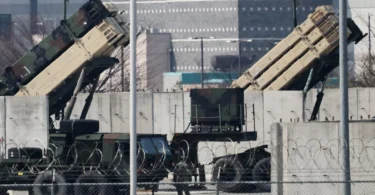
She also pointed to recent remarks by Turkish Defense Minister Yasar Guler indicating that Türkiye is exploring alternatives to the Russian-made S-400 air defense system.
“Guler’s statement this week that Türkiye will seek other options for air defense, instead of the Russian system purchased years ago but never used, opens the possibility for better integration with American and European systems,” she said.
ALLIANCE FOCUSES ON IMPLEMENTATION
Experts also viewed the summit as significant because NATO shifted its focus from setting political goals to implementing concrete military capabilities.
The summit declaration reaffirmed the allies’ “ironclad” commitment to Article 5 of the Washington Treaty, under which an attack against one ally is considered an attack against all.
It also confirmed continued implementation of the alliance’s 5% defense spending target agreed at last year’s Hague summit.
Watkins described the summit conclusions as “realistic, sustainable, and necessary.”
“So I believe that Mark Rutte achieved his objectives for the summit,” Watkins further added.
NATO UNITY COMES OUT STRONGER
Watkins said NATO’s greatest strength continues to be its cohesion.
“NATO’s center of gravity is its cohesion-shared values, interests and decades of close cooperation between its members at many levels of their governments and armed forces.”
He noted that disagreements have always existed within the alliance but should not overshadow decisions reached collectively.
“We shouldn’t draw definitive conclusions from what is said at these events, but look more upon what they decide-and whether they keep the alliance on a steady course,” he said.
Hudson-Dean similarly argued that the summit exceeded expectations regarding unity.
“The 2026 NATO summit achieved many of the goals laid out by the alliance, which we see in the strongly worded final declaration: clear unity around collective defense, Russia’s threat to Europe, and commitment to bigger defense spending and support for Ukraine.”
She also highlighted the participation of Trump in all scheduled meetings, including his discussions with Ukrainian President Volodymyr Zelenskyy, as an important signal for European allies.