
Pointing to credible Russian open-source reporting, she said 250 civilians had been killed and 1,596 injured in attacks inside Russia during the first six months of this year.
“This represents a 121 percent increase in civilian casualties in the Russian Federation compared with last year,” she said.
The second driver of the swelling civilian casualty toll was the widespread use of short-range drones and glide bombs in frontline areas, Bell said.
She highlighted in particular the impact of so-called first-person view drones (FPVs), where the drone operator can see the target in real time.
“In the first six months of this year, civilian casualties from short-range drones increased by 65 percent,” she said, lamenting that “these drones are fundamentally changing civilian life in frontline communities”.
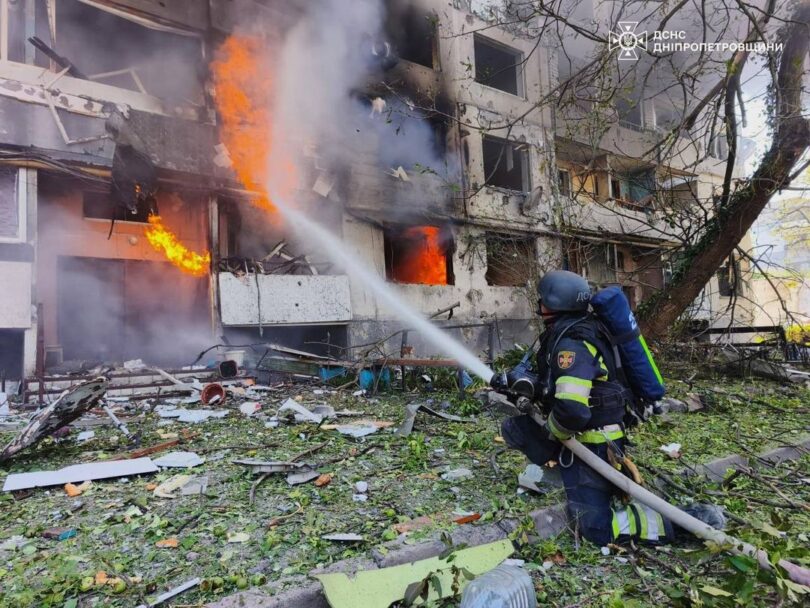
During recent visits to Zaporizhzhia, Kherson, Kharkiv and Dnipro, Bell said people had told her team that they feel “tracked by FPV drones while carrying out ordinary daily activities: gardening, walking their dogs, feeding their animals outside, going to the store, driving or simply walking or cycling outdoors”.
UN Human Rights Office spokesperson Thameen Al-Kheetan told reporters that “civilians and civilian infrastructure are strictly protected under international humanitarian law, and any such deliberate attack is a war crime.”
“There needs to be investigations in all attacks, both in Ukraine and in Russia, where civilians were impacted, killed, or injured, to determine the responsibilities and to achieve accountability and justice,” he insisted.
Related