
BY SPECIAL CORRESPONDENT
.
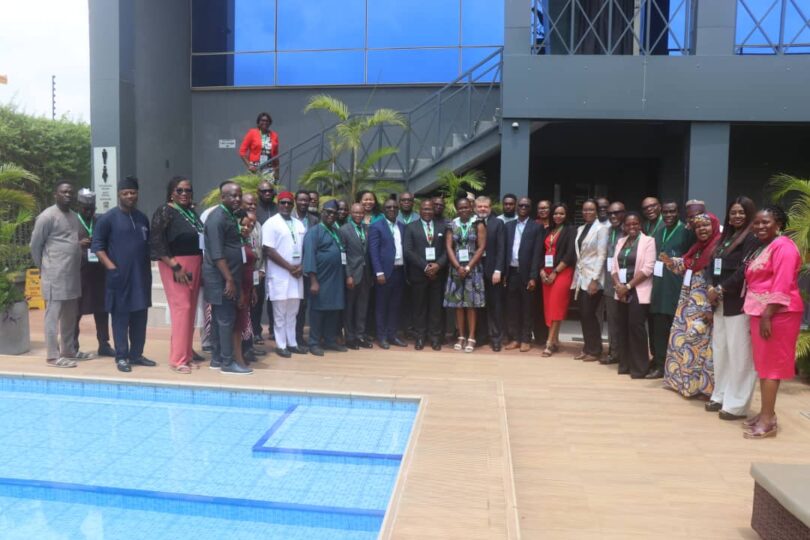
Stakeholders from government ministries, development institutions, the private sector and civil society organisations gathered in Abuja on Tuesday for the inception workshop of the Innovative Climate Finance for Unlocking Development and Equity in Africa (INCLUDING-Africa) project, a regional initiative aimed at strengthening climate finance systems and promoting inclusive low-carbon development across West Africa.
.
The three-year project, funded by the International Development Research Centre (IDRC), is being implemented by the Resource and Environmental Policy Research Centre, Environment for Development (REPRC-EfD), University of Nigeria, Nsukka ( UNN) in collaboration with partners from Ghana, Sierra Leone, Côte d’Ivoire, Senegal and the Environment for Development (EfD) Global Hub at the University of Gothenburg, Sweden.
.
The workshop, held at The Envoy Hotel in Abuja, officially launched the project and brought together policymakers, researchers, financial institutions, environmental experts and development partners to discuss strategies for improving climate finance mobilisation and access for vulnerable groups across the region.
.
Speaking at the event, the Vice-Chancellor of University of Nigeria, Prof. Simon Uchenna Ortuanya, reaffirmed the institution’s commitment to the successful implementation of the project.
.
Prof. Ortuanya assured stakeholders of the university’s “unflinching support” in ensuring that the project achieves its objectives and delivers meaningful outcomes for Nigeria and other participating countries across Africa.
.
He noted that climate change remains one of the greatest development challenges facing the continent, stressing the need for stronger partnerships, research-driven policies and inclusive financial systems to support adaptation and resilience.
.
The Project Team Leader and Director of REPRC-EfD, Prof. Nnaemeka Chukwuone, said the initiative was designed to address persistent barriers preventing African countries from accessing and deploying climate finance at the scale required to meet national climate commitments.
.
According to him, climate hazards such as flooding, severe heatwaves and prolonged droughts continue to threaten food security, biodiversity, livelihoods and economic stability across the region.
.
Chukwuone explained that despite commitments contained in Nationally Determined Contributions (NDCs) and National Adaptation Plans (NAPs), many African countries still face significant climate financing gaps.
.
He disclosed that current climate finance received by West African and Sahel countries covers only about seven per cent of their projected needs by 2030, while countries such as Nigeria and Ghana continue to record substantial annual financing deficits.
.
He identified weak climate-responsive fiscal policies, inadequate mobilisation of public and private climate finance, and limited access to funding for grassroots actors, women-led enterprises and small businesses as major systemic challenges confronting the region.
.
The project, he said, would examine and strengthen fiscal, financial and policy frameworks to enhance climate finance mobilisation while also developing innovative financial tools and building institutional capacity for low-carbon and climate-resilient development.
.
The project will focus on Nigeria, Ghana, Côte d’Ivoire and Senegal, while drawing expertise from a consortium of institutions including the Nigeria Conservation Foundation, African Energy Transition Services (AETS), the Institute of Statistical, Social and Economic Research (ISSER), University of Ghana, and the EfD Global Hub, Sweden.
.
Participants at the workshop highlighted the importance of inclusive climate finance systems that prioritise women, youth, Micro, Small and Medium Enterprises (MSMEs), and local communities that are often excluded from mainstream funding mechanisms.
.
Under the project’s framework, researchers will deploy computable general equilibrium models, stakeholder surveys, political economy studies and participatory action research to assess climate-related reforms and co-design innovative financing instruments.
.
The project also includes pilot-testing financial instruments with 200 MSMEs across participating countries, alongside capacity-building programmes for regulators, financial institutions and community organisations.
.
Organisers said the project is expected to contribute to improved fiscal and policy frameworks, expanded climate finance mobilisation, enhanced access for marginalised groups and stronger institutional capacity for climate governance in West Africa.
.
The implementation period for the INCLUDING-Africa project runs from 2026 to 2028.
.
The inception workshop also provided an opportunity for the Inaugural meeting of the Project Advisory Committee, chaired by the former Director of Environment for Development (EfD) Initiative, Sweden, Professor Gunnar Kohlin.