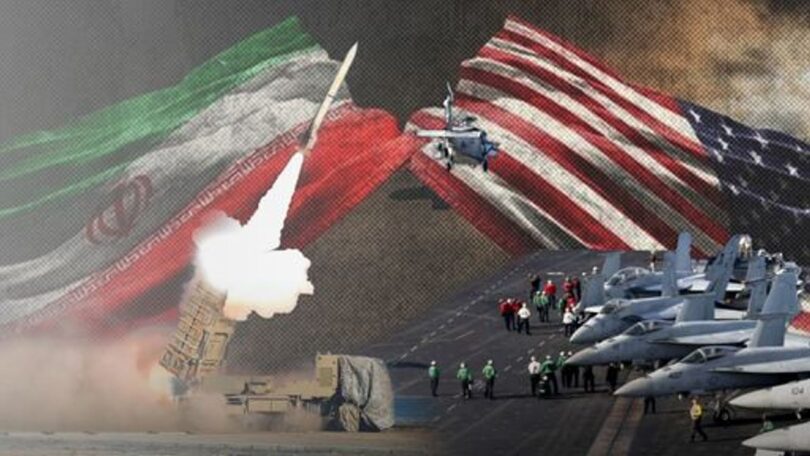
Washington DC — On Monday, Iran, the US and mediator Pakistan all announced a memorandum of understanding aimed at ending the war in the Middle East, which broke out on February 28 when the US and Israel launched strikes on Iran, killing the longtime supreme leader, Ali Khamenei, much of the other top brass, and numerous civilians.
But Iran swiftly retaliated by asserting control over the Strait of Hormuz — the narrow chokepoint through which one-fifth of global oil once passed — and unleashing barrages of missiles and drones on US-allied Gulf countries, shattering the oil-rich nations’ hard-earned reputation for stability.
The war has claimed thousands of lives, sparked a global energy crisis, and fuelled inflation in the US economy.
The memorandum of understanding, brokered primarily by Pakistan and scheduled to be signed in Geneva on Friday, is expected to lift the blockade of both the Strait of Hormuz and Iranian ports. The US and Iran will then begin two months of intensive negotiations on Tehran’s nuclear programme and the possible lifting of sanctions.
Despite public declarations of victory by both Iran and the US, analysts contend that neither side prevailed.
“Both sides lost, in different ways,” Alan Eyre, a US diplomat, tells TRT World.
Eyre, who was a core member of the US nuclear negotiating team from its inception in 2010 to the 2015 Joint Comprehensive Plan of Action (JCPOA) agreement with Iran, says the US lost some of its “soft power” by initiating an “illegal, immoral and deeply mistaken war of choice.”
“It also lost the strategic deterrence value of its military might, showing that although the US could dominate militarily, it still could not achieve any of its strategic goals,” notes Eyre.
Iran lost because it will emerge from this war “even more impoverished economically”, with a new “more militarised regime” even less willing and able to provide for its people, argues Eyre, who also served as first-ever Persian language spokesperson of the US Department of State.
Related
War objectives
In their conflict with Iran, the Trump administration and Israel pursued goals that included eliminating or severely degrading Tehran‘s nuclear and ballistic missile programme, neutralising or destroying Iran‘s naval capabilities, weakening its network of regional proxies, and overthrowing the Iranian government.
Iran portrayed the war as an existential defensive struggle for national survival. Rather than seeking a conventional military victory, Tehran relied primarily on asymmetric warfare to impose the heavy costs for the US and its regional allies, with the aim of forcing a negotiated settlement.
Iran’s objective was to withstand the combined US-Israel assault, maintain internal control, and avoid collapse. To achieve this, Iran sought to deter further attacks and restore a regional balance of power through missile and drone strikes on US and allied targets. It disrupted shipping in the Strait of Hormuz, and used its regional proxies and partners against US and Israeli forces.
Eyre argues that, in another sense, Iran “won“ because the US failed to achieve any of the strategic objectives it had hoped to secure through the war.
“Iran was able to withstand the combined military onslaught of the US and Israel and still not capitulate to US demands, and was even able to both weaponise and monetise control of the Strait of Hormuz, giving it an invaluable new form of strategic deterrence,” he says.
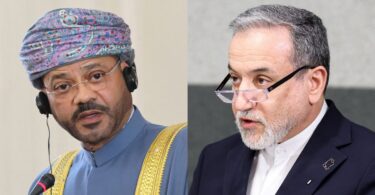
The memorandum, concluded by Washington and Tehran with the help of mediating parties – including Pakistan, Qatar, Egypt, Türkiye, Saudi Arabia and Oman – is no small achievement, given their mutual mistrust, according to International Crisis Group.
“The memorandum represents a step away from lose-lose dynamics. It also will allow both the US and Iran to claim a measure of victory: Washington likely will insist that the memorandum reopens the strait to unimpeded traffic, returning to the pre-war status quo, while Iran will claim that it retains control of a waterway it can close at will, says the Crisis Group.
The agreement implicitly recognises that neither side was able to deliver a knock-out blow, but that both have sufficient capacity to impose significant costs on the other, it adds.
“Finalising the MoU put a floor under a ceasefire that was at times close to collapse, and gives the two sides a framework to move into more detailed nuclear negotiations,” Ali Vaez, project director at ICG, tells TRT World in a statement.