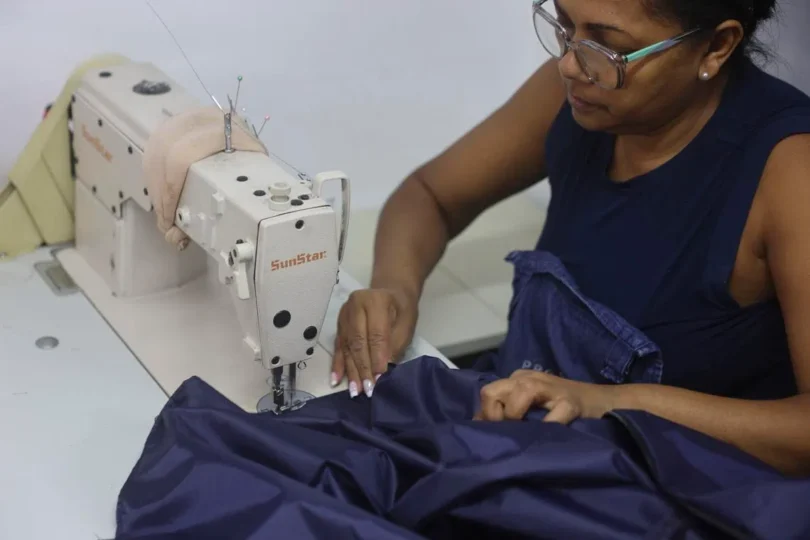
MARACAY, Venezuela – Seamstresses at Venezuelan fashion label By Efrain Mogollon are used to making colourful dresses with ruffled sleeves and elegant draped skirts, but these days they face a grim task: making body bags for thousands of quake victims.
They never thought they would be making something so morbid, but like other Venezuelan operations, their workshop has shifted priorities following the 7.2- and 7.5-magnitude earthquakes that struck on June 24.
With over 4,700 people killed and an estimated 50,000 missing, body bags are in short supply.
Designer Efrain Mogollon could not stand by and do nothing.
Within a week of the quakes, he mobilised his 22-strong team in the north-central city of Maracay.
“We were basically in a state of shock,” the 44-year-old told AFP in the worst-hit state of La Guaira.
“We needed to understand what we could do based on what we know how to do… And in this case, it was sewing.”
‘The truth hit hard’
By July 13, Mogollon’s workshop had produced 1,000 bags, half of which went to the National Service of Medicine and Forensic Sciences in Caracas, while the other half went directly to rescuers and relatives of the deceased.
The final product is a body bag made of 500-micron high-density polyethylene, measuring 3m long and 90cm wide.
Each roll of bags bears a prayer card depicting the Sacred Heart of Jesus.
A worker attaches a depiction of Jesus Christ to a body bag before it is donated to rescue teams.
PHOTO: REUTERS
“The truth hit hard when they told us what we were going to do. But at the same time we feel that we’re doing something good,” said seamstress Grismary Villegas.
“It’s a way of supporting this pain,” the 21-year-old said as she deftly stitched a bag together using dark blue thread.
Villegas started out in the workshop aged 17, following in the footsteps of her grandmother and aunt.
She has been sewing since she was eight years old, but says she could never have predicted the task currently at hand.
“There are a lot of people offering support and that’s what matters – that in the most difficult moments we must always stand united as a country,” she said, voicing hope that no more bags would be needed.
The United Nations is set to deliver 10,000 body bags.
‘Necessary evil’
As hospital and morgue capacity reaches breaking point, the Venezuelan government has created a makeshift body storage site at the port of La Guaira and has expanded a cemetery to bury hundreds of unidentified victims.
High-rise buildings once lined the seaside city’s coast, but the skyline has been reduced to piles of rubble.
Makeshift shelters have sprung up around the city, with thousands of people made destitute by the quakes that buried many more under the debris.
“Going to ground zero of the disaster completely changed the perspective, not only mine as creative director but that of the entire team,” Mogollon said.
Andrea Vizcaino, a 38-year-old doctor working in the disaster zone, called the initiative a “necessary evil”.
“We can’t say… that it’s good,” echoed volunteer Carlos Solorzano, 44.
“But I’ll tell you one thing: it’s useful for being able to help the family.”
La Guaira’s newly displaced population is extremely vulnerable, and Mogollon identified another need he could help with while visiting a shelter: tarpaulins to protect the homeless from the cold and the rain.
Back at the workshop, production has already begun. AFP