Rabiat Uthman
Every year, as Eid al-Kabir approached in Kano State, there was a familiar excitement that words could hardly capture.
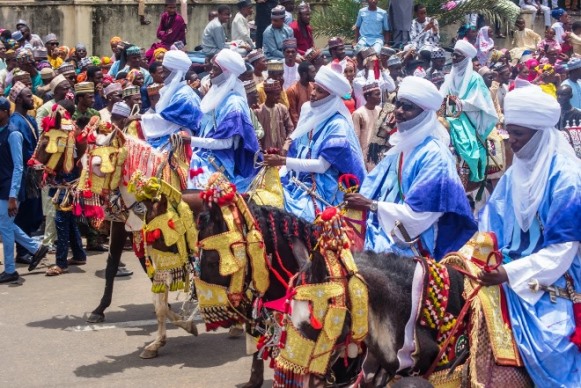
The sound usually came first — the deep rhythm of drums, the blast of trumpets, and the thunder of horses’ hooves echoing through ancient streets. Then came the riders, elegantly dressed in richly decorated robes, mounted on beautifully adorned horses in a spectacle that blended culture, history, and celebration.
Children pushed through crowds for a glimpse of the procession. Elders watched with pride and nostalgia. Families gathered from different parts of the state, while visitors and tourists travelled from across Nigeria and beyond to witness one of the country’s most celebrated cultural events.
Read Also: Kano gov. approves N20,000 Eid package for civil servants
This was the Durbar — a centuries-old tradition that became synonymous with Sallah celebrations in Kano.
More than a parade, the Durbar symbolised a connection between the Emir and the people, between history and modern identity. Traditionally held on the second and third days of Eid after prayers and sacrifices, the festival brought colour, unity, and a unique cultural spirit to the city.
The cultural significance of the Durbar also gained international recognition when UNESCO officially listed it as part of humanity’s intangible cultural heritage in 2024.
However, that same year, the celebration was suspended.
The cancellation followed tensions surrounding the emirship dispute involving the reinstated Emir of Kano, Muhammadu Sanusi II, and the deposed Emir, Aminu Ado Bayero. Citing security concerns, authorities announced a ban on all Durbar activities during the 2024 Eid celebrations.
The suspension continued in 2025, leaving many residents disappointed and uncertain about the future of the historic festival.
Now, as Eid al-Kabir 2026 approaches, many people in Kano are once again waiting and hoping for the return of the Durbar.
Across the city, residents speak about the absence of the festival with a mixture of sadness and longing.
For many residents, the Durbar represented
more than royalty or ceremony. It was a celebration of Kano’s cultural identity and a moment when the city proudly displayed its heritage to the world.
Despite the ongoing suspension, many believe the spirit of the Durbar remains alive in the memories of the people — in the stories passed from one generation to another and in the anticipation that one day, the festival will return.
The horses are still there. The traditional garments remain carefully preserved. And the ancient routes through Kano still hold memories of the sound of hooves and the cheers of spectators.
While uncertainty remains over when the Durbar will fully return, many residents agree on one thing: Eid celebrations in Kano have not felt the same without it.
For them, every quiet Sallah season serves as another reminder of a cultural tradition they hope to see restored.