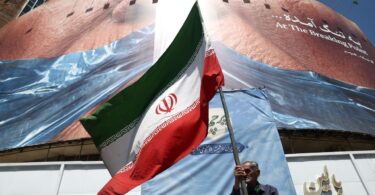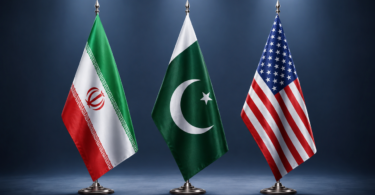
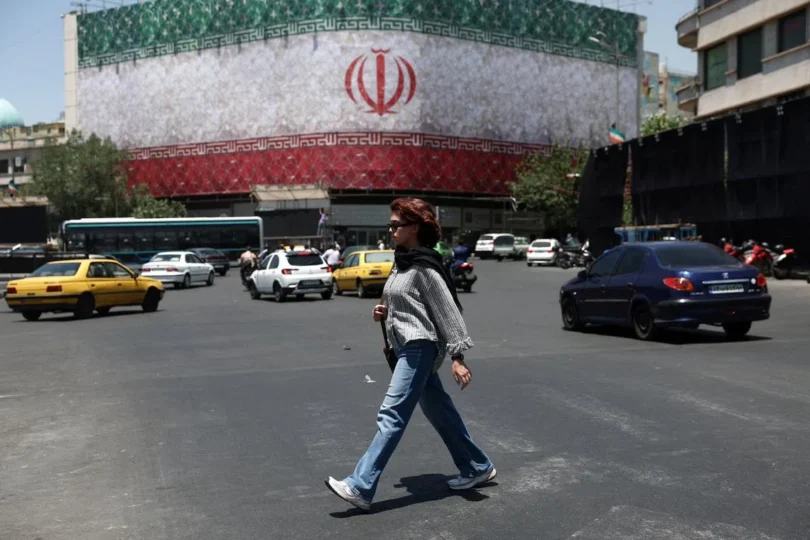
The United States and Iran have reached a deal to end their war and will hold an official signing ceremony on June 19 in Switzerland, Pakistani Prime Minister Shehbaz Sharif said on social media early on June 15.
The agreement was struck despite an Israeli strike on Lebanon on June 14 that drew criticism from both Iran and US President Donald Trump.
The precise terms of the deal were not immediately known. Sharif said the pact called for “the immediate and permanent termination of military operations on all fronts, including in Lebanon”.
Multiple sources previously told Reuters that the draft deal would reopen the Strait of Hormuz, end the US blockade of Iranian ports and extend a ceasefire, while leaving Iran’s nuclear programme to be addressed during a 60-day period of additional talks.
READ MORE HERE
PHOTO: AFP
Iran circulated competing versions of a proposed interim agreement with the US, even as President Donald Trump stuck to his timeline on June 14 to sign a deal.
All of the texts – there were at least three – include similar elements around reopening the vital Strait of Hormuz waterway, giving Iran sanctions relief and opening the door to longer-term negotiations around its nuclear programme.
But they diverge in key respects, making it difficult to assess how much of a win the deal will be for either side. A major discrepancy hinged on how much financial relief Iran would get immediately or in the future – a concern for Iran hawks in the US who don’t want Trump to give away too much.
READ MORE HERE

PHOTOS: EPA
Russian President Vladimir Putin and Donald Trump held a “friendly and frank” phone call on the US president’s birthday, the Kremlin said. Ukrainian President Volodymyr Zelensky also spoke with Trump.
“The conversation was friendly and frank in character and lasted about an hour,” Kremlin foreign policy aide Yuri Ushakov said on June 14. The pair discussed international issues, the negotiations between the US and Iran and contacts between Washington and Moscow.
Ushakov said US envoys Steve Witkoff and Jared Kushner, Trump’s son-in-law, planned to return to Russia soon, without giving more detail.
READ MORE HERE

PHOTO: AFP
“You need to be happy,” reads graffiti spray-painted on a ruined building swamped in rubbish in Cuba’s capital Havana. And for 100 minutes, as Morocco held local favourites Brazil to a draw, Cubans complied and put their troubles aside as football’s World Cup came to state television on June 13 – two days late.
In a small cafe in the densely populated Centro Habana district of pastel-coloured townhouses with peeling facades and washing lines strung from the balconies, men perched on stools were watching the action on a small screen.
Baseball-mad Cuba has appeared only once in the World Cup, way back in 1938. But on the communist island, reeling from the worst economic crisis in over a generation, intensified by a US-imposed oil blockade, football is king among the kids particularly.
READ MORE HERE

PHOTO: AFP
Germany won their first opening match at a World Cup since lifting the trophy in 2014 as they eased to a 7-1 win against debutants Curacao in their opening Group E match in Houston on June 14.
The Germans will face stiffer tests against group rivals Ecuador and Ivory Coast, but the win against the tiny Caribbean nation puts them in a good position to progress to the knockout stages for the first time since 2014.
An early German goal by Felix Nmecha was cancelled out by a deflected strike from Livano Comenencia which had the Curacao fans, known as the Blue Wave, out of their seats in Houston.
READ MORE HERE