
Fire outbreaks often occur without warning. Within minutes, a small spark from faulty electrical wiring, a gas leak, or an unattended cooking appliance can grow into a devastating blaze, threatening lives and destroying property.
While fire service agencies play a crucial role in responding to emergencies, the reality is that the first few minutes after a fire starts are often the most critical.
In this week’s SolaceBase newsletter, we examine why safety measures taken before the arrival of firefighters can make the difference between a minor incident and a major tragedy.
While many people assume that the responsibility for dealing with a fire begins when emergency responders arrive, the reality is that firefighters are not always able to reach the scene immediately due to factors such as traffic congestion, distance, poor road networks, or delays in reporting the incident.
During this critical period, occupants of a building are often left to confront the immediate consequences of the fire, making preparedness and preventive safety measures essential.
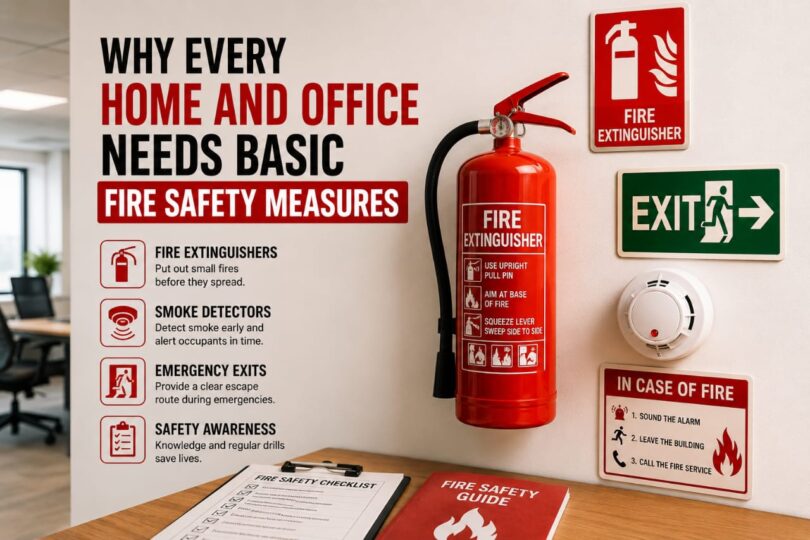
One of the most important safety measures is the availability of functional fire extinguishers. A properly maintained extinguisher can be used to put out small fires before they spread beyond control.
Read Also:(PHOTOS): Fire razes home appliances, office furniture market in Kano
Unfortunately, many homes, offices, and business premises either lack fire extinguishers or have equipment that is expired and unusable.
Having the right type of extinguisher and ensuring that occupants know how to use it can significantly improve emergency response during the early stages of a fire.
Equally important is the installation of smoke detectors and fire alarms. These devices provide early warning signs that enable people to evacuate quickly and safely.
In many cases, lives are lost not because of the flames themselves but because people are unaware of the danger until it is too late. Early detection allows valuable time for escape and emergency action.
Clear and accessible emergency exits are another essential component of fire safety. Buildings should have designated escape routes free from obstructions, and occupants should be familiar with these routes.
Read Also:Fire destroys N350m property at Abuja hotel
Panic and confusion are common during emergencies, but proper planning and regular drills can help people respond calmly and effectively.
Public awareness also plays a vital role in preventing fire-related disasters. Simple habits such as switching off electrical appliances when not in use, avoiding overloaded sockets, handling cooking equipment carefully, and storing flammable materials properly can reduce the likelihood of fire outbreaks.
Fire safety should not be viewed as a responsibility for institutions alone; it is a shared responsibility that begins with individuals and families.
The financial and emotional costs of fire incidents can be enormous. Businesses may lose years of investment, families may lose their homes and possessions, and in the worst cases, lives may be lost. Yet many of these consequences can be minimized through basic safety precautions and preparedness.
Read Also:Nigerian innovator laments poor local support for life-saving fire detection technology
As communities continue to grow and urban centres become more crowded, the need for a stronger culture of fire safety becomes increasingly important.
Waiting for the fire service to arrive should never be the first line of defence. Instead, individuals, organisations, and property owners should prioritise preventive measures and emergency preparedness.
Firefighters are indispensable partners in emergency response, but the actions taken before they arrive often determine the outcome of an incident.
Ultimately, fire safety is not just about responding to disasters; it is about reducing risks, protecting lives, and ensuring that when emergencies occur, people are prepared to act.
The best way to fight a fire is to prevent it from becoming a disaster in the first place.