
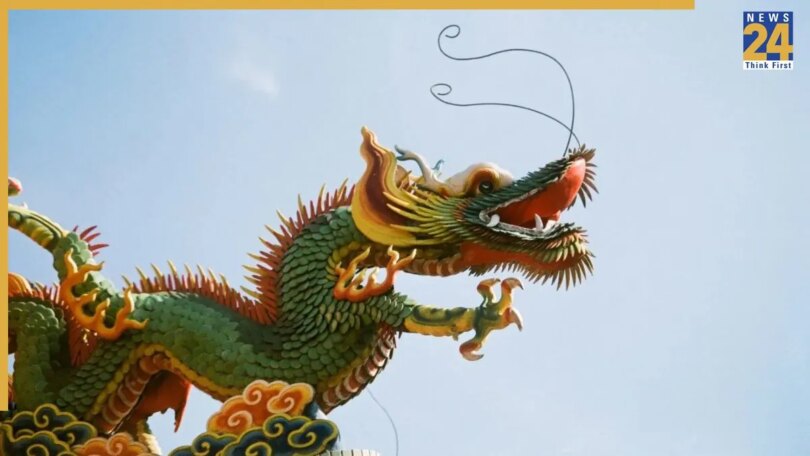
China is often referred to as the ‘Dragon,’ but this is not an official title. It is a deeply rooted cultural identity that has developed over centuries.
Meaning of the dragon in Chinese culture

2 / 6
In Chinese civilisation, the dragon is not a symbol of fear. Instead, it represents unity, prosperity and divine power, making it a highly respected cultural symbol.
‘Sons of the dragon’ belief

3 / 6
For generations, Chinese people have referred to themselves as the ‘descendants of the dragon,’ reflecting a strong cultural and historical connection with this mythical symbol.
Historical origins of the dragon symbol

4 / 6
According to tradition, Emperor Huang Di united different tribes and combined their symbols into one. Over time, this merged symbol gradually evolved into what is now known as the dragon.
Dragon and imperial power

5 / 6
In ancient China, the dragon was closely linked with emperors, who considered themselves divine rulers. This symbol appeared on royal clothing, palaces and imperial insignia.
Dragon vs Western interpretation

6 / 6
Unlike Western depictions where dragons are often seen as destructive creatures, in Chinese culture the dragon symbolises wisdom, prosperity, protection and good fortune. Other countries also have symbolic identities, such as Bhutan as the ‘Land of the Thunder Dragon,’ India as the ‘Land of the Elephant’ and Japan as the ‘Land of the Rising Sun.’