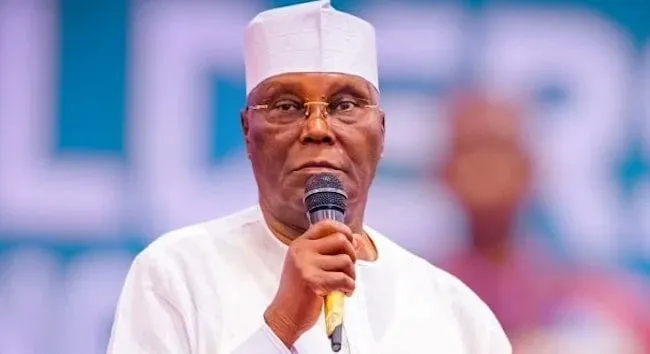
Former Vice President has raised concerns over what he described as a dangerous contradiction in Nigeria’s economic management, warning that the country’s external reserves are shrinking despite reports of a ₦5 trillion oil windfall.
In a statement issued on Saturday by his Senior Special Assistant on Public Communication, phrank Shaibu, Mr Atiku said the decline in the nation’s reserves amid rising oil earnings points to deepening economic mismanagement and unsustainable monetary policies.
According to the statement, Nigeria’s external reserves fell to $48.45 billion as of April 24 from $48.72 billion recorded a week earlier, representing a cumulative depletion of approximately $1.57 billion since March 11.
Mr Atiku argued that the persistent drawdown suggests that the is aggressively injecting liquidity into the foreign exchange market in an attempt to defend the naira artificially.
“This is not stability—it is a fragile illusion sustained by burning through national savings,” the statement said.
The former presidential candidate warned that defending the national currency without addressing structural economic weaknesses such as low productivity, weak exports and declining investor confidence would ultimately fail.
“A nation cannot consume its buffers to mask policy failures while ignoring the structural weaknesses undermining its currency. Defending the naira without fixing productivity, exports, and investor confidence is akin to pouring water into a basket,” he stated.
Mr Atiku also expressed concern that the reported oil windfall—driven largely by external geopolitical developments rather than deliberate government reforms—has not translated into relief for ordinary Nigerians facing worsening economic hardship.
He noted that despite increased oil revenues, citizens continue to grapple with rising fuel prices, high transportation costs and soaring inflation.
“This paradox is both unjust and unsustainable,” he said.
The former vice president urged the Federal Government to channel the oil windfall into strategic interventions aimed at cushioning the impact of fuel subsidy removal and improving living conditions for vulnerable Nigerians.
He warned against spending the additional revenue on recurrent expenditure or political patronage.
“Atiku Abubakar therefore issues two clear and strategic warnings: first, this windfall must not be squandered on recurrent expenditure or political patronage.
“It must be deployed deliberately to provide targeted relief to Nigerians through structured interventions that cushion the impact of fuel price increases, stabilise food supply chains, and support the most vulnerable,” the statement added.
He further called on the government to abandon what he termed the “reckless defence” of the naira through reserve depletion and instead invest in long-term economic growth.
According to him, priority areas should include domestic refining capacity, critical infrastructure, policies that support non-oil exports and measures aimed at restoring investor confidence.
“The naira cannot be defended by force; it must be strengthened by fundamentals,” Mr Atiku stated.
The former vice president stressed that periods of economic windfall are critical tests of leadership and fiscal discipline.
“Windfalls are tests of leadership. They reveal whether a government is committed to sustainable nation-building or addicted to short-term optics,” he said.
He added that Nigeria’s external reserves should not be treated as “a political war chest,” warning that fiscal indiscipline and economic “brinkmanship” could worsen the country’s fragile economic situation.
“Nigerians deserve honesty, discipline, and foresight—not illusion, waste, and economic brinkmanship,” the statement concluded.