
0
Goddy Umukoro
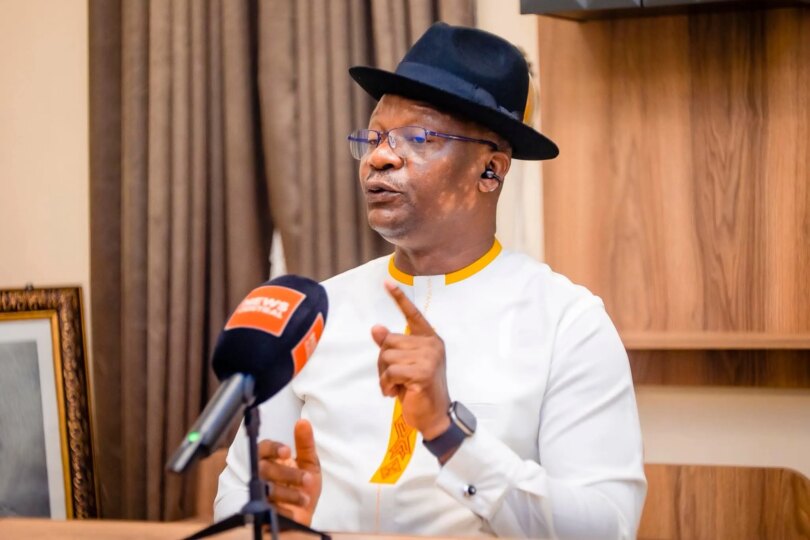
Delta State Commissioner for Works (Rural Roads) and Public Information, Mr Charles Aniagwu, has defended the conduct of the All Progressives Congress (APC) Delta North Senatorial primary, stating that Senator Ned Nwoko lost the contest due to weak grassroots engagement and lack of political structure within the party.
Speaking on Morning Brief on Channels Television on Thursday, Aniagwu dismissed allegations of manipulation in the primary election, insisting that the process complied with party guidelines and reflected the wishes of registered APC members across Delta North Senatorial District.
According to him, former Delta State Governor, Dr Ifeanyi Okowa, polled 113,309 votes across the nine local government areas in the district, while Nwoko secured 2,612 votes.
Aniagwu argued that internal party elections differ significantly from general elections because party members often make decisions based on loyalty, personal relationships and grassroots connections.
“There is a huge difference between internal party elections and general elections because sentiments are different. This election was won and lost based on party dynamics and grassroots relationships,” he said.
The commissioner alleged that Nwoko failed to engage party stakeholders ahead of the exercise, claiming the senator did not adequately interface with party leaders, ward executives, state legislators, commissioners, local government chairmen and other APC stakeholders across Delta North.
“We have 98 wards in Delta North and he never reached out to leaders across those wards. He never informed people that he intended to contest,” Aniagwu said.
He further claimed that Nwoko lacked political structures even within his immediate political environment, adding that the senator’s poor relationship with party members contributed to his widespread defeat.
Aniagwu also revisited Nwoko’s emergence as senator in 2023, alleging that the lawmaker benefitted from political support facilitated by former Governor Okowa.
“Ned Nwoko went to the Senate on scholarship,” Aniagwu said, maintaining that party leaders mobilised support for him at the time.
The commissioner further defended the credibility of the APC primary process, insisting that party officiahls supervised the exercise in line with the Option A4 voting system, where party members openly queued behind their preferred candidates.
He rejected allegations that results were manipulated or taken outside the state for announcement.
“What happened was a transparent process where party members openly aligned with candidates of their choice,” Aniagwu stated.
Providing party membership figures, he said Delta Central has 168,860 registered APC members representing 36.5 per cent of the state’s membership strength, Delta North has 159,218 members representing 35.2 per cent, while Delta South accounts for 128,144 members representing 28.3 per cent.
Aniagwu added that Delta State served as the pilot state for APC’s electronic membership registration initiative, which he said significantly expanded party membership.
He maintained that internal party elections are heavily influenced by emotional connections and consistent engagement with party members.
“In party primaries, people look at who relates with them, attends their events and stays connected with them. Those emotional attachments matter,” he said.
The commissioner’s remarks come amid ongoing reactions following the APC Delta North Senatorial primary and complaints by Senator Ned Nwoko over the conduct of the exercise.