On my way to school, I see them almost every day.
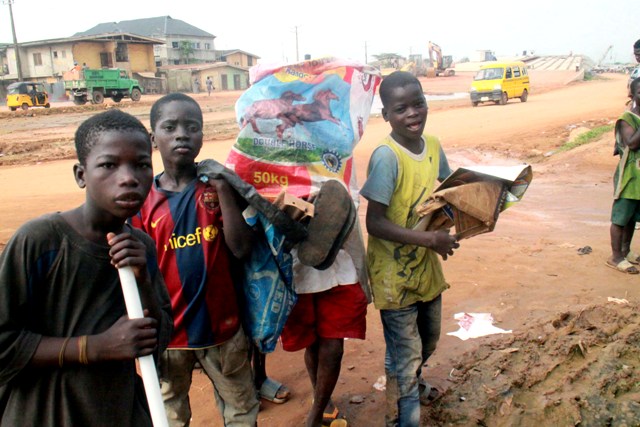
A child of seven or eight years old, standing under the hot sun with a tray in his or her hands, calling out to passersby. Sometimes, they smile, while other times they look tired. But one thing is constant: they are not in school.
A report by UNICEF over the weekend said Nigeria currently accounts for about 18.3 million out-of-school children, the highest number globally.
The report said Jigawa, Kano and Katsina have been identified as states with the highest number.
This is not surprising.
It only gave a number to what many of us already see and live with daily.
It sounds overwhelming, almost too big to imagine. But for me, it is not just a number. It is that boy on the roadside. It is that girl in the market. It is the children we walk past without thinking twice.
And maybe that is the real problem. We have learned to look, but not to see.
Read Also:Jigawa college of education, polytechnic, other key educational institutions get zero naira capital expenditure funding in Q1, 2026
Many of these children are not hidden from society; they are often found by the roadsides, markets, tertiary institution environments and even the office environments, engaging in menial jobs such as washing clothes, running errands, or hawking.
I often wonder what their mornings look like. While I’m getting ready for lectures, packing my books and thinking about assignments, what are they thinking about? Survival? Hunger? Where will the next money come from? At what point did their lives take such a different path from mine?
The report talks about poverty, insecurity, and cultural barriers, and those are real. But beyond all that, there is something deeply unsettling, many of these children were never given a real chance from the beginning.
If early childhood education is as important as experts say, then it means the system failed them long before they were old enough to even understand what school is and yet, life goes on.
Read Also:Sokoto neglects Primary Healthcare, disburses just 5% of capital budget in 2025
We pass them. We buy from them. Sometimes we even praise them for being “hardworking,” without questioning why a child has to work that hard in the first place. There is also something we do not talk about enough, and that is the role of the home.
The report points out that very few fathers are involved in early education. In many families, decisions about a child’s future are not always made with education as a priority, and when that happens, the consequences are not immediate but they are lasting. I still cannot help but think this is bigger than policy or parenting.
It is about what we, as a society, have become comfortable with. Because the truth is, these children are not invisible.
We see them every day.
We just don’t always stop to think about what their lives could have been. What they still could be if things were different.
Maybe the real tragedy is not just that so many children are out of school.
Maybe it is that their absence from the classroom no longer shocks us the way it should.