
The Federal Government has given a newly inaugurated committee 90 days to develop a National Threat Assessment and a five-year Strategic Defence Operations Plan aimed at strengthening Nigeria’s response to emerging security challenges.
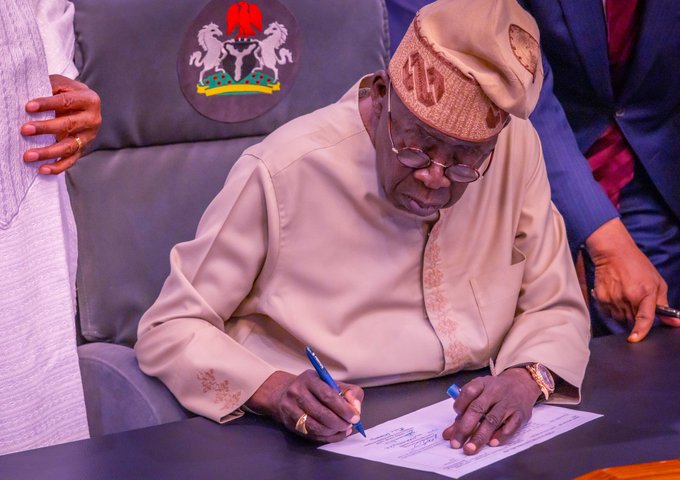
The committee was inaugurated on Wednesday by the Secretary to the Government of the Federation, George Akume, who represented President Bola Tinubu at the ceremony.
According to a statement by the SGF’s media aide, Yomi Odunuga, the committee is expected to submit both documents to the President for consideration and approval at the end of the 90-day period.
Akume said the initiative was designed to move Nigeria’s security planning from largely reactive responses to a more coordinated system capable of identifying threats early, establishing priorities and directing resources towards clearly defined security objectives.
He urged members to carry out the assignment with professionalism, objectivity, urgency and patriotism, describing it as a task of significant national importance.
The SGF said modern security threats were increasingly interconnected and capable of exploiting institutional, jurisdictional and operational gaps.
While acknowledging recent successes recorded by the military and other security agencies, he said Nigeria needed a broader strategic framework capable of anticipating threats and sustaining security operations rather than responding only to individual incidents.
Akume said the National Threat Assessment would provide a comprehensive picture of existing and emerging security threats, their strategic implications and possible responses.
The assessment, he added, would also provide a common basis for planning by the Armed Forces, intelligence agencies and other security institutions, helping the government determine areas requiring early investment in intelligence, technology, infrastructure, personnel and training.
The proposed five-year defence operations plan would then translate the findings of the threat assessment into specific operational priorities and capability requirements.
Unlike a fixed five-year strategy, Akume said the plan would be reviewed annually to reflect new threats, changing operational realities, technological developments and lessons from ongoing military operations.
He said the committee would assess the relative urgency of security threats, establish operational priorities across different theatres, identify capability gaps and determine requirements for equipment, logistics, infrastructure, technology and personnel.
It would also recommend procurement priorities based on assessed threats and operational needs, rather than institutional preferences, while establishing timelines for implementation and mechanisms for monitoring results.
Akume said security personnel risking their lives to defend the country deserved a strategic framework that clearly defined their objectives and provided the resources and capabilities required to achieve them.
The committee is being coordinated and supported by the Special Adviser to the President on Homeland Security, Maj-Gen. Adeyinka Famadewa (retd.).
Famadewa said members would work collectively to strengthen Nigeria’s security architecture, describing the assignment as a shared national responsibility.
He added that subcommittees would be created to handle specialised areas of the assignment and ensure that the committee meets the 90-day deadline.
Members of the committee include the National Security Adviser, Nuhu Ribadu; Minister of Defence, Christopher Musa; Minister of State for Defence, Bello Matawalle; Chief of Defence Staff, Olufemi Oluyede; Chief of Army Staff, Waidi Shaibu; Chief of Air Staff, Air Marshal Sunday Aneke; and Chief of Naval Staff, Vice Admiral Idi Abbas.
Others are the Inspector-General of Police, Olatunji Disu; Director-General of the Department of State Services, Tosin Ajayi; and Director-General of the National Intelligence Agency, Muhammed Muhammed.