The Federal Government has assured Nigerians that a comprehensive report detailing how funds saved from the removal of fuel subsidy and foreign exchange subsidies have been spent will soon be made public.
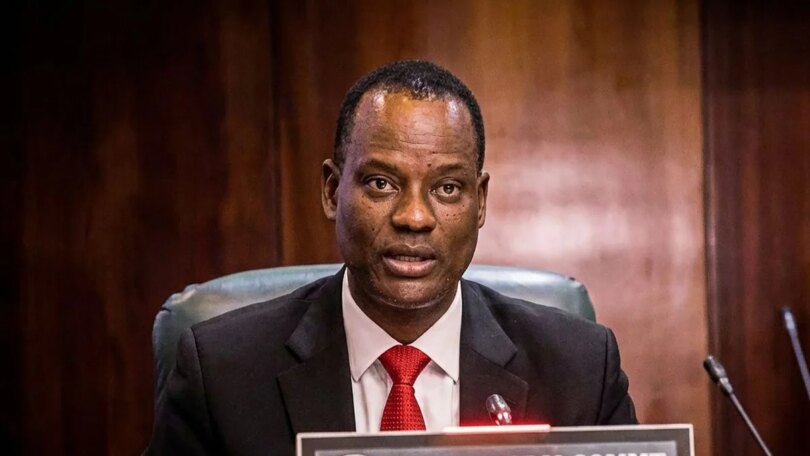
The assurance was given by the Minister of Finance and Coordinating Minister of the Economy, Wale Edun, during discussions at the 7th Africa Emerging Markets Forum held in Abuja on Thursday.
Questions about the fate of subsidy savings resurfaced during the forum after concerns were raised that many Nigerians were yet to see clear evidence of how the gains from the reforms had improved their daily lives.
Responding to the concerns, the minister acknowledged that Nigerians deserved answers and promised that the government would provide a detailed explanation of how the funds had been utilised.
“There was a question about the subsidy savings. Where has it gone to? I’ve heard this question so many times. And guess what? It’s a valid question,” he said.
He added that the government was committed to transparency and would soon release a breakdown of the expenditures linked to the savings generated from the policy changes.
“So where has the money gone to? And in a few days, you will see the detailed analysis, because we believe that we owe a duty to explain what we do to the Nigerian people. That’s what transparency looks like,” the minister stated.
According to him, the combined effect of removing fuel subsidy and ending what he described as foreign exchange subsidies represented roughly five per cent of Nigeria’s Gross Domestic Product (GDP), making it one of the most significant fiscal reforms undertaken by the government in recent years.
The minister explained that while many people viewed the reforms mainly from the perspective of expected financial savings, the primary objective was to correct long-standing distortions within the economy and create a more sustainable fiscal framework.
He noted that part of the resources generated had been absorbed by rising debt servicing obligations, which increased following changes in interest rates and broader economic adjustments.
The government, he said, had also directed substantial resources toward social intervention programmes and public sector obligations.
Among the initiatives highlighted was the implementation of the new N70,000 minimum wage approved for workers across the country.
He also pointed to the Nigerian Education Loan Fund (NELFUND), which has provided financial support to students in tertiary institutions.
According to him, more than 1.5 million students have benefited from tuition support and monthly stipends under the scheme.
The minister further defended the government’s borrowing strategy despite improvements in revenue generation.
He explained that increased revenue collection does not automatically eliminate the need for borrowing where government expenditure remains higher than available income.
“If you have a budget to spend 10 and you have a target of revenue of six, you need to borrow four. If you collect revenue of seven, you have exceeded your revenue target. But it doesn’t change the fact that you still need to borrow three,” he explained.
He maintained that borrowing remains a legitimate economic tool when the funds are invested in projects capable of generating returns greater than the cost of the loans.
On concerns about rising poverty levels, the minister rejected suggestions that the reforms themselves had created the hardship currently being experienced by many Nigerians.
He argued that the country was dealing with the consequences of years of economic distortions and unsustainable spending patterns, insisting that difficult decisions were necessary to place the economy on a more stable path.
“The reform itself was a reset. We were living in fiscal illusions. So, we needed to stop deceiving ourselves so the country can move forward,” he said.
He added that the government’s current focus is on ensuring that recent economic gains translate into job creation, increased productivity and improved living standards for citizens.
The minister also disclosed that authorities are working on measures aimed at reducing the cost of capital for businesses and investors without introducing fresh subsidy programmes.
He said the initiative is expected to complement efforts by the Central Bank of Nigeria (CBN) to tackle inflation and stimulate growth in key sectors of the economy.
Also speaking at the forum, the Director of Statistics at the Central Bank of Nigeria, Dr. Okpanachi Moses, presented findings from a study covering 36 Sub-Saharan African countries.
Moses said the research showed that food price volatility and inflation often reinforce each other, making it more difficult for monetary authorities to effectively manage inflation through conventional policy tools.
He explained that food price shocks have a particularly strong impact in African countries because households spend a significant share of their income on food.
“What we found is, interestingly, a mutually reinforcing relationship between food price volatility and inflation persistence,” he said.
According to him, countries experiencing conflict often face greater challenges in controlling inflation because disruptions in food production and supply chains quickly affect consumer prices.
He stressed that restoring food systems and implementing structural reforms were essential for long-term price stability.
“Central banks in countries that are in conflict must apply demand-side tools with caution. What is critical is that there needs to be more investment towards restoring or stabilising the food system,” Moses stated.