President Bola Tinubu has revealed that the Federal Government tracked the families and communities of the kidnappers behind the abduction of schoolchildren and teachers in Oyo State, insisting that his administration neither negotiated with the criminals nor paid ransom for the victims’ release.
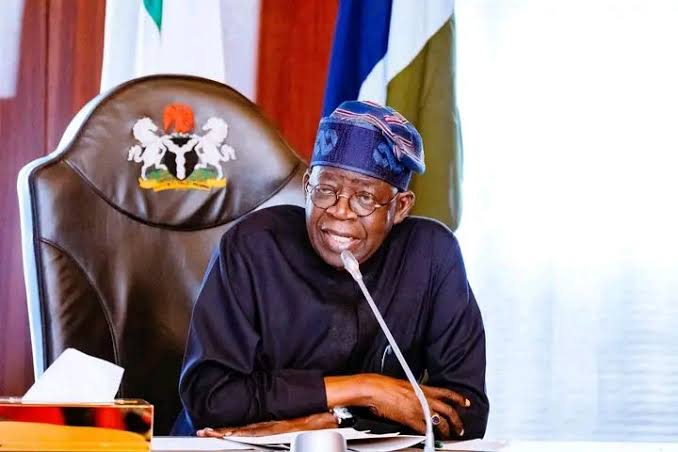
The President disclosed this on Thursday while receiving a delegation of traditional rulers from Oyo State, led by the Olubadan of Ibadanland, Oba Rashidi Ladoja, at the Presidential Villa, Abuja.
Speaking publicly for the first time since the victims were rescued on July 10, Tinubu said the kidnappers demanded money and the release of detained members of their gang, but the government rejected both conditions.
“We refused to negotiate for ransom. These criminals wanted us to release from detention members of their criminal gangs that were already arrested. That was one of their conditions, outside of the money they were looking for.
“And we said no deal. We are not going to negotiate with criminals. They committed murder, and we were ready to finish with their families, members of their own communities. They grew up somewhere,” the President said.
Tinubu said the successful rescue operation was made possible through intelligence gathering and the military’s knowledge of the terrain, describing it as a major lesson that prompted changes in the country’s security architecture.
He said the Federal Government’s decision to expand the Nigerian Army from eight to 12 divisions was a direct response to the Oriire school abduction, aimed at reducing response time and strengthening the fight against terrorism and banditry.
“We refused to pay ransom. We have the geography of the forest. We know what it is, and in answer to it, you’ve seen that from eight divisions, we are now moving to 12 divisions, to shorten the response time and give that response time the teeth needed to defeat terrorism and banditry,” he said.
The President also reiterated plans to establish state police with safeguards against abuse and announced that forest guards would be retrained and equipped to combat criminal elements operating in forests.
He blamed the growing insecurity on instability in neighbouring Sahel countries, including Mali, Burkina Faso and Niger Republic, saying many of those involved in attacks were not Nigerians.
Tinubu urged traditional rulers to mobilise their communities to support security agencies with credible intelligence by reporting suspicious individuals and activities.
He also advised state governors to prioritise road construction over unnecessary flyover projects, noting that improved road networks would enhance economic activities and make remote communities more accessible to security agencies.
“They are taking four to five times their money. Instead of building flyovers where there is no significant traffic, they should build roads and artery networks that improve quality of life and enable security agencies to access difficult areas,” he said.
The President commended the armed forces for their role in rescuing the abductees and called on Nigerians to appreciate security personnel for their sacrifices.
Earlier, the Olubadan of Ibadanland, Oba Rashidi Ladoja, said the delegation visited the President to thank him and the armed forces for securing the release of the abducted pupils and teachers after 56 days in captivity.
The monarch also commended the Federal Government for ongoing road projects in Oyo State, including the proposed dualisation of the Ibadan-Ijebu Ode, Ogbomoso-Ilorin and Badagry-Sokoto roads, describing them as critical to economic development and regional connectivity.
The victims were abducted on May 15, 2026, when gunmen attacked three schools in Esiele and Yawota communities of Oriire Local Government Area of Oyo State, killing a mathematics teacher, Michael Oyedokun, and taking about 39 pupils and seven teachers hostage.
They were rescued on July 10 in an intelligence-led operation that authorities said resulted in the arrest of eight suspects and the neutralisation of several others without the payment of ransom.