FIFA has announced plans to partially open up the commercial side of its operations to private investors through a new subsidiary that will manage business activities linked to the World Cup and other competitions. The global football governing body said it would maintain majority ownership of FIFA Forward Enterprise (FFE),……
FIFA has announced plans to partially open up the commercial side of its operations to private investors through a new subsidiary that will manage business activities linked to the World Cup and other competitions.
The global football governing body said it would maintain majority ownership of FIFA Forward Enterprise (FFE), while seeking to raise $4.2 billion later this year by offering minority, non-controlling stakes to selected long-term investors.
FIFA said the move was aimed at strengthening its commercial operations and expanding funding for football development, while stressing that the organisation would retain full control over sporting and regulatory matters.
The announcement followed reports by The Times and The Financial Times that details of the proposed structure had emerged through leaked information from sources familiar with the plan.
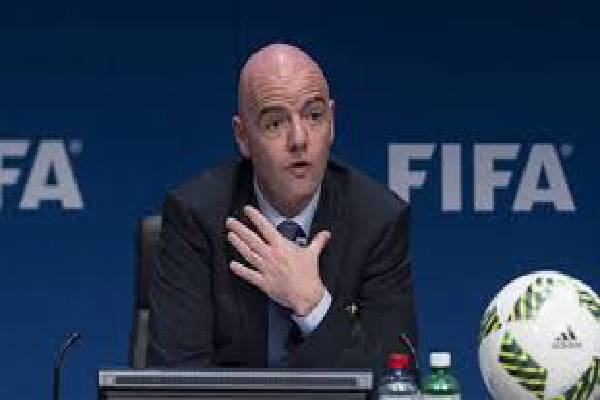
The Times reported that FIFA President Gianni Infantino could potentially become commissioner of FFE after his expected next term as FIFA president ends in 2031. FIFA, however, rejected the claim, saying no such arrangement had been discussed.
The reports also indicated that FIFA had begun discussions with financial advisers and prospective investors, including Thrive Capital, the investment firm founded by Joshua Kushner, as well as an investment arm of JP Morgan Chase.
Former FIFA President Sepp Blatter criticised the reported plan, pointing to the close relationship between Infantino and United States President Donald Trump.
“The close relationship between the FIFA President and the US President has reached a financial dimension that is deeply damaging football. No one has the right to sell our game,” Blatter said in a social media post.
European football’s governing body, UEFA, also expressed opposition to the proposal.
“This crosses a line that football’s governing institutions should never cross. UEFA takes it extremely seriously,” UEFA said.
Read Also: Vozinha, Messi, Rodri Make FIFA World Cup Best XI
“The soul and governance of football are not assets to trade — especially with zero transparency as to who gains financially. None of us are the owners of football. It is not FIFA’s to sell.”
The proposal will require approval from the 38-member FIFA Council and a majority of FIFA’s member associations before it can take effect.
FIFA said it plans to present the proposal to the council soon, adding that it “would retain sole control of FFE and exclusive authority over football governance, competitions, match calendar, and all regulatory and sporting decisions”.
The organisation said FFE could have an “initial equity valuation of $20bn”.
Under the proposal, each of FIFA’s 211 member associations would also have the opportunity to acquire a one-off $20 million stake in FFE.
FIFA said the investment scheme, combined with its existing development programmes, could take its total planned development funding beyond $10 billion over the next four years.
The proposal has also drawn criticism from British Prime Minister Andy Burnham, who argued that football should not be treated as a commercial product.
“Football does not belong to investors. It belongs to the people who fill the stands and who stand on the touchline week in, week out, rain or shine. The World Cup is not a product. It is the greatest competition in world sport, and it was never anyone’s to sell. Dress the deal up however you like. Once you have sold a piece of it, you have sold out. Football belongs to the fans. It always has, and it always will,” he wrote on X.
The development comes after FIFA projected record revenues of more than seven billion euros ($8 billion) for 2026, following the expansion of the World Cup to 48 teams.
Infantino had also previously disclosed that FIFA had discussed the possibility of expanding the 2030 World Cup to 64 teams.
Critics have raised concerns that greater private investment could create pressure to expand major FIFA competitions or increase their frequency.
In 2019, a FIFA stakeholders’ committee rejected a proposal backed by Infantino for a $25 billion private investment in an expanded Club World Cup. The proposed investors reportedly included Japan’s SoftBank and Saudi Arabia’s sovereign wealth fund.
FIFA subsequently expanded the Club World Cup from seven teams to 32 clubs in 2025.
The organisation has also previously faced financial difficulties involving commercial partnerships, including losses associated with the collapse of ISL, which negotiated World Cup broadcasting rights, in 2001. Estimates of FIFA’s losses from the collapse ranged from $30 million to $115 million.