
Jigawa is stepping up its fight against desertification, with the National Agency for the Great Green Wall targeting 500,000 seedlings for planting across the state during the 2026 rainy season….
Jigawa is stepping up its fight against desertification, with the National Agency for the Great Green Wall targeting 500,000 seedlings for planting across the state during the 2026 rainy season.
The campaign is expected to cover more than 50 hectares, with authorities hoping the trees will help reclaim degraded land, reduce soil erosion and provide a buffer for communities increasingly exposed to the effects of climate change.
The Director-General of the National Agency for the Great Green Wall, Saleh Abubakar, announced the target during an inspection of ongoing projects across Jigawa.


Already, plantations have been established in several communities.
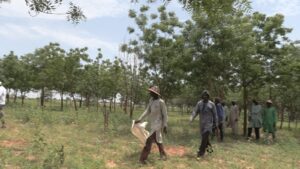
In Fari, the agency has planted 10 hectares of gum Arabic and 20 hectares of woodlots, while another 10 hectares of cactus and gum Arabic have been established at Yarda Kangiwa in Kaugama Local Government Area.
Five hectares of woodlots have also been planted in Balangu, Kafin Hausa Local Government Area, while about 10 kilometres of neem trees have been established along the Kamataraye shelterbelt in Maigatari.
For residents in communities facing desertification, the trees are becoming an important line of defence against environmental degradation.
They say the plantations can provide protection while offering communities potential sources of energy and other economic benefits.
But officials warn that planting the trees is only the beginning.
The Jigawa State Field Officer, Kabiru Abubakar, urged residents to protect the plantations and take ownership of the projects, particularly against vandalism and other forms of damage.
He linked changing rainfall patterns and deforestation to some of the environmental challenges confronting the state.
The Great Green Wall programme is being implemented in Nigeria’s 11 frontline states as part of efforts to restore degraded land and strengthen climate resilience.
The agency announced a five-year plan in 2025 to plant 50 million date palm trees across the 11 states, beginning with five million seedlings.
With the 2026 planting season now underway, Jigawa’s 500,000-seedling target represents another major step in the campaign to push back desertification and build more resilient communities.