The Netherlands is officially no longer experiencing a national water shortage, but the effects of the long drought are expected to continue for months.
Weeks of rainfall and lower demand for water have improved the situation enough for the government to lower the country’s water shortage status from level two to level one. Level one means there is still a risk of a shortage.
Several factors have helped.
Farmers are now harvesting crops and using less water for irrigation. Cooler weather has also reduced the amount of water lost through evaporation.
The government team that met every week during the summer to deal with the shortage will now stop meeting.
However, officials will continue monitoring the situation through the national water distribution committee and the weekly drought monitor.
Despite the improvement, the drought itself is not over.
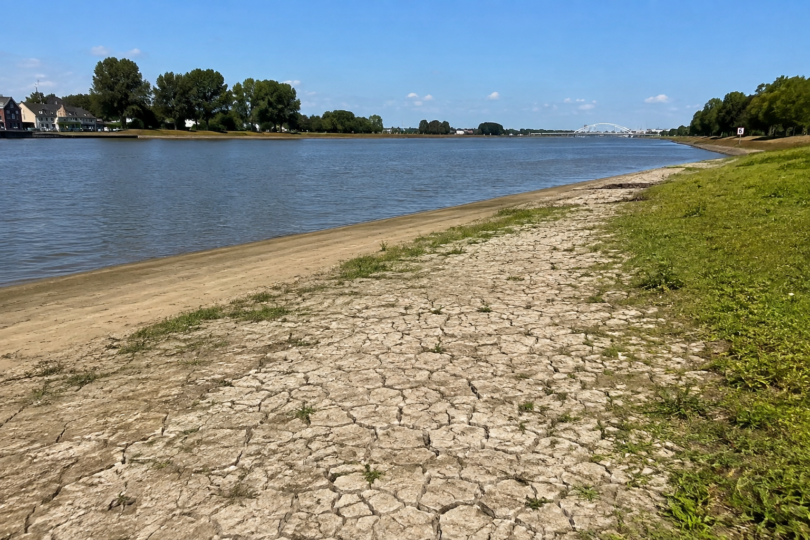
The Rhine is currently carrying only around half the amount of water normally expected at the beginning of September.
Officials warn that river levels could remain unusually low until the end of 2026. Groundwater levels could take even longer to return to normal.
The situation also remains difficult for some houseboat owners.
Some houseboats became stranded after parts of the Rhine dried up during the summer. They will remain stuck until water levels rise enough for them to float again.
Shipping companies are also dealing with reduced services and delays at locks.
Restrictions on taking water from certain areas remain in place across the higher sandy regions in the east and south of the Netherlands.
Officials are also concerned about saltwater entering the IJsselmeer, which could affect water used by drinking water suppliers.
Some regional water authorities have started removing restrictions as conditions improve.
Despite the continuing drought problems, officials say drinking water supplies in the Netherlands remain secure.