
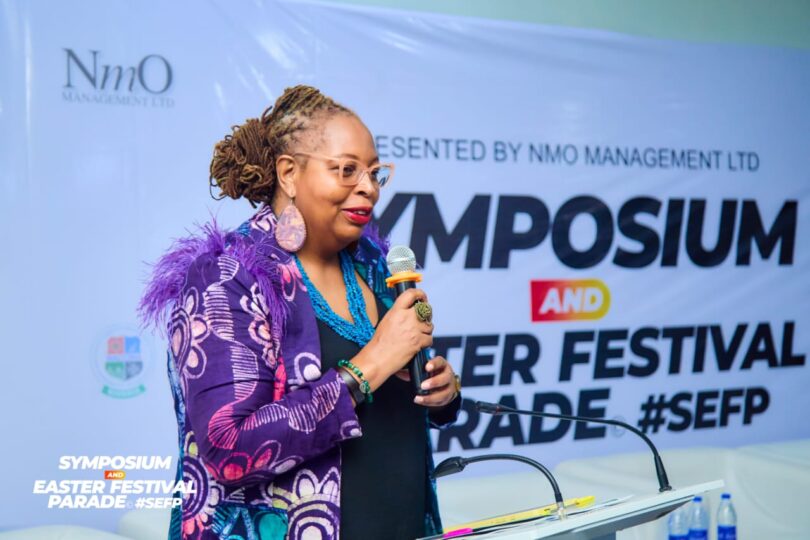
Nigeria’s creative economy is moving into a new phase as a planned partnership with Portugal shifts from a signed Letter of Intent towards implementation, with trade, investment, knowledge exchange and international market access at the centre of the emerging framework….
Nigeria’s creative economy is moving into a new phase as a planned partnership with Portugal shifts from a signed Letter of Intent towards implementation, with trade, investment, knowledge exchange and international market access at the centre of the emerging framework.
The development comes alongside the reappointment of Dr Ngozi Omambala as Vice Chairman of the Creative Economy Trade Group of the Nigerian Association of Chambers of Commerce, Industry, Mines and Agriculture (NACCIMA) for the 2026/2027 tenure.
Her appointment, effective September 1, followed a decision by the NACCIMA Council at its second-quarter meeting in Port Harcourt on June 24 and subsequent approval by the association’s National President, Engr. Jani Ibrahim, OON.
The renewed mandate comes as NACCIMA prepares to implement its creative economy collaboration with the Migration Observatory Lab of the Centre of African Studies at the University of Porto, Portugal.
NACCIMA communicated its readiness on September 7 to proceed with implementation of the partnership following the signing of the Letter of Intent.
The next phase is expected to include a joint 12-month work plan, pilot programme design, resource mobilisation and coordinated engagement with relevant stakeholders.
For Nigeria, the significance of the development lies in the potential to convert the country’s considerable cultural influence into stronger commercial and institutional structures.
Nigeria’s music, film, fashion, visual arts and digital content industries have built substantial international audiences. However, challenges around financing, intellectual property, distribution, export systems, professional infrastructure and access to international markets continue to affect the ability of creative businesses to fully commercialise that global reach.
NACCIMA’s Creative Economy Trade Group has a mandate that goes beyond cultural promotion. It is responsible for promoting investment opportunities in the creative economy, travel, tourism, hospitality and entertainment sectors, contributing to policy development and addressing constraints to sector growth.
The group also works with stakeholders including Nollywood, NANTAP and creative entrepreneurs.
That gives the Portugal partnership a clear economic and commercial dimension.
Rather than treating culture solely as a tool of international visibility, the emerging framework places creative production within a broader conversation around enterprise, trade and investment.
Representing the NACCIMA Creative Economy Trade Group in the engagement with the University of Porto, Omambala said the creative economy was becoming an increasingly important driver of enterprise, trade, investment, innovation, employment and international engagement.
“My renewed mandate within NACCIMA provides an opportunity to deepen the connection between Nigeria’s creative businesses and wider domestic and international markets, institutions and investment opportunities,” she said.
Nigeria has already demonstrated that its cultural products can travel.
Nigerian musicians perform before international audiences, Nollywood productions circulate across Africa and the diaspora, while Nigerian fashion continues to gain visibility in global cultural spaces.
But international recognition alone does not constitute a mature creative economy.
The sector also requires access to finance, reliable distribution channels, export frameworks, intellectual property protection, market intelligence, skills development, data and international commercial networks.
That is where the proposed relationship with a European academic and institutional partner could become significant.
The University of Porto collaboration is expected to facilitate knowledge exchange and stakeholder coordination, but its long-term impact will depend on whether it delivers practical opportunities for Nigerian creative businesses.
Omambala said the partnership should move “beyond conversations to practical programmes, knowledge exchange, institutional partnerships and resource mobilisation” capable of delivering measurable value to creative entrepreneurs and the wider Nigerian economy.
The next 12 months will therefore be important.
The partnership will need to translate its institutional commitments into tangible outcomes, including potential market access, new business relationships, training, research, funding opportunities and connections between Nigerian entrepreneurs and European networks.
That matters because Nigeria’s creative economy has often been driven by individual talent and private enterprise, while the institutional systems supporting those successes have developed more slowly.
The wider economic impact of the sector also extends beyond artists and performers.
Film production supports technicians, lawyers, advertisers, designers, transport operators and other service providers.
Music events generate activity across hospitality, tourism, transport and retail.
Fashion connects creative talent with manufacturing, merchandising and exports, while visual arts can support cultural tourism and international exchange.
NACCIMA’s decision to bring creative industries together with travel, tourism, hospitality and entertainment reflects this interconnected economic ecosystem.
Portugal could potentially provide a pathway into wider European institutional and commercial networks. But the value of the relationship will ultimately depend on whether it produces sustainable connections and commercial opportunities rather than remaining at the level of ceremonial exchanges.
Nigeria’s creative industries have already established international appeal.
The challenge now is building the commercial architecture capable of capturing more of the economic value generated by that appeal for Nigerian businesses and creative professionals.
Omambala, who is also Founder and Festival Director of Artistic Pulse Festival & Trade Fair 2026 and Group Managing Director and Chief Executive Officer of NMO Management Ltd, brings experience across creative enterprise, trade, cultural diplomacy and international stakeholder engagement.
Her role places her at the intersection of the institutional and entrepreneurial sides of the conversation: connecting creative talent with markets, investment and business opportunities.
NACCIMA says the renewed appointment and the University of Porto implementation process are expected to support efforts to position Nigeria’s creative economy as a platform for enterprise growth, trade, investment, knowledge exchange and sustainable economic development.
The ambition is substantial, but the more important phase begins with implementation.
For Nigeria’s creative economy, the question is no longer whether the country has cultural influence. It clearly does.
The bigger question is whether that influence can be converted into organised, measurable and sustainable economic value.
The Nigeria–Portugal partnership will now have an opportunity to help answer that question.