
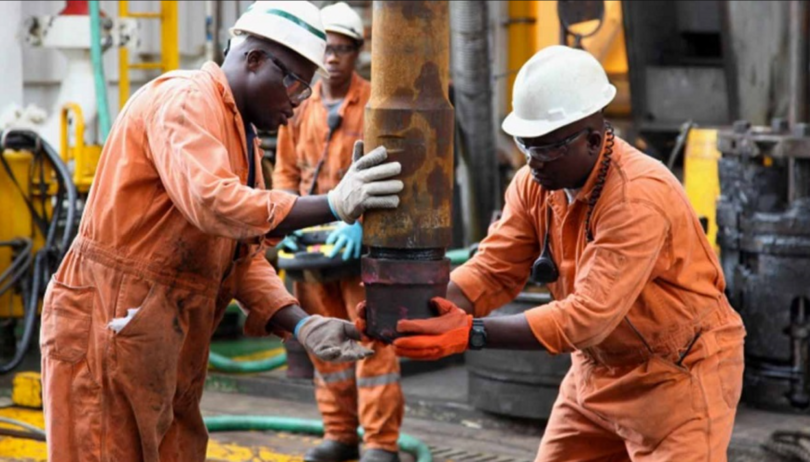
Nigeria’s oil sector contributed 3.92% to the country’s total real Gross Domestic Product (GDP) in the first quarter of 2026, reflecting a slight decline from the corresponding period of 2025 despite improved growth in the sector.
This was contained in the latest figures released by the National Bureau of Statistics on Monday, May 25.
According to the report, Nigeria’s economy recorded a real Gross Domestic Product (GDP) growth of 3.89% year-on-year in the first quarter of 2026, marking an improvement over the 3.13% recorded in the corresponding period of 2025.
The NBS data showed that the oil sector posted stronger year-on-year growth in the first quarter of 2026 compared to the same period last year.
However, the sector’s performance slowed when compared to the previous quarter, although quarter-on-quarter growth remained positive at 9.31% in Q1 2026.
The report also showed that the oil sector’s contribution to the country’s real GDP declined slightly on a year-on-year basis, though it improved compared to the preceding quarter.
The NBS further disclosed that Nigeria recorded an average daily oil production of 1.55 million barrels per day (mbpd) in the first quarter of 2026, lower than the 1.62 mbpd recorded in the same quarter of 2025 and below the 1.58 mbpd produced in Q4 2025.
The report showed that the country’s GDP growth in the first quarter was largely supported by agriculture, industry, and services activities, with agriculture recording improved performance compared to the same period last year.
The services sector remained the biggest contributor to Nigeria’s economy during the quarter under review.
The non-oil sector also maintained its dominance in the economy, contributing 96.08% to real GDP in Q1 2026, driven mainly by telecommunications, crop production, trade, manufacturing, financial institutions, real estate, construction, and transportation.
The latest GDP figures come amid growing concerns over Nigeria’s medium-term growth outlook following weaker global economic projections and ongoing geopolitical tensions linked to the Middle East crisis.
The IMF disclosed this during a media briefing for the launch of its April 2026 Global Financial Stability Report.
It is believed that prolonged instability in the Middle East could further impact crude oil prices, energy markets, inflation, and trade flows, with implications for oil-dependent economies such as Nigeria.