The Executive Chairman of the EFCC, Ola Olukoyede, gave the charge recently when staff and 100-level students of the Department of Cybersecurity, Abdulkadir Kure University, Niger State, visited the Commission’s Corporate Headquarters in Abuja. Olukoyede, who was represented by the Head of Public Interface Unit of the EFCC, Assistant Commander……
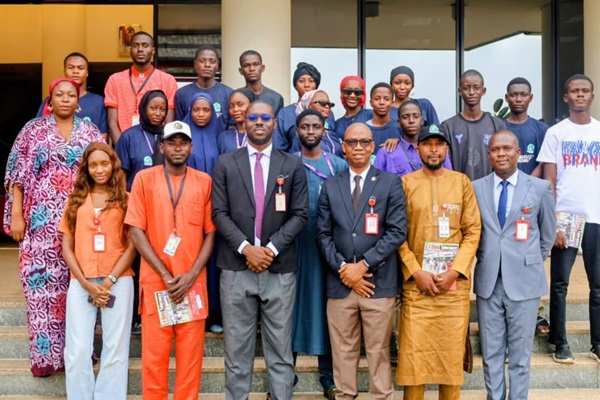
The Executive Chairman of the EFCC, Ola Olukoyede, gave the charge recently when staff and 100-level students of the Department of Cybersecurity, Abdulkadir Kure University, Niger State, visited the Commission’s Corporate Headquarters in Abuja.
Olukoyede, who was represented by the Head of Public Interface Unit of the EFCC, Assistant Commander of the EFCC, ACE I Tony Ojelimafe Orilade, said the fight against corruption and economic and financial crimes should not be left to the Commission alone.
“We need you in this fight against economic and financial crimes because Nigeria is so blessed with natural resources but there is an issue of corruption and that is why the EFCC was set up to fight the menace
“We cannot do it all alone. We need everybody. We need you because this fight is not the fight for the staff of the Commission. It is not the fight for the EFCC Chairman. It is a fight for the betterment of this country, Nigeria.”
Olukoyede urged the students to report suspicious activities, saying their contribution was essential to reducing corruption in the country.
Read Also: EFCC, NELFUND Move to Prevent Diversion of Student Loan Funds
He said, “If we join hands together to fight corruption, let us work to the point that corruption is reduced to the very barest minimum. How do you join in this fight? When you see something, please try and say something. You cannot say it is none of your business.”
The EFCC boss also warned students against cybercrime, popularly known as yahoo yahoo, saying the consequences could extend beyond imprisonment and affect their future opportunities.
The Chairman added that a criminal record could have serious consequences for young people seeking employment, education or international travel, adding that, “be an ambassador. Represent your family. Your family has a name. Don’t destroy that name.”
Also speaking, the Head of the Commission’s Enlightenment and Reorientation Unit, Assistant Commander of EFCC, ACE II Aisha Mohammed, urged the students to take ownership of the anti-corruption campaign.
Mohammed said the EFCC’s mandate included prevention, investigation and prosecution of economic and financial crimes, adding that the commission had programmes aimed at promoting integrity among young people.
She said, “You need to understand that this fight against corruption is for everyone. You have to own it. It is not EFCC alone. If Nigeria is bad, it is also us that will suffer it. So we have to understand that we have to fight this fight together.”
She disclosed that the EFCC operates Integrity Clubs in primary and secondary schools and Zero Tolerance Clubs in tertiary institutions.
Mohammed urged the students to resist peer pressure, avoid greed and remain content with what they had.
In a lecture on “Cybercrime and Its Menace,” Detective Ogunjobi Olalekan of the EFCC Cybercrime Unit, explained the two broad categories of cybercrime as cyber-dependent and cyber-enabled crimes.
Olalekan also warned the students against cyberstalking, unauthorised access to computer systems and the possession or distribution of child sexual abuse material.
He particularly cautioned against sextortion and the recording or sharing of nude images, noting that such acts could have devastating consequences for victims, adding that cybercrime had consequences not only for victims but also for perpetrators, their families and society.
He listed “financial losses, identity theft, emotional distress, damage to reputation and relationships, loss of opportunities and psychological trauma” among the consequences associated with cybercrime.
Olalekan, however, encouraged the students to consider cybersecurity as a viable career path, urging them to use their university years to develop specialised skills.
“You can use these four years to fine-tune your life,” he said, adding that skilled cybersecurity professionals could work remotely for organisations across different countries.
The Head of Department, Dr Jamilu Yahaya Maipan-Uku, who represented the university, said the visit was designed to expose the students to the practical realities of cybercrime and cybersecurity.
Maipan-Uku said the EFCC was among the agencies whose activities were directly relevant to the students’ field of study.
He said, “The EFCC is one of the agencies that actually coordinates the activity of cybercrime, which is solely in line with the cybersecurity responsibility. We felt it was necessary for them to hear it from the horse’s mouth, what the available cybercrimes are and what are the events that are associated with those crimes. It is better we come here so that they will be educated at the inception.”
Maipan-Uku said the university was interested in establishing a stronger relationship with the EFCC, including possible internship opportunities for its students.
The don also appealed to the EFCC to consider supporting the university’s cybersecurity programme with forensic laboratory facilities and other relevant tools.
He said the university would be willing to partner with the commission in training students and developing cybersecurity expertise.