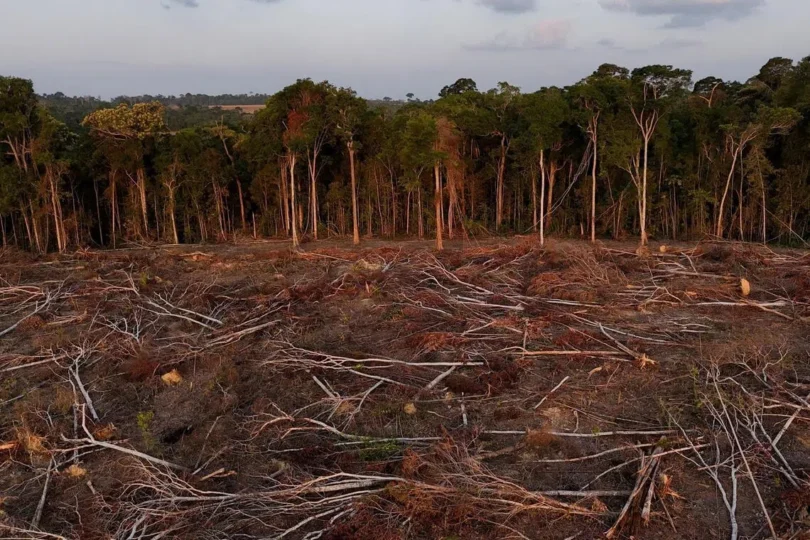
SINGAPORE – The world lost tropical rainforests the size of Denmark in 2025 after fires triggered record destruction across the tropics in 2024, though a sharp decline in forest loss in Brazil helped brighten the picture.
Global tropical rainforest loss fell 36 per cent in 2025 to 4.3 million ha, down from a record 6.7 million ha in 2024, said the authors of an annual study by the University of Maryland.
Every minute, rainforest area equivalent to about 11 football fields disappeared in 2025, the researchers said in the annual report released by Global Forest Watch. The report is prepared by the Washington-based World Resources Institute think-tank and the University of Maryland.
They analysed global satellite data to detect changes in tree cover, which could be due to manmade clearance, fires or natural disturbances such as flooding or rivers changing course.
Brazil lost 1.6 million ha of primary forests in 2025, a fall of 42 per cent from the year earlier, partly because of stronger environmental policies.
But Indonesia’s primary forest loss ticked up 14 per cent to nearly 300,000 ha – about four times the area of Singapore – driven by mining, plantations, floods, and the government’s food and energy estate programme. Malaysia’s forest loss eased 5 per cent to just over 65,000 ha.
While the 36 per cent drop in global tropical rainforest loss was encouraging, the researchers said it also reflected a lull after an extreme fire year in 2024.
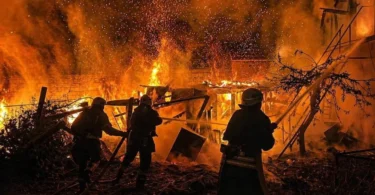
There are also fears that the fire threat could return, with scientists predicting an El Nino forming in the coming months, which typically pushes up global temperatures and triggers droughts and fires in South-east Asia and parts of South America.
“Fires and climate change are feeding off each other, and with El Niño on the horizon for 2026, investments in prevention and response will be critical as extreme fire conditions become the norm,” Ms Elizabeth Goldman, co-director of Global Forest Watch, said in a statement.
The researchers also looked at total tree cover loss globally, which eased 14 per cent in 2025, reaching 25.5 million ha – an area a little larger than Laos. But fires were still responsible for 42 per cent of global tree cover loss.
In Canada, 85 per cent of the 6.2 million ha of tree cover loss in 2025 was due to fires, the study shows. This makes the 2025 fire season the nation’s second worst in history, after blazes in 2023 smothered large parts of North America in smoke reaching Europe.
Southern Europe suffered large wildfires because of increasing summer temperatures and drought. In France, tree cover loss due to fire in 2025 was the highest on record. But Russia’s tree cover loss from fire was the lowest in a decade.
The tropics remained a key focus for the researchers as they have long been a hotspot for deforestation to meet growing demand for food such as soy, corn, beef as well as palm oil and wood fibre for packaging and clothing. Most of the deforestation linked to human activities occurs in the tropical regions.
Primary forests are largely undisturbed areas rich in plant and animal species. They play a major role in regulating the global climate by soaking up planet-warming carbon dioxide from the air and storing water for rivers.
Despite years of pledges by governments and companies to halt and reverse tree cover loss, rainforests continue to be cleared. Brazil has lost roughly 20 per cent of its Amazon rainforest during the past 50 years, while Indonesia has lost more than 40 per cent of its forests.
There are also concerns that Indonesia’s deforestation rate will accelerate sharply after remaining largely flat for the past seven years.
Forest loss in the country surged by 66 per cent in 2025, hitting its highest level in eight years amid weak environmental protections and an ambitious drive for food and energy self-sufficiency, environmental group Auriga Nusantara said on March 31.
The Jakarta-based think-tank said forest loss was driven by a complex mix of clearing for food and bioenergy crops, as well as palm and pulpwood plantations, mining expansion, and severe flooding in northern Sumatra due to Cyclone Senyar last November.
Nearly a fifth of the deforestation in 2025 was due to the government’s food and energy estate programme, Auriga said. It joined other conservation groups in voicing concern about a large rice and sugar food estate being created in South Papua province that could eventually cover 2 million ha.
At a media briefing for the report on April 23, Ms Goldman said that humanity was far from meeting a 2021 commitment signed by more than 140 countries to halt and reverse forest loss by 2030.
“We are still 70 per cent higher than where we should be in 2025 to meet this goal, and achieving it in the coming years will not be easy, as forests become more vulnerable to climate change, and as humanity’s growing demand for food, fuel and material source from forests and the lands they stand on continues to grow.”