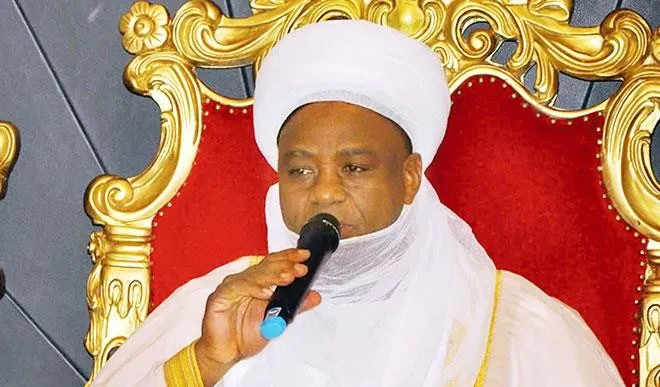
The Sultan of Sokoto and President-General of the Nigerian Supreme Council for Islamic Affairs, NSCIA, Sa’ad Abubakar III, has dismissed claims of a planned “Islamisation” of Nigeria, describing such narratives as impossible and divisive.
Speaking on Wednesday at the First Triennial Meeting of the Nigeria Inter-Religious Council, NIREC, in Abuja, the Sultan affirmed that Muslims have no agenda to dismantle the Christian population, stating that God in His wisdom brought both faiths together for a purpose.
The Sultan, who is also the Co-Chairman of NIREC, stressed that the council remains a vital platform for dialogue, which he believes is the only instrument to set the nation free.
He noted that in his 20 years on the council, he has never missed a meeting, a testament to his commitment to peace.
“We believe talking is better than fighting. Let us understand our differences rather than trying to forget them; I am a Muslim, you are a Christian, and we must live together with respect,” he said.
Addressing the theme of religious literacy, the monarch warned against the rise of “self-styled” clerics who lack deep theological knowledge.
He pointed out that knowing the Arabic language does not make one an Islamic scholar, just as pastors in parts of the Middle East preach in Arabic.
He urged religious leaders to be literate enough to guide their followers correctly and prevent the weaponisation of faith for selfish or political gains.
The Sultan also took a firm stand against the religious profiling of criminals, insisting that bandits and terrorists should be called by their names rather than being linked to Islam.
He stated that any individual who takes an innocent life under the guise of religion is “going to hell,” as Islam equates the killing of one human being to the destruction of all humanity.
He lamented that more Muslims have actually been killed in the “madness” of banditry and terrorism across the North.
Ahead of the 2027 general elections, the Sultan called for increased trust between faith leaders and their followers.
He noted that without mutual trust, national progress would remain elusive.
He commended the collaboration between NIREC and international bodies, mentioning recent high-level interfaith engagements in London involving the Archbishop of Canterbury and prominent Islamic scholars aimed at finding home-grown solutions to Nigeria’s challenges.
He expressed gratitude to the Federal Government for its support and urged NIREC members to remain steadfast in steering the nation toward peace.
“Even if the government is not funding us, we will find ways to continue our meetings,” he said.
He emphasised that the sight of Christian and Muslim leaders eating and working together sends a powerful message of unity to the grassroots.
NAN