
Artificial Intelligence (AI) is transforming the technology industry at a rapid pace. While companies are using AI to improve productivity and reduce costs, the shift is significantly affecting jobs. Data compiled by Layoffs.fyi shows that AI-led layoffs in the global technology sector continue to rise, with 2026 already surpassing the total layoffs recorded in 2025 even though only half the year has passed.
According to the data, AI-related tech layoffs worldwide touched 1.28 lakh employees by July 1, 2026, higher than the 1.25 lakh layoffs recorded during the whole of 2025. Companies are accelerating their adoption of AI tools and automation technologies, leading to workforce restructuring across industries.
The trend has been building for several years. Global AI-led tech layoffs stood at around 81,000 in 2020, before dropping sharply in 2021. However, layoffs surged to more than 1.65 lakh in 2022 and peaked at nearly 2.66 lakh in 2023. While the numbers eased in 2024 and 2025, the half-year 2026 figure has already crossed last year’s total, indicating that the impact of AI on jobs remains far from over.
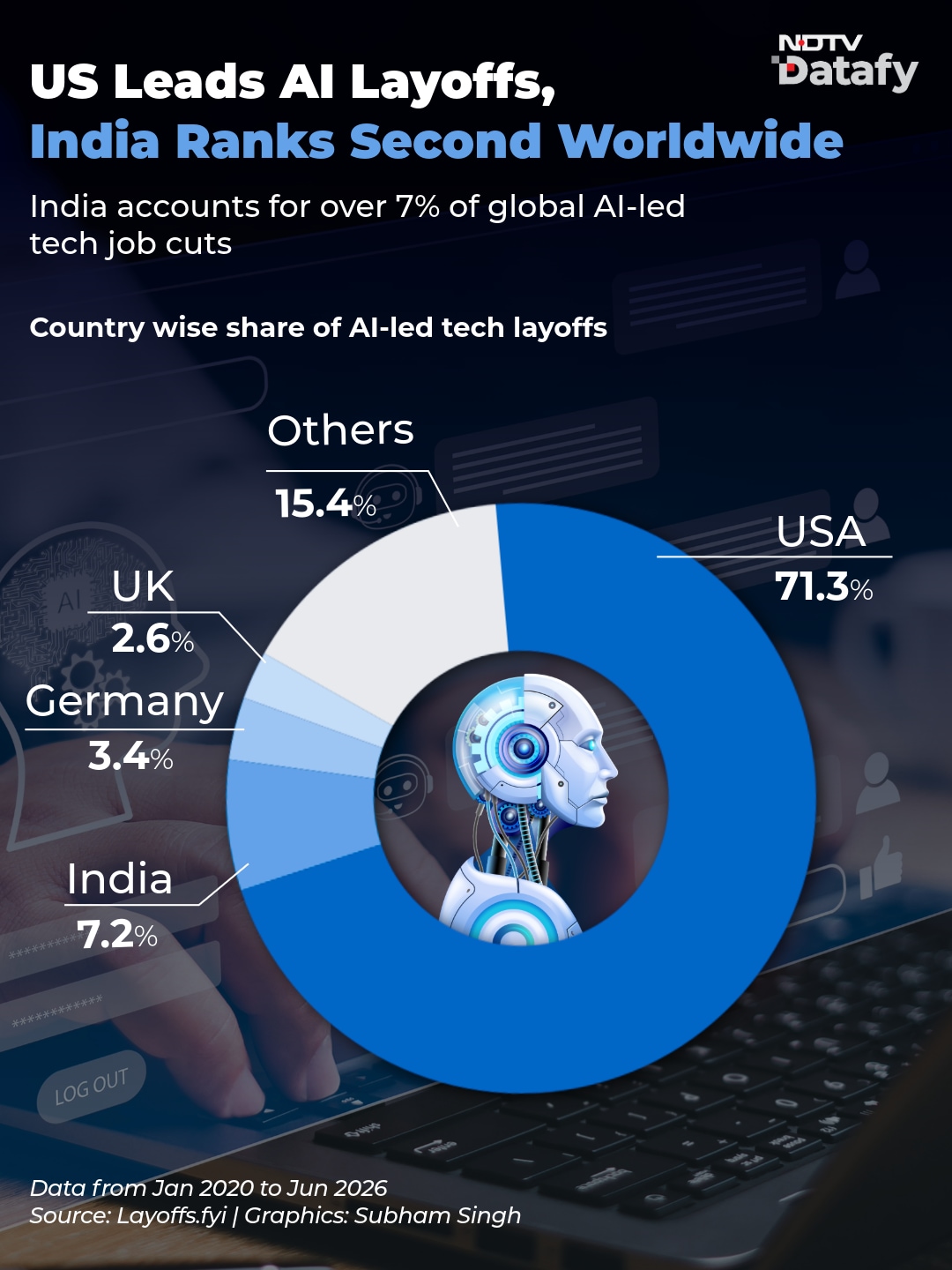
The United States has been the most affected country, accounting for 71.33 per cent of all AI-led tech layoffs globally between January 2020 and July 2026. However, India ranked second on the list with a 7.16 per cent share. Countries such as Germany (3.43 per cent) and the United Kingdom (2.64 per cent) followed India. Together, all other countries accounted for about 15.44 per cent of the total AI-related tech job cuts during the period.
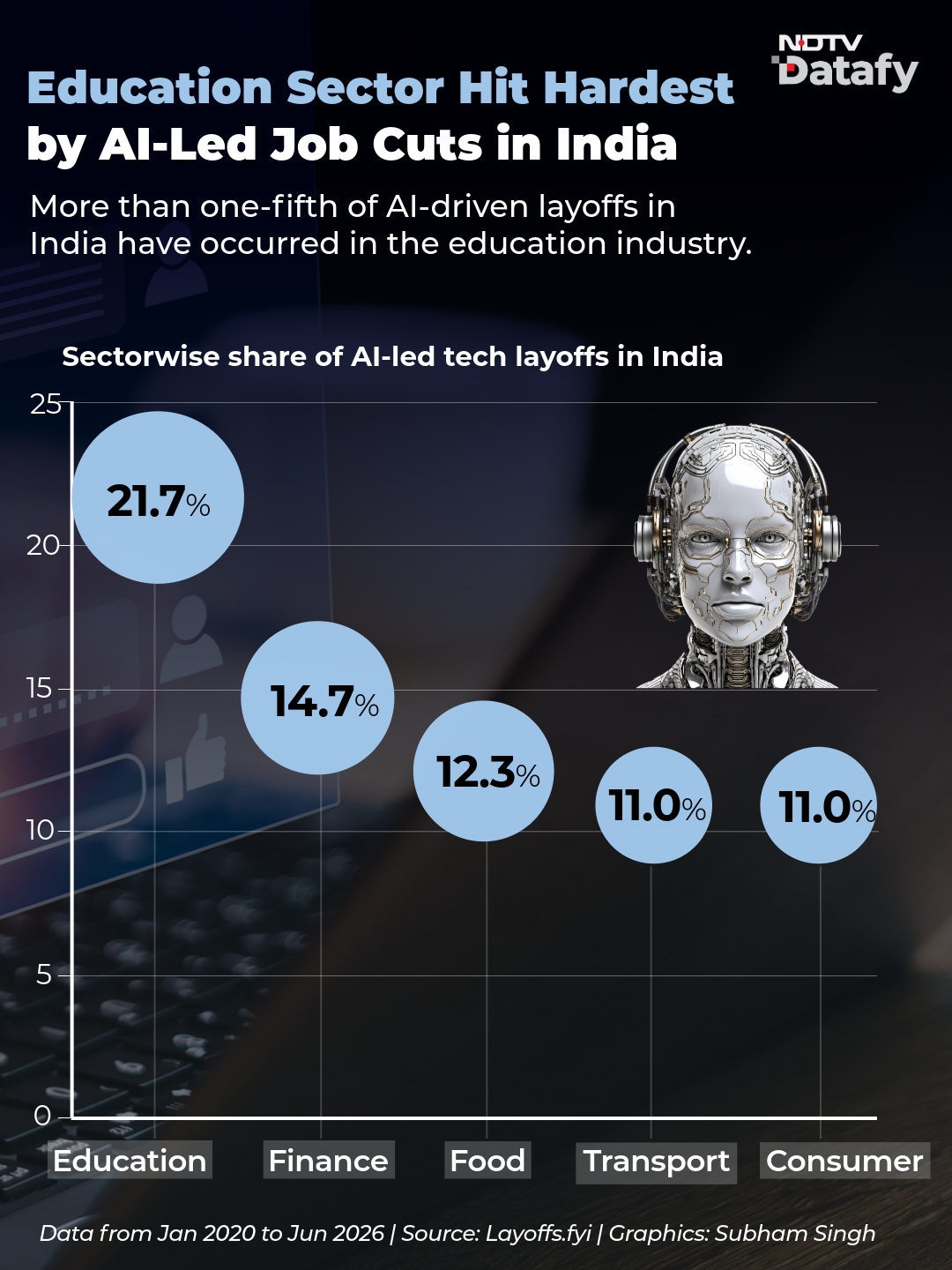
Within India, the impact has not been evenly distributed across sectors. The education sector has recorded the highest share of AI-led layoffs at 21.67 per cent, making it the most affected industry. The finance sector ranked second with 14.73 per cent of AI-led layoffs, followed by food (12.26 per cent), transport (11.03 per cent), and consumer-related businesses (11 per cent).
While AI is creating new opportunities in fields such as machine learning, data science, and AI development, it is simultaneously reducing demand for many traditional roles.