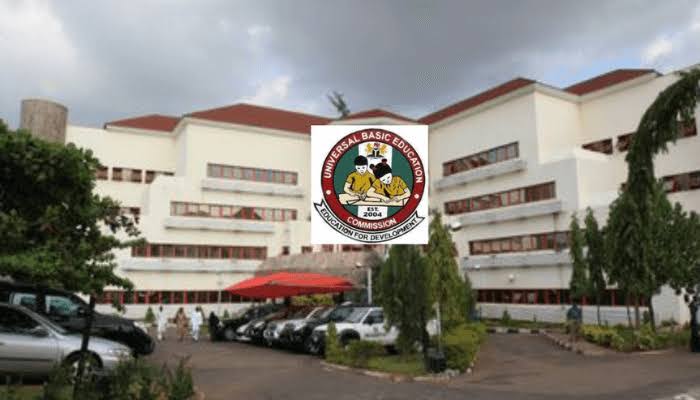
The Universal Basic Education Commission, UBEC, has released more than N5 billion to 518 communities nationwide under its School-Based Management Committee–School Improvement Programme, SBMC-SIP, intensifying efforts to enhance basic education delivery and curb the out-of-school children crisis.
Executive Secretary of UUBEC, Dr. Aisha Garba, made the announcement on Thursday in Abuja during the official launch of the 2025 SBMC-SIP cycle.
Garba said the funding initiative reflects the Federal Government’s renewed push to upgrade learning conditions, strengthen grassroots participation in school management, and ensure that pupils not only gain access to education but remain in school through completion.
She disclosed that a total of N5.18 billion has been set aside for the 2025 intervention, benefiting 518 communities, with each state and the Federal Capital Territory receiving support for 14 schools.
Represented by the Deputy Executive Secretary, Technical, Mr. Rasaq Olajuwon Akinyemi, she explained that the programme will target underserved communities, focusing on renovating deteriorating school structures, supplying classroom furniture, and improving water, sanitation, and hygiene, WASH, facilities.
She noted that the event marked multiple milestones, including a review of progress recorded under the 2023 and 2024 SBMC-SIP cycles, the disbursement of the final tranche of funds for those phases, the formal commencement of the 2025 programme, and the unveiling of a new Learner Retention Support Programme.
According to her, these combined efforts signal a coordinated approach to improving school governance, boosting infrastructure, encouraging community ownership, and addressing systemic barriers that prevent children from enrolling or completing their education.
Garba noted the growing impact of the SBMC-SIP, revealing that over 1,112 schools have benefited from the initiative, with more than N1.5 billion disbursed in earlier phases. She added that 13,670 projects have been initiated across the country, many of which are expected to help return over 400,000 out-of-school children to classrooms.
She stressed the need for strict adherence to transparency, accountability, and timely execution as a new cycle begins, assuring that UBEC will continue to collaborate with State Universal Basic Education Boards, SUBEBs, and other stakeholders to ensure effective delivery.
In addition, UBEC announced the release of N434.5 million as the final tranche for the 2023 and 2024 SBMC-SIP cycles, aimed at completing 11,484 ongoing projects nationwide.
Beyond infrastructure upgrades, the Commission also introduced the Learner Retention Support Programme, a N5 billion initiative targeting one million pupils across eight states in its pilot phase.
The programme is designed to tackle socio-economic challenges that hinder school attendance, reduce dropout rates, and sustain learners’ participation.
Garba emphasized that while access to education is crucial, retention remains key to achieving meaningful outcomes, noting that practical interventions are needed to address the realities pushing children out of school.
Speaking at the event, Minister of Education, Dr. Tunji Alausa, described the initiatives as central to the Federal Government’s drive to strengthen basic education and promote inclusive learning nationwide.
Represented by the Director of Basic Education, Dr. Folake Olatunji-David, the minister said the programmes align with existing national frameworks, including the Universal Basic Education Act and the National Policy on Education, as well as global targets such as Sustainable Development Goal 4.
He noted that while the SBMC-SIP encourages decentralised school management and community ownership, the retention programme directly addresses the persistent challenge of out-of-school children, particularly in states with high prevalence rates.
Alausa called on key stakeholders, including SUBEBs, local authorities, and community leaders, to uphold transparency and accountability in the utilisation of funds, stressing that the success of the interventions hinges on effective implementation and monitoring at the grassroots.
Participants at the event reaffirmed their commitment to collaboration, improved school environments, and ensuring that education reforms translate into tangible benefits for Nigerian children.