Ethiopian Prime Minister Abiy Ahmed has outlined the respective contributions of Ethiopia, Djibouti and the Dangote Group to the Ethiopia-Djibouti Petroleum Products Infrastructure Project, describing the partnership as critical to delivering a transformational development. Speaking at the commissioning of the project on Thursday, September 24, 2026, the Ethiopian Prime Minister……
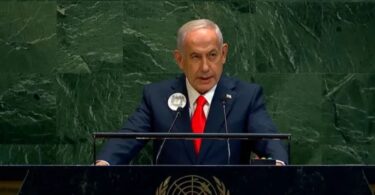
Ethiopian Prime Minister Abiy Ahmed has outlined the respective contributions of Ethiopia, Djibouti and the Dangote Group to the Ethiopia-Djibouti Petroleum Products Infrastructure Project, describing the partnership as critical to delivering a transformational development.
Speaking at the commissioning of the project on Thursday, September 24, 2026, the Ethiopian Prime Minister said Djibouti would contribute its strategic location, ports and experience, while Ethiopia would provide its large and growing market.
He said Dangote, on its part, would bring capital and industrial expertise to the project.
According to him, the combination of the three partners demonstrated how major transformational projects could be delivered through strategic cooperation.
“Djibouti brings its strategic location, ports and experience; Ethiopia brings a large and growing market; while Dangote brings capital and industrial expertise,” he said.
The Prime Minister said projects of such scale require patience, discipline and commitment, as well as high engineering standards and effective regulatory coordination.
“They also require strong regulatory coordination, transparent governance and responsible environmental and social management. Above all, they require partnership,” he said.
Abiy stressed the need for the partners to work together to ensure the project is delivered safely, efficiently and on schedule.
“We must work together to deliver this project safely, efficiently and on time,” he said.
He added that the project must be completed according to schedule and to the highest international standards.
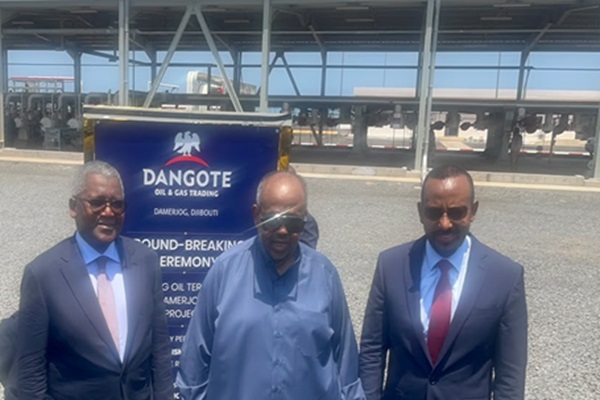
The project, a partnership involving Dangote Group, Ethiopia Investment Holdings and Djibouti, comprises a 120-kilometre pipeline and a combined petroleum storage capacity of 400 million litres.
Speaking on the broader significance of the investment, Dangote said African countries and businesses must take the lead in developing the continent.
“As Africa’s leading industrial conglomerate, our investments across the continent are driven by a firm belief that Africans must take lead in developing Africa, not foreigners,” he said.
Read Also: Ethiopia-Djibouti Pipeline Project To Create Jobs, Boost Local Businesses – Dangote
“We understand the terrain, the challenges, the culture and the opportunities.”
Dangote said the group’s investments were also aimed at reducing Africa’s dependence on imports and increasing the continent’s capacity to produce finished goods.
“We are committed to reducing Africa’s dependence on imports. We want our continent to become more self-sufficient in finished goods,” he said.
He identified manufacturing and infrastructure as central to achieving that objective.
“Manufacturing and infrastructure must remain the central of this transformation,” Dangote said.
The businessman cited the Dangote Group’s investments in cement, petroleum refining and fertiliser as examples of the company’s long-term industrial strategy across Africa.
He said Dangote Cement currently has a total production capacity of 55 million tonnes, which he expects to increase to 100 million tonnes within about four years.
The group, he added, operates in 11 African countries, with Ethiopia among the countries where it has made significant investments.
Dangote also disclosed plans to explore opportunities to establish cement production in Djibouti.
He said the company’s petroleum refinery in Nigeria would also have its capacity increased to 1.4 million barrels per day.
“And we are going to take it to double that capacity to be 1.4 million barrels a day, which is the largest single plant producing petroleum products in the world,” he said.
Dangote said the group’s fertiliser business was also expanding, with the aim of strengthening Africa’s capacity to produce inputs required for food security and industrial growth.
He said Nigeria had moved from importing some of the products to producing and exporting cement, clinker, fertiliser and petroleum products.
Dangote also projected that Ethiopia would begin exporting fertiliser rather than importing it by 2029.
“Likewise, in the next, by 2029, beginning, Ethiopia will be a country that will be exporting fertilizer and not importing,” he said.
He said the group’s broader objective was to support African countries in becoming self-sufficient in products for which they have the raw materials, market demand and strategic need.
“Our mission is to lead Africa’s industrial transformation,” Dangote said.
“We support countries to become self-sufficient in products for which they have raw materials, market demand and strategic need.”
The remarks came as Ethiopia, Djibouti and the Dangote Group advanced a major petroleum infrastructure partnership aimed at strengthening the movement and storage of refined petroleum products between the two countries.
The Memorandum of Understanding (MoU) to seal the deal was signed by representatives of the three partners, including Mr Jalal Tozogla (Dangote representative), Mr Brook Taye (Ethiopia Investment Holdings) Mr Oman Aden ( Greathorn Investment Holdings) .