
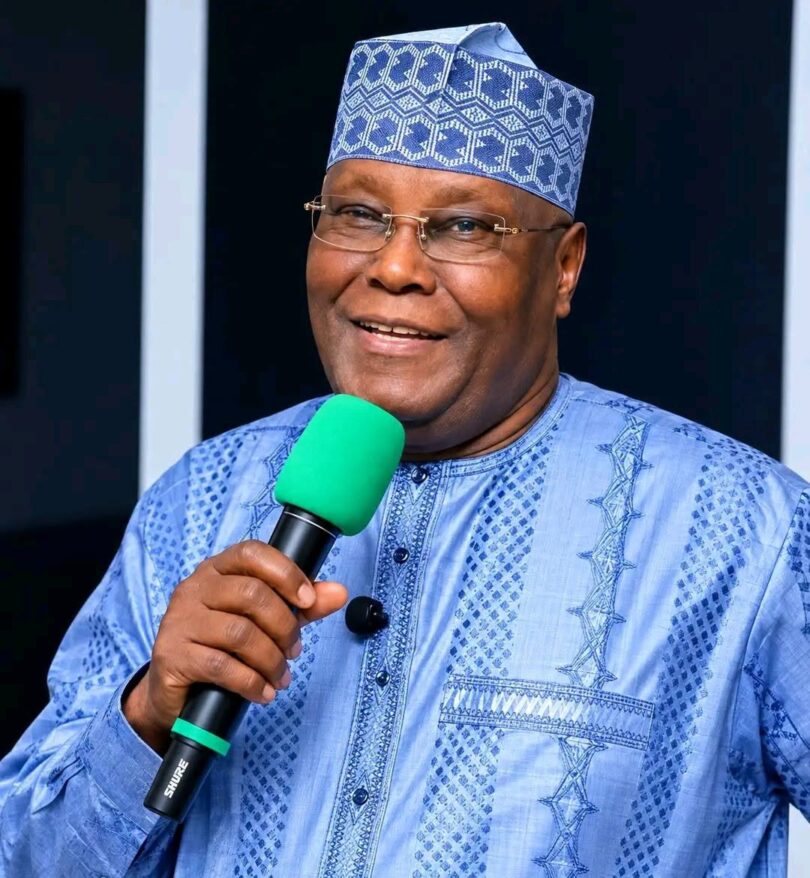
Former Aviation Minister Femi Fani-Kayode has launched a broad attack on former Vice President Atiku Abubakar, criticising his decision to seek the presidency again in the 2027 election….
Former Aviation Minister Femi Fani-Kayode has launched a broad attack on former Vice President Atiku Abubakar, criticising his decision to seek the presidency again in the 2027 election.
In a statement titled “The Seventh Bid of Waziri”, Fani-Kayode described Atiku’s latest presidential bid as his seventh attempt and questioned his political record, party affiliations and previous relationships with political leaders.
Atiku is the presidential candidate of the African Democratic Congress (ADC) for the January 16, 2027 election. The Independent National Electoral Commission’s final list confirms him alongside 17 other presidential candidates.
Fani-Kayode said Atiku first contested a presidential primary in 1993, when he lost the Social Democratic Party nomination to MKO Abiola. He subsequently contested the 2007 presidential election on the platform of the Action Congress, lost the PDP primary in 2011 to then-President Goodluck Jonathan, and lost the APC primary to Muhammadu Buhari in 2015.
He then contested the 2019 and 2023 presidential elections as the PDP candidate, losing to Buhari and Bola Tinubu respectively. Atiku is now contesting the 2027 election on the ADC platform.
Fani-Kayode compared Atiku’s record with that of Senegal’s former President Abdoulaye Wade, who contested the presidency several times before eventually winning, arguing that the two politicians had different political records.
He also criticised Atiku’s movement between political parties, saying he had belonged to several parties since entering politics.
The former minister revisited the political conflict between Atiku and former President Olusegun Obasanjo during their time in office, alleging that Atiku sought to challenge Obasanjo’s leadership and presidential ambitions.
Fani-Kayode, who served as Aviation Minister under Obasanjo, also recounted an incident he said occurred during Federal Executive Council meetings, alleging that he had demanded Atiku’s removal from cabinet meetings over what he described as disloyalty to the president.
He further accused Atiku of contributing to divisions within political parties, including the PDP and, more recently, the ADC.
Fani-Kayode also criticised Atiku’s reported position on fuel subsidy. Atiku has publicly pledged to restore fuel subsidy if elected in 2027, a position that has also been backed by ADC governorship candidates in the North-West.
On corruption allegations, Fani-Kayode listed several cases and controversies that have been associated with Atiku, including the Mambilla power project, Siemens, Halliburton, INTELS and the William J. Jefferson case.

He acknowledged, however, that the allegations he cited had not resulted in a Nigerian trial or conviction against Atiku.
“To be fair none of these cases have, at least so far, resulted in a Nigerian trial or conviction but all have left a paper trail in the files of foreign regulators and many unanswered questions at home,” he said.
Fani-Kayode also alleged that Atiku had engaged a foreign public relations company to attack President Tinubu, and made further allegations concerning payments to the firm. Those claims were presented by Fani-Kayode without supporting evidence in the statement.
The former minister ended his statement by predicting that Atiku would lose the 2027 election and return to private life.
He wrote that Atiku had “little chance” of winning his seventh attempt and asserted that he would be defeated in January 2027.
Atiku’s campaign is already underway. On September 25, his campaign approved its National Campaign Council and Presidential Campaign Management Committee, with former Kaduna State governor Nasir El-Rufai named as deputy chairman.
The political claims and allegations in Fani-Kayode’s statement are his own and should be distinguished from independently established facts